What should you compare before choosing?
Start by deciding what you want to achieve: smooth light creases without setting anything up, treat several garments at home or get a more structured finish. Que Choisir Ensemble distinguishes between these uses. The steam output figures given by manufacturers aren’t enough on their own to compare irons.
Handheld garment steamer
Choose it if: you need to touch up a hanging outfit from time to time, at home or while travelling.
Keep in mind: it can smooth light creases, but won’t create the sharp creases you get with an iron, according to Que Choisir Ensemble.
Standing garment steamer
Choose it if: you have several garments to steam at home and space to set up the appliance.
Keep in mind: it’s less suited to taking in your luggage and won’t give you the structured finish of an iron.
Steam iron
Choose it if: you want to work precisely on collars, cuffs or sharp creases, and have a suitable surface to iron on.
Keep in mind: it takes more setting up than a quick touch-up on a hanger. Que Choisir Ensemble notes that the steam output figures given by manufacturers aren’t necessarily comparable.
Steam generator iron
Choose it if: you also do longer, traditional ironing sessions at home, according to Que Choisir Ensemble.
Keep in mind: its size makes it unsuitable for a quick touch-up or packing in your luggage.
| What matters to you |
What to check |
Who this matters most to |
| Touch-ups without setting up |
Advertised heat-up time for the exact model; use on a hanger and whether you may need a support. |
If I need to steam an outfit just before I leave, I want to avoid setting up an ironing board. Around 33% of consumers make quick touch-ups their priority. |
| Portability and ease of handling |
Weight and dimensions of the exact model; a folding handle or pouch if you need these accessories. |
When I pack the appliance in my luggage, its weight and size matter as much as its handheld design. Around 27% of consumers prioritise portability while travelling. |
| Several garments per tankful |
Tank capacity, how easy it is to fill, and the stated or measured running time under the conditions tested. |
If I’m steaming several garments at home, I want to avoid having to refill the tank. Around 20% of consumers put steaming several garments at the top of their list. |
| Finish and fabric |
The garment’s care instructions, the finish you want and the appliance’s settings. Don’t judge the result by the stated steam output alone. |
To neaten a collar or create a sharp crease, I first check that the garment can be ironed and that the appliance is suitable for this finish. Around 20% of consumers prioritise a precise finish. |
Garment steamers available on Joybuy
This selection includes handheld garment steamers for touch-ups on a hanger, including while travelling, and a standing model for several garments at home. These appliances are intended for touch-ups; if you need sharp creases, consider an iron.
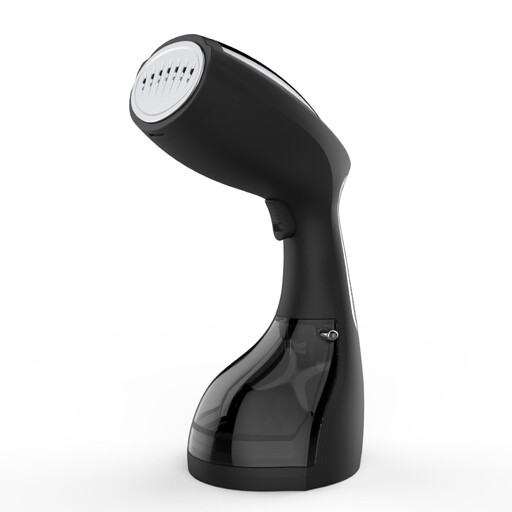 Image unavailable
SteamOne STRAVEL EUTAC140B, 1400 W
For touching up a hanging garment at home or while travelling. Removable 260 ml tank, up to 11 minutes of stated running time, stated net weight of 1.1 kg and an advertised heat-up time of around 30 seconds. The steam output given in the product name is 24 g/min.
View on Joybuy
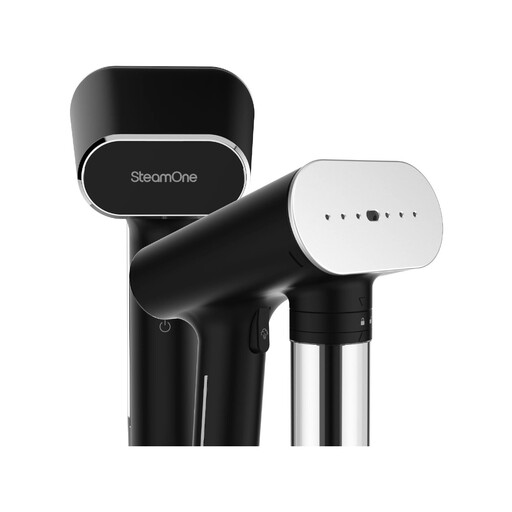 Image unavailable
SteamOne KARL 2 EUNS150BV2, 2000 W
For a quick touch-up on a hanging garment or an appliance to take with you. 150 ml tank, up to 8 minutes of stated running time, stated net weight of 0.86 kg, two settings and an advertised heat-up time of around 30 seconds. The steam output given in the product name is 33 g/min.
View on Joybuy
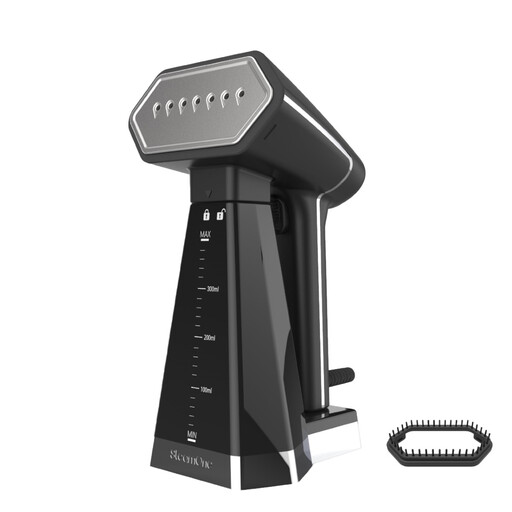 Image unavailable
SteamOne EUSN400B, 2000 W
For touching up several garments at home or while travelling. 400 ml tank, up to 27 minutes of stated running time, two settings, stated net weight of 1.03 kg and an advertised heat-up time of around 40 seconds. The steam output given in the product name is 30 g/min.
View on Joybuy
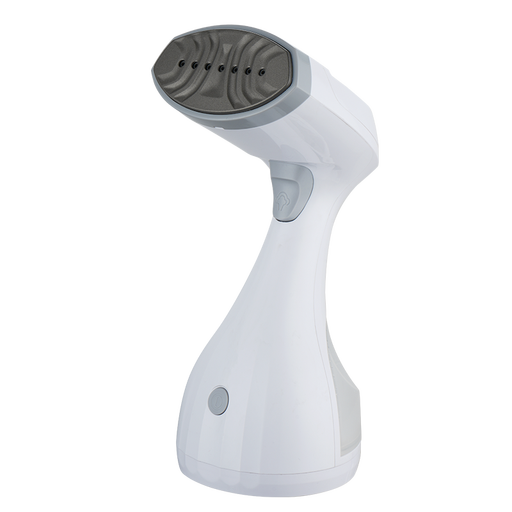 Image unavailable
Aucma handheld garment steamer, 1500 W, 300 ml
For touching up clothes on a hanger or steaming several garments in a row. Removable 300 ml tank, 10 to 15 minutes of stated continuous steam, stated net weight of 1.0 kg and an advertised heat-up time of 30 seconds or less.
View on Joybuy
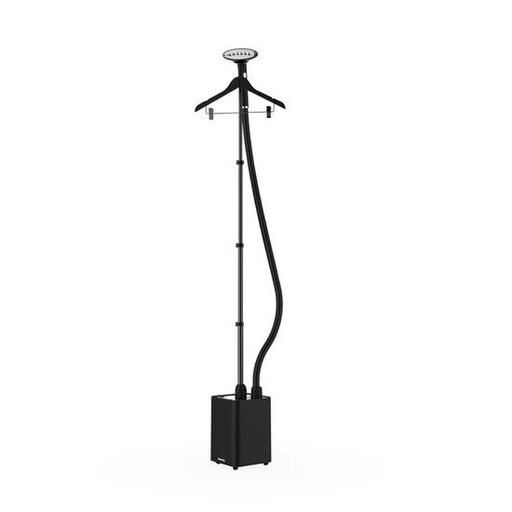 Image unavailable
SteamOne HENRI 2 EUJK300B, 2000 W
For steaming several hanging garments at home; its stated net weight of 8 kg makes it less practical to pack in your luggage. It includes a hanger, a removable 1.8 L tank and adjustable steam output. Up to 45 minutes of stated running time and a heat-up time of around 60 seconds are advertised. The steam output given in the product name is 42 g/min.
View on Joybuy
Frequently asked questions
Is a garment steamer enough for delicate fabric or a sharp crease?
For light creases on a suitable fabric, a garment steamer can work well for a touch-up on a hanger. To create a sharp crease or achieve a precise finish, choose an iron if the garment’s label and its instructions allow it. ‘Delicate’ doesn’t mean you should ignore the care instructions for the fabric.
What should you do with the tank after a touch-up?
Follow the instructions for your model. Philips recommends emptying the tank after use for the models covered by its support information; this manufacturer recommendation doesn’t automatically apply to every brand.
What protections apply when you buy from a business in France?
Under the legal guarantee of conformity, you can make a claim to the professional seller for two years from the date the goods are delivered, according to the DGCCRF and subject to the conditions set out in law. For eligible distance purchases, you generally have at least 14 days to withdraw from the purchase. This right covers a change of mind and is separate from a claim relating to a fault, according to the French Ministry of the Economy.
What should you check to ensure an appliance sold in France meets electrical safety requirements?
Check the markings and safety information that apply to the model you’re considering. The European Low Voltage Directive 2014/35/EU, in the consolidated version published by EUR-Lex on 30 May 2026, covers electrical equipment designed for a rated voltage of 50 to 1,000 V for alternating current and 75 to 1,500 V for direct current. These conditions define the scope of the directive. If you’re travelling outside France, separately check the voltage the appliance accepts and the plug used in your destination country.


