To smooth light creases from one or two outfits taken out of a suitcase, choose a handheld garment steamer if you value quick touch-ups on a hanger and compact storage. A standing model is better suited to regular use at home. If you want sharp creases or a classic ironed finish, choose an iron, or a steam generator iron for larger loads of laundry. Whatever you choose, check the garment’s care label and follow the instructions for your chosen model.
Which option suits each need?
Touch-ups after a trip
If your outfit is slightly creased when you take it out of your suitcase, you’ll probably want to freshen it up on a hanger without setting up an ironing board. Que Choisir describes a garment steamer as an appliance that smooths light creases caused by travelling or storage.
Looking after several outfits at home
If you want to freshen up several shirts, dresses or tops after they’ve been stored away, tank capacity, ease of handling and how well the garment stays in place matter more than a travel-friendly size alone. A standing garment steamer could be worth considering.
When you want a crisp finish
If you need to create sharp creases or regularly iron large loads of laundry, don’t assume a garment steamer can automatically replace your ironing equipment. Que Choisir distinguishes between steam touch-ups and the uses of an iron or steam generator iron.
What should you look for before buying?
Start with the finish you want, then think about how many garments you’ll be steaming and where you’ll use the appliance. According to Que Choisir, garment steamers are mainly for smoothing light creases caused by travelling or storage. For a crisp, ironed finish, you’ll need to consider another option.
| What matters to you | What to check | Who is it for? |
|---|
| Quick touch-ups and portability |
Heat-up time; packed dimensions; and whether it can be used on a hanger. |
If you need an outfit ready after a trip, waiting a long time or carrying a bulky appliance can make touch-ups more difficult. Around 33% of consumers put speed and portability at the top of their list. |
| Several garments |
Capacity, ease of filling and weight in your hand. |
If you’re freshening up several items after storage, you’ll want to avoid stopping to refill the tank. This is the top priority for around 25% of consumers. |
| A crisp finish |
Whether you need to create creases; fabric type and how often you iron. |
For an outfit that needs sharp creases or laundry that’s difficult to iron, simply smoothing out wrinkles may not be enough. Around 25% of consumers prioritise a crisp, structured finish over quick touch-ups. |
| Delicate fabrics |
The care label; settings and instructions in the manual for delicate finishes. |
If a garment is embellished or fragile, you’ll want to choose a method that follows its care instructions before exposing it to steam. Around 17% of consumers make this precaution a priority. |
Mistakes to avoid
-
Expecting a garment steamer to create sharp creases
Que Choisir describes garment steamers as suitable for smoothing light creases, not as a universal replacement for an iron or steam generator iron.
Decide on the finish you want before buying: a quick touch-up on a hanger or a crisp, structured finish from ironing.
-
Looking only at the advertised steam output
A single figure won’t tell you how the appliance will perform on your fabric or how comfortable it’ll be to use for a whole session. Que Choisir’s testing, for example, looks at steam output and performance across different fabrics.
Also consider heat-up time, settings and ease of handling, as well as comparable test results where available.
-
Choosing a compact model without considering refills
An appliance that’s easy to carry may be less practical when you have several garments to freshen up in one go.
Consider the tank capacity and the steamer’s weight in relation to the number of items you usually treat, then check how the tank is filled.
-
Assuming ‘delicate fabrics’ means it’s safe for everything
A garment’s embellishments and finishes may require precautions that aren’t covered by the appliance’s general description. GINETEX advises choosing the maximum temperature according to the care label.
Read the garment’s care label and the model’s instructions before choosing a setting or accessory.
Brands to compare
Calor
Calor’s range includes handheld appliances and standing models: two formats to consider depending on whether you’ll be freshening clothes while travelling or mainly at home.
- Calor lists a removable 200 ml tank for the Access Steam Care DT9100C0. The Pro Style Care IT8460C0 is a standing model with a support.
- These details apply to the models mentioned, not every Calor garment steamer or how long it will actually last when used on your clothes.
Philips
The Series 5000 STH5020/40R1 is a handheld garment steamer with a rotating head, which could be useful if storage space is limited.
- Philips says this model heats up in 35 seconds and has ECO and MAX modes.
- These details apply to the STH5020/40R1 presented by Philips; they don’t cover other versions in the range.
Laurastar
Laurastar positions IGGI as a travel-friendly model and IZZI for longer sessions at home.
- The brand describes IGGI as compact enough to fit in a suitcase.
- Laurastar says IGGI takes 2 min 30 to heat up, so bear this in mind if you plan to freshen up an outfit just before heading out.
Handheld garment steamers on Joybuy
These three handheld garment steamers are suited to occasional touch-ups after a trip or storage. If your priority is ironing large loads of laundry or creating sharp creases, compare irons or steam generator irons instead.
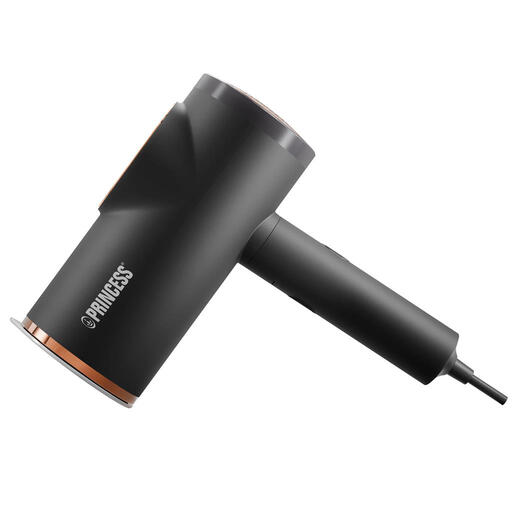 Image unavailable
Princess 332890 folding garment steamer with lint-removing attachment
The foldable design is worth considering if you need to put the appliance away between travel touch-ups. The product name includes a lint-removing attachment; if you’re treating several garments, check that the runtime suits your session. Follow the care label and instructions when steaming delicate fabrics.
View on Joybuy
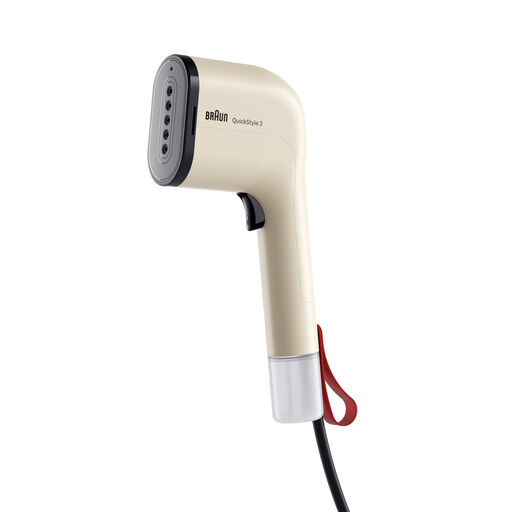 Image unavailable
Braun QuickStyle 3 GS3012BG, blue and grey
If your outfit is creased after a journey, this handheld garment steamer is worth comparing with other compact models. Check its capacity and how comfortable it is to hold if you plan to steam several garments. Don’t assume it’s suitable for delicate fabrics based on the range name alone.
View on Joybuy
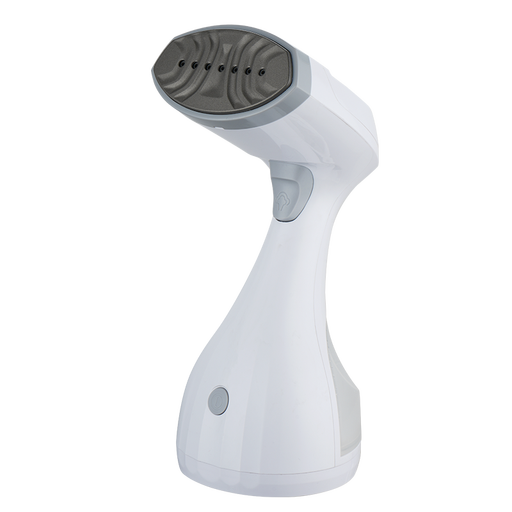 Image unavailable
Aucma 1,500 W handheld garment steamer with 300 ml tank
The 300 ml tank is worth considering if you’re preparing several outfits, though it doesn’t tell you exactly how long the steamer will run. The product name lists a power rating of 1,500 W, a white finish and an included brush. If the soleplate material matters to you, check it before buying. Then consult your garments’ care labels and the instructions for use on delicate fabrics.
View on Joybuy
Frequently asked questions
Can a garment steamer replace an iron after a trip?
A garment steamer can smooth light creases from an outfit taken out of a suitcase without the need to set up an ironing board. However, according to Que Choisir, it won’t replace ironing when you need sharp creases or a structured finish. Keep an iron or steam generator iron for those jobs.
What tank capacity should you choose for several garments?
Compare capacity with how easy the tank is to fill and the weight of the appliance. Capacity alone won’t tell you how long it’ll run on your clothes. For example, Calor lists a 200 ml tank for the Access Steam Care DT9100C0, but that isn’t a one-size-fits-all guide for every session.
Can you use steam on delicate clothing?
First check the garment’s care label, then consult the garment steamer’s instructions for the fabric and its finishes. GINETEX says the maximum temperature should be determined by the care label. A general ‘delicate fabrics’ claim on the appliance doesn’t replace this check.


