
Livraison le jour même ou le lendemain

Qualité garantie

Débloquez vos offres de bienvenue: Livraison GRATUITE | Jusqu'à -80 % | 30 jours d'essai gratuits à JoyPlus
Téléchargez l'application
A vertical garment steamer can make looking after a family wardrobe, work uniforms or a large amount of laundry much easier. It lets you steam clothes while they’re on the hanger, without having to get the ironing board out every time. But the figures on the product specification don’t always tell the whole story.
Before you buy, there are three potential pitfalls to bear in mind.
If you regularly steam shirts, jackets, dresses or trousers, don’t just look at the wattage: consider it alongside the steam output, measured in grams per minute.
A 1,950 W garment steamer producing 32 g/min is a good option for tackling a large number of clothes, subject to the manufacturer’s recommendations. By contrast, a handheld model rated at 1,200 to 1,600 W and 24 to 25 g/min is better suited to quick touch-ups.
Heat-up time matters in everyday use, too. Models that are ready to use in 35 to 45 seconds let you steam an outfit just before you head out. A slower appliance, on the other hand, may end up forgotten at the back of a cupboard.
For a family, shop or frequent use, look for a removable tank of at least 1.4 litres. Models with a 2 l tank may claim up to 45, 55 or 90 minutes of run time, depending on the steam output and setting selected. This is the maximum duration stated on the product page, not a guarantee that applies in every situation.
A small 150 to 400 ml steamer is easier to store and carry, but you’ll need to refill it more often. It’s best suited to touch-ups, travel and smaller spaces.
A versatile appliance should let you adjust the steam and temperature to suit the fabric. Some models offer 11 temperature settings, while others have just two or three steam levels. In all cases, check the care label and test on an inconspicuous area first, especially with silk, wool, velvet or coated fabrics.
Remember to check for:
A handheld vertical steam iron is handy for a quick touch-up. A freestanding garment steamer is better suited to steaming several items in a row. An integrated ironing board can also help you get more precise results on collars, cuffs and thicker areas.
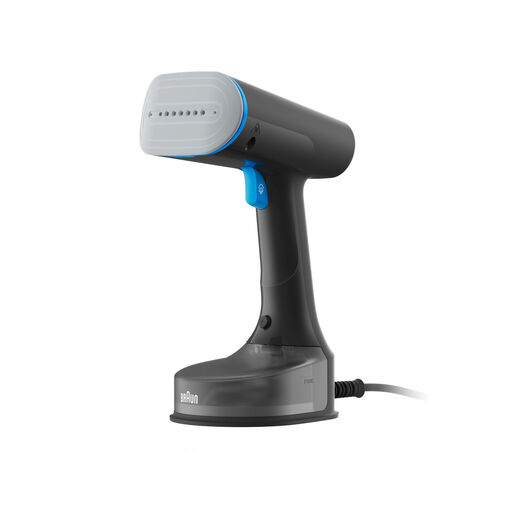
Why it’s a good fit for this profile : Weighing just 1.04 kg, this handheld model is ideal if you’re new to steaming or short on space. It can be used vertically or horizontally, without a separate ironing board.
The removable 150 ml tank, automatic shut-off and anti-drip system make it easy to get started. However, its run time is designed for shorter sessions.
1 200 W, continuous steam at 25 g/min, heats up in a stated 45 seconds and comes with a brush.
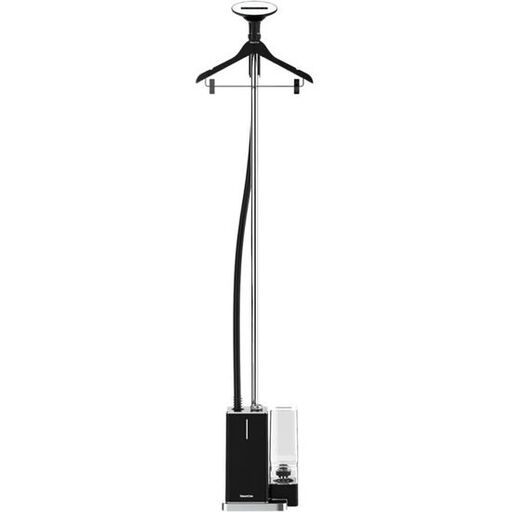
Why it’s a good fit for this profile : Its power and adjustable settings make it a good choice if you want to steam clothes and household linens regularly with a freestanding appliance.
The three Eco, Medium and Max settings mean you’re not limited to a single steam output. The supplied hanger also makes it easier to steam longer items.
2 300 W, adjustable steam output up to 50 g/min, 2 l tank, heats up in a stated 35 seconds and offers up to 90 minutes of stated run time.
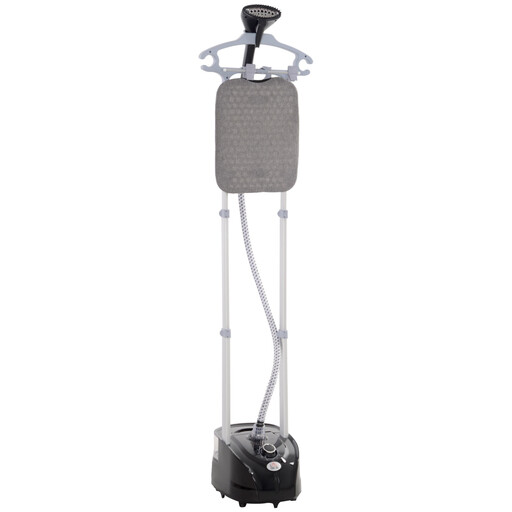
Why it’s a good fit for this profile : With its integrated board and hanger, this model is designed for households with lots of laundry, as well as shops, workshops and accommodation providers.
The large tank, adjustable pole and ironing surface help avoid the compromises associated with fully handheld appliances.
1 950 W, stated steam output of 32 g/min, removable 2 l tank, 11 temperature settings and a stated heat-up time of 38 seconds.
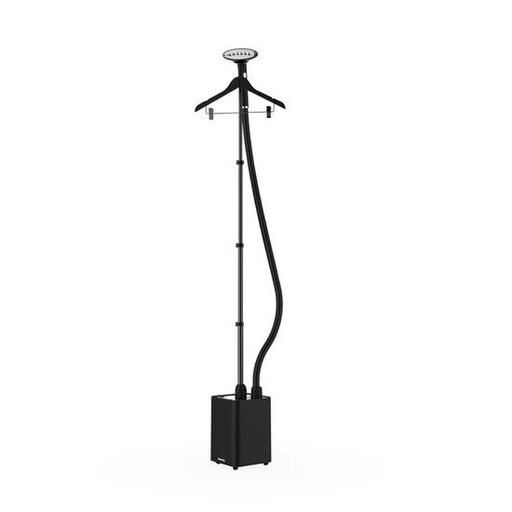
Why it’s a good fit for this profile : The wheels, adjustable pole and supplied hangers are handy for repeated use on jackets, dresses, curtains and upholstery.
The adjustable steam output of up to 42 g/min means you don’t have to use the same steam level on every fabric. The gravity-fed anti-scale system makes the maintenance recommended in the manual easier.
2 000 W, removable 1.8 l tank, up to 45 minutes of stated run time and four integrated wheels.
We’ve brought together a comprehensive selection, updated in real time, of products that meet these demanding criteria and European safety regulations.
Steam doesn’t always replace an iron when you want crisp, sharp creases. It’s best for quick de-wrinkling, refreshing the look of clothes and caring for garments that are difficult to lay on an ironing board.
It depends on how often you use it, the quality of the water, how well you maintain it and whether you follow the manufacturer’s instructions. Emptying the tank after each session and descaling it appropriately helps limit the build-up of deposits. Before you buy, check the warranty terms and whether accessories are available.
It depends on its power rating and how long you use it. An appliance rated at 1 950 W and used for 10 minutes will naturally use much less electricity than one running continuously for an hour. Actual consumption also varies depending on the heating cycles and setting selected. To avoid switching it on repeatedly, get several garments ready before you start and use only the steam output you need.
Not always. Some models accept tap water, while others recommend demineralised or distilled water. Always follow the manufacturer’s instructions. This is especially important in areas of France with very hard water, as it helps protect the steam circuit and prevent marks on fabrics.