
Livraison le jour même ou le lendemain

Qualité garantie

Débloquez vos offres de bienvenue: Livraison GRATUITE | Jusqu'à -80 % | 30 jours d'essai gratuits à JoyPlus
Téléchargez l'application
A garment steamer can make getting ready every day much easier. This is particularly true if you live in a small home, travel often or would rather avoid getting out the ironing board. However, specifications do not always tell the whole story. A high wattage does not guarantee effective steaming, while a compact appliance may offer fairly limited run time.
Before comparing the different models, here are the main pitfalls to avoid.
A 1 600 or 2 600 W appliance uses more electricity, but this figure alone does not indicate how effectively it will remove creases. You should also look at the steam output, measured in grams per minute, as well as the pressure when considering a steam generator iron.
For a few quick touch-ups, a continuous output of 18 to 25 g/min is generally sufficient. Appliances offering pressure of 6 to 8 bars and a higher steam output are better suited to households that switch between vertical steaming and conventional ironing.
A 70 ml tank helps keep a portable garment steamer lightweight and compact, but it may require frequent refills. Conversely, a 1.5-litre tank is suitable for longer sessions, at the cost of a bulkier appliance.
Also check whether the tank is removable, whether its opening is wide enough and whether the manufacturer specifies what type of water to use. In areas with hard water, an anti-scale garment steamer or a self-cleaning function can make maintenance easier.
Steam and soleplates can reach high temperatures. An automatic switch-off, an anti-drip system or a temperature-controlled soleplate are genuinely useful features for everyday use. However, these features do not replace reading the instructions or following the safety guidance: always keep the appliance out of children’s reach.
With silk, viscose, satin or certain coated fabrics, test the steam on an inconspicuous area first. A garment steamer for delicate fabrics should be moved continuously rather than held in one place.
Steam output refers to the amount of steam produced per minute. A higher figure can speed up crease removal on thick shirts, jackets or curtains, but it may also leave the fabric more damp.
Heat-up time has a direct impact on ease of use. The models featured here claim to start in approximately 30 to 45 seconds, while a steam generator iron may require a little more preparation. If you want to get ready quickly in the morning, this detail matters almost as much as the wattage.
If you regularly steam several garments, check the appliance’s weight, the cord length and whether it has a lockable steam button. These details have a direct impact on hand fatigue.
Before buying, check for the CE marking, the 220-240 V voltage information and the contact details of the manufacturer or importer established in the European Union. Also read the descaling instructions, warranty terms and availability of removable parts.
Empty the tank after every use, allow the appliance to cool completely and never add perfume, essential oil or chemicals to the water unless the instructions explicitly allow it.
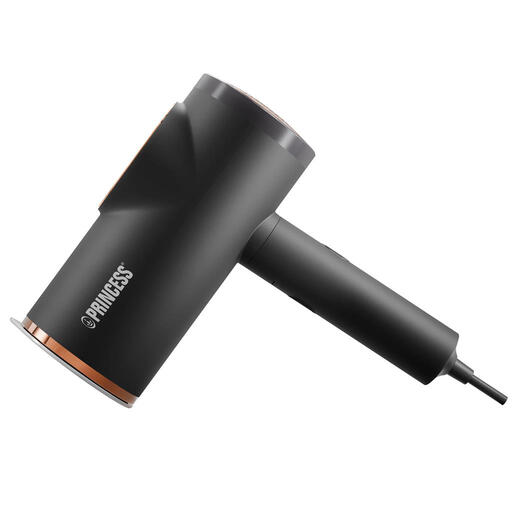
Why this choice suits this profile : With its foldable 0.80 kg design, 30-second heat-up time and removable 100 ml tank, it is ideal for first-time use at home or while travelling.
The tank capacity is clearly stated, while the automatic switch-off helps prevent the appliance being left on during or after use.
Claimed output of 18 g/min, lockable steam button and integrated lint-removing brush.
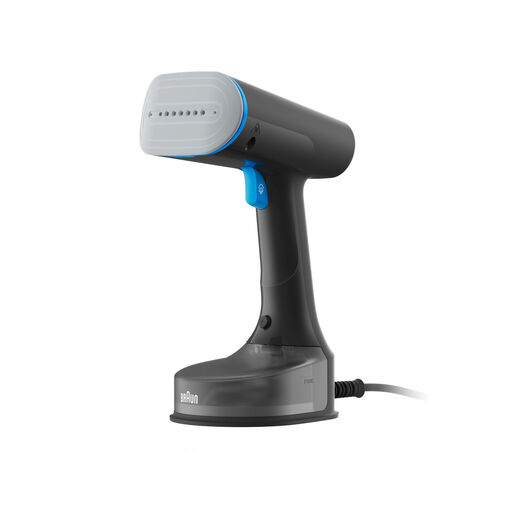
Why this choice suits this profile : This model combines vertical and horizontal steaming, a removable 150 ml tank and thoughtfully designed features for regular use.
The anti-drip system reduces the risk of water marks, while the automatic switch-off provides a practical safety feature.
1 200 W power, claimed continuous output of 25 g/min, 2.5 m cord and included brush.
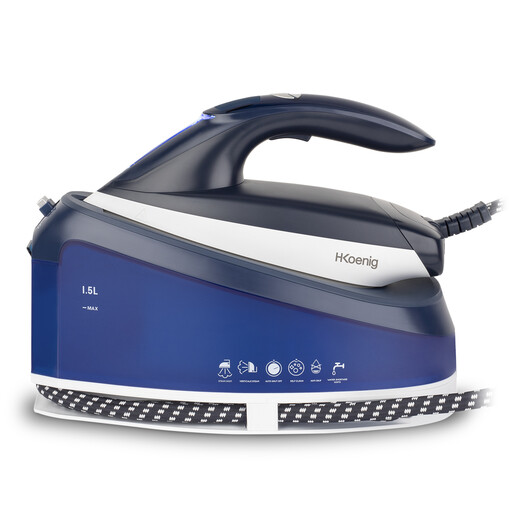
Why this choice suits this profile : Its 1.5-litre station is designed for households that iron several garments in succession and want to switch from vertical steaming to conventional ironing.
Its large capacity avoids repeated refills, while the automatic switch-off provides extra safety if the appliance is forgotten.
Claimed pressure of 8 bars, steam output of 120 g/min, ceramic soleplate and 1.5-litre tank.
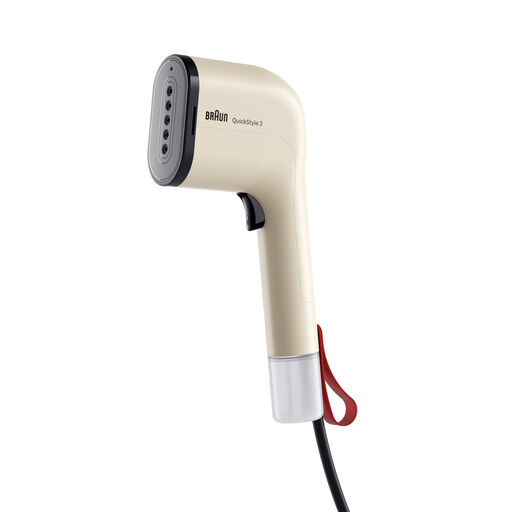
Why this choice suits this profile : Its claimed weight of 770 g, slim design and heat-resistant cover make it easy to carry in a suitcase or store in a drawer.
The compact dimensions come with a removable 70 ml tank and a 2 m cord: the appliance does not promise long run time.
Claimed 30-second heat-up time, continuous output of 20 g/min and iCare technology, which the manufacturer presents as protection against excessive temperatures.
We have put together a complete, real-time updated selection of products that meet these demanding criteria while complying with European safety regulations.
Hang the garment on a stable hanger, then gently stretch the fabric with one hand. Move the steamer head from top to bottom, keeping a steady motion. For delicate fabrics, keep a small gap between the soleplate and the garment, and always check the care label.
Never direct the steam jet towards a person, animal or electrical appliance. After use, unplug the appliance, empty any remaining water and wait until it has cooled completely before storing it.
Not always. It is ideal for light creases, hanging garments and last-minute touch-ups. To create a sharp trouser crease or tackle heavily creased laundry on a flat surface, a steam generator iron with a vertical steaming function will often be more suitable.
A 70 to 150 ml tank is generally sufficient for a few garments. For several shirts, curtains or family use, a 250 to 300 ml capacity reduces interruptions. 1 to 1.5-litre stations are suitable for longer sessions, but they are considerably less convenient to transport.
Empty the tank after every session, follow the cleaning procedure and use the water recommended in the instructions. An anti-scale collector or self-cleaning function makes maintenance easier, but does not remove the need for regular descaling.