
Livraison le jour même ou le lendemain

Qualité garantie

Débloquez vos offres de bienvenue: Livraison GRATUITE | Jusqu'à -80 % | 30 jours d'essai gratuits à JoyPlus
Téléchargez l'application
A creased shirt just before you leave for work, a dress that is difficult to iron or a suitcase to pack at the last minute: a garment steamer meets very different needs from a traditional iron. But promises of rapid heating and “powerful steam” are not enough to guarantee you make the right choice.
Some details can even become frustrating over time. A small tank means having to stop regularly, a low steam output makes it harder to smooth thick fabrics, and a heavy appliance can eventually strain your wrist. Here are the criteria to consider before buying, along with a selection suited to different needs.
A high wattage tells you about the appliance’s heating capacity. However, it does not guarantee fast crease removal on its own. The steam output, measured in grams per minute, gives you a more practical indication of how much steam is produced.
For a shirt, blouse or lightweight garment, a moderate continuous output may be more than enough. For a jacket, thick trousers or curtains, a more generous flow of steam makes the job considerably easier. It is therefore better to compare the wattage, steam output and heating time rather than focusing solely on the number of watts.
A portable garment steamer is easy to store, but its tank is usually small. A 70 ml capacity is suitable for a few garments, while a 300 ml tank offers greater convenience for a steaming session at home.
A large tank does, however, make the appliance heavier and bulkier. For a travel steamer, compactness may be the top priority. At home, on the other hand, a larger capacity and a removable tank that is easy to fill make it much more pleasant to use.
Steam and heated surfaces can cause burns. Before buying, check for an automatic shut-off, an anti-drip system, protection against dry running and a cable that is long enough.
An appliance that can be used both vertically and horizontally can replace some of the functions of a steam iron, but it does not always offer the same precision when creating sharp creases. Take time to read the instructions, cleaning guidelines and information relating to connection to 220-240 V or 230 V, depending on the model.
Continuous steam makes the process smoother: there is no need to keep pressing a trigger. A heating time of around 30 seconds is useful in the morning or at the office, but the result also depends on the distance between the head and the fabric, the tension applied to the garment and the type of fibre.
For versatile use, look for:
A lightweight handheld garment steamer is easy to use on a hanger. A weight of under 1 kg is useful when you need to steam several shirts, while a steam generator is better suited to longer sessions on an ironing board.
The length of the cord, the shape of the handle, the position of the steam button and the ability to remove the tank all directly affect ease of use. A heat-resistant cover also makes storage easier once the appliance has cooled down.
A transparent or visible tank lets you check the water level at a glance. After each use, allow the appliance to cool down, empty any remaining water if recommended in the instructions, then clean it according to the manufacturer’s guidelines. Limescale can reduce steam output, so check the type of water recommended in the instructions.
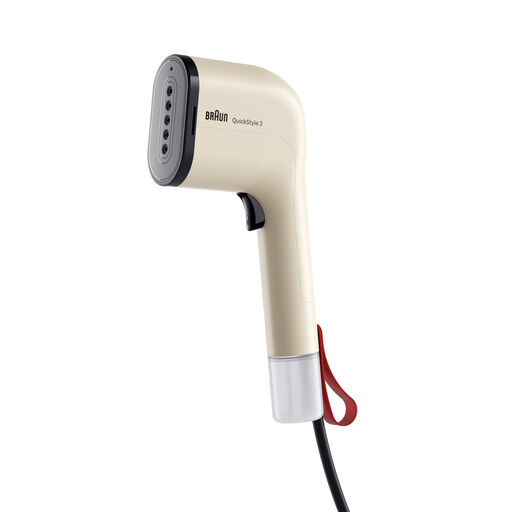
Why this choice suits this profile : Its slim design and weight of 770 g make it a good first appliance, suitable for smaller homes and easy to store in a drawer.
The specifications state a 30 second heating time and a continuous output of 20 g/min. However, its removable 70 ml tank limits each session to a few garments.
The manufacturer lists iCare and FastSteam technologies, along with a 2 m cord and a heat-resistant cover. Automatic shut-off is not specified for this model.
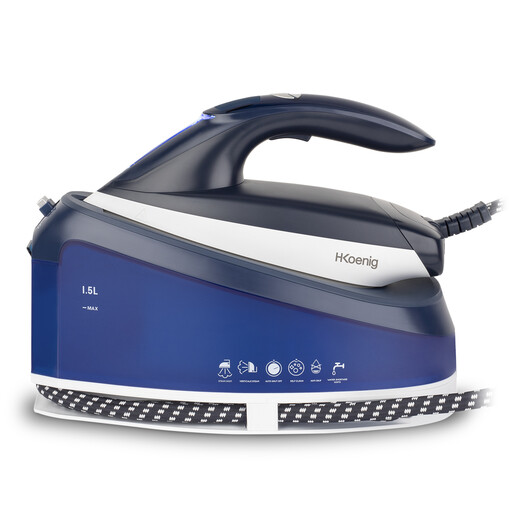
Why this choice suits this profile : This steam generator is designed for households that alternate between horizontal ironing and vertical steaming across several garments.
Its 1.5 L tank avoids repeated refills during a long session. However, its design is less convenient to transport than a handheld steamer.
Advertised power of 2 600 W, pressure of 8 bar, output of 120 g/min and a non-stick ceramic soleplate. Automatic shut-off is listed in the product information.
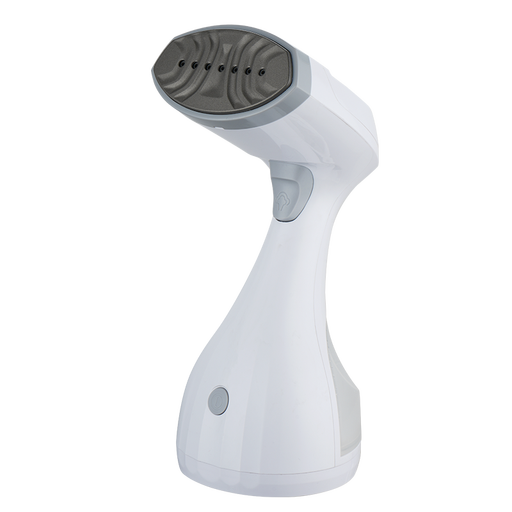
Why this choice suits this profile : Its handheld design can be used at home, in the office or while travelling, both vertically and horizontally.
The 300 ml tank reduces interruptions compared with very compact models. The stated anti-drip system allows use in both positions, provided you follow the instructions.
Advertised power of 1 500 W, heating in 30 seconds or less, two steam settings and a lock button to maintain a continuous flow.
Hang the garment on a stable hanger and check its care label. Gently stretch the fabric, then move the steam from top to bottom without holding the head in the same place for too long. For delicate materials, start with a less visible area and follow the distance recommended by the manufacturer.
Never use the appliance on a person, touch its hot soleplate or unplug it before filling or cleaning it. Wait until it has cooled completely before putting it away, particularly in a heat-resistant cover or bag.
We have put together a complete, real-time updated list of products that fully meet these strict selection criteria and European safety regulations.
Not always. It is highly practical for quickly relaxing creases on a hanger and for garments that are difficult to place on an ironing board. A steam iron remains more precise for shaping a collar, sleeve or sharp crease. A steam generator generally combines substantial steam production with horizontal use, but it is also bulkier.
The cost depends on the electrical power and how long the appliance is used. A 1 100 W appliance used for a few minutes does not necessarily cost more to run each day than a more powerful model used briefly. The volume of water heated, how often you use it and maintenance also affect running costs.
There is no universal lifespan: it depends on how often the appliance is used, water quality, storage conditions and whether the instructions are followed. Keeping the tank clean, descaling the appliance in accordance with the instructions and storing it once cooled down all help preserve the steam output and the various components.