
Livraison le jour même ou le lendemain

Qualité garantie

Débloquez vos offres de bienvenue: Livraison GRATUITE | Jusqu'à -80 % | 30 jours d'essai gratuits à JoyPlus
Téléchargez l'application
A garment steamer lets you quickly freshen up a shirt, dress or suit without having to drag out the ironing board every time. Yet some models disappoint after just a few uses. The problem often lies in the gap between marketing promises and the features that really matter day to day.
A high wattage doesn't guarantee effective de-wrinkling on its own. Power, measured in watts, mainly affects how quickly the appliance heats up and how well it maintains its temperature. To compare two models, also look at the steam flow rate, given in grams per minute, and the pressure, expressed in bars, when it comes to a steam generator.
A 1,100 W appliance can work perfectly well for the occasional shirt. For thicker fabrics or repeated sessions, though, it's better to go for a model with 1,600 W or more. These figures aren't everything: they need to be paired with a suitable water tank and a comfortable grip.
A small tank makes the appliance lighter and easier to carry, but it inevitably reduces how long you can use it. A portable garment steamer with a 70 or 100 ml tank is usually enough for a few items of clothing. If you need to prepare several outfits in a row or tackle the family laundry, choose a garment steamer with a removable tank of 150 to 250 ml, or even a steam generator with a larger reservoir.
A removable tank makes filling and cleaning much easier. After each use, remember to empty any leftover water to reduce mineral build-up.
Steam and the soleplate can reach high temperatures. Check for an automatic shut-off, an anti-drip system and a stable handle. The CE mark, instructions in English and a voltage compatible with the UK mains supply — typically 220-240 V — are also points to verify.
Steaming doesn't mean you can ignore the care label. With silk, viscose, velvet or decorated fabric, start by testing on an inconspicuous area and keep to the recommended distance. An anti-crease steamer is designed to relax wrinkles, but it can't guarantee no marks or colour loss at all.
For everyday use, a continuous flow of around 18 to 25 g/min is generally fine for shirts, T-shirts and lightweight dresses. Models with a higher flow rate or greater pressure are better suited to thick fabrics, curtains and longer steaming sessions.
A steam generator usually consists of a separate base unit and a steam iron. It takes up more space, but offers a larger water supply and power that's better suited to big loads of laundry. Some models also let you steam clothes while they're hanging vertically.
A vertical garment steamer is especially handy for clothes on hangers, jackets and curtains. A portable, foldable model slips more easily into a suitcase or drawer. The weight, cord length and position of the controls all directly affect how comfortable it is to use.
For a travel garment steamer, go for a compact design, fast heating and a tank that's easy to fill. At home, a slightly bulkier appliance can be a sensible choice if you steam several items one after another.
A limescale collector, a self-cleaning function or a clearly explained descaling procedure are particularly useful in hard-water areas. Always check the manufacturer's recommendations about using tap water or filtered water.
The advertised runtime depends on the flow rate you use. A 150 ml removable tank obviously won't give you the same usage time as a 1.5 or 1.8 litre tank. So compare its capacity with your actual laundry volume, rather than relying solely on the power rating.
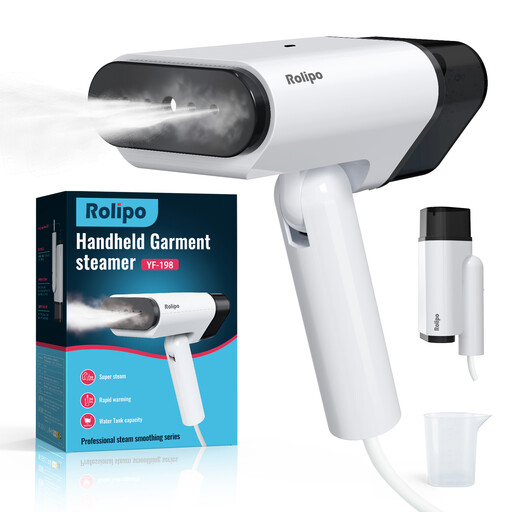
Why this choice suits this profile: Its foldable design and single-button control make it easy to use at home, in the office or on short trips.
The advertised anti-leak tank helps prevent drips during transport. Its size, however, reminds you that it's designed for small sessions rather than large piles of laundry.
Foldable design, single-button control and a compact size that fits easily into a suitcase.
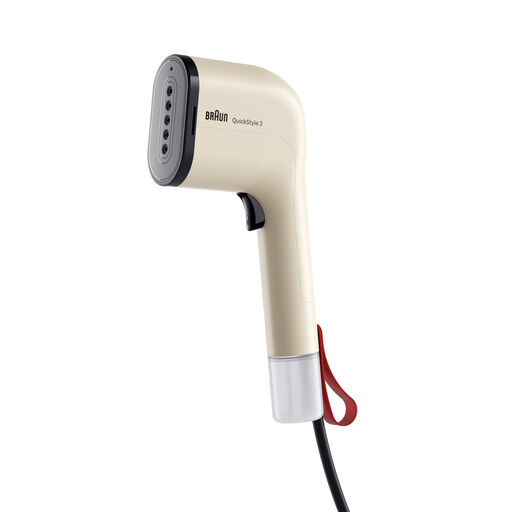
Why this choice suits this profile: Its slim design, claimed weight of 770 g and 30-second heat-up time are perfectly suited to the constraints of a suitcase or limited storage space.
The 70 ml removable tank is easy to fill, but its limited capacity means you'll need to refill it once or more to treat several garments.
Advertised continuous steam flow of 20 g/min, 2 m cord and a heat-resistant storage bag included.
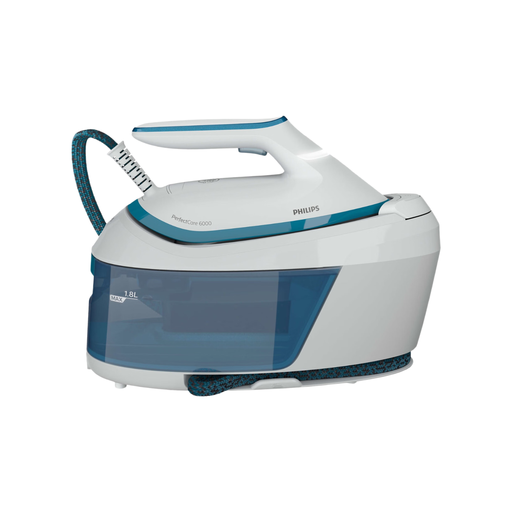
Why this choice suits this profile: This steam generator is aimed at households that iron regularly and want a large water reservoir, with an appliance that can be used both horizontally and vertically.
The 1.8 l removable tank keeps interruptions to a minimum. The Smart Calc-Clean system tells you when to descale, though regular maintenance is still needed.
Advertised pressure of 6.5 bar, continuous steam flow up to 150 g/min and automatic shut-off.
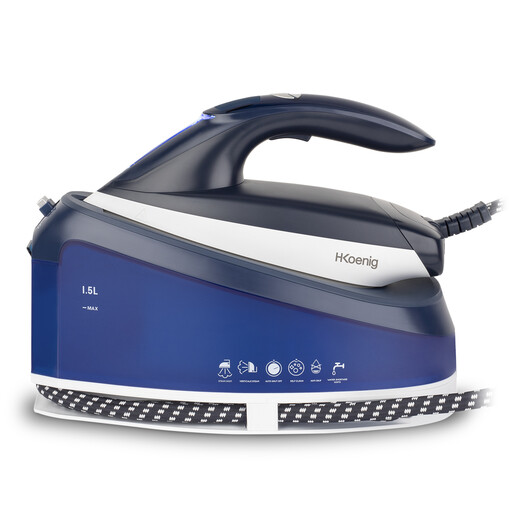
Why this choice suits this profile: Its compact design and 1.5 l tank suit those who switch between traditional ironing, steaming hanging clothes and tackling thick fabrics.
The advertised specs combine 2,600 W, 8 bar and 120 g/min. The vertical function broadens its uses, while the automatic shut-off boosts safety.
Non-stick ceramic soleplate, 1.5 l tank and vertical steam function for clothes and curtains.
No. Check the care label and test the steam on an inconspicuous part of the garment. Very delicate fabrics, prints and certain trims may need a greater distance, or even traditional ironing at a low temperature.
A steamer is mainly used on a hanging garment and is ideal for quick touch-ups. A steam iron, often part of a steam generator system, combines mechanical pressure and soleplate heat to tackle stubborn creases and large volumes of laundry.
The cost depends on the power, heat-up time and how long you actually use the steam. To keep your bills down, only fill the tank with the water you need, unplug the appliance after use and choose a model whose heat-up time matches your routine.