
Livraison le jour même ou le lendemain

Qualité garantie

Débloquez vos offres de bienvenue: Livraison GRATUITE | Jusqu'à -80 % | 30 jours d'essai gratuits à JoyPlus
Téléchargez l'application
A garment steamer lets you freshen up a shirt, dress or curtain without getting out the ironing board. But not all models are in the same league. A compact appliance can quickly run out of steam when faced with a pile of laundry, while a steam generator iron is often overkill for a few occasional touch-ups.
Before buying, there are three pitfalls to avoid:
For a portable garment steamer, continuous steam output is the clearest indicator when comparing the appliance’s ability to relax creases. A model delivering between 18 and 25 g/min will generally be suitable for everyday steaming of shirts, lightweight jackets and dresses.
Appliances designed to handle large volumes of laundry often use a different setup. A steam generator iron has a separate tank and displays pressure in bars. Some of the Philips models featured here offer up to 6 or 6.5 bar, with continuous steam output reaching 120 or 150 g/min. These figures reflect the specifications provided by the manufacturer; on their own, they do not guarantee the same results on every fabric.
Higher power generally speeds up heat-up time, but it can also increase electricity consumption. For occasional touch-ups, an appliance rated at 1,100 to 1,600 W will often be more practical than a 2,400 W steam generator iron.
The right capacity mainly depends on how many garments you need to steam:
A garment steamer with a removable tank is easier to fill and empty. Also check the size of the opening and the recommendations regarding tap water, as these can vary from one brand to another. Never add perfume, oil or any product not specified in the instructions.
A travel steamer should be lightweight, compact and quick enough to heat up. Its weight, cord length and whether it comes with a storage pouch are all worth checking before you buy.
For a steamer designed for delicate clothes, choose a soleplate or technology designed to minimise the risks associated with excessive heat during contact. Always test it on an inconspicuous area, particularly when working with silk, viscose or fabrics featuring printed patterns.
The most useful features include:
Steam reaches a very high temperature. Use the appliance on a stable surface, keep it out of children’s reach and unplug it before filling, cleaning or storing it.
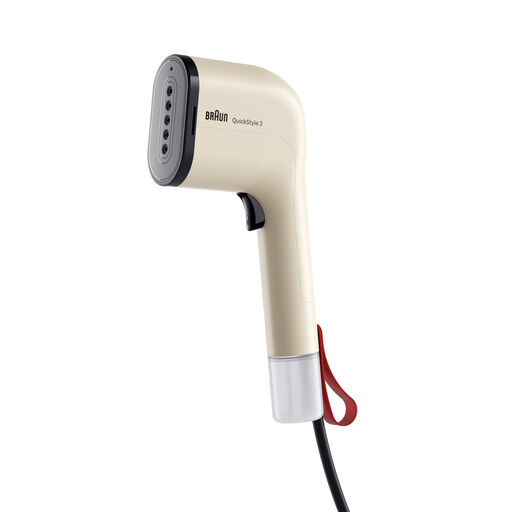
Why this choice suits this profile: Weighing 770 g and heating up in a claimed 30 seconds, it is ideal for quick touch-ups, fits easily in a cupboard and can be taken with you without any hassle.
Its specifications mention a removable 70 ml tank with a wide opening, making it easier to fill despite its limited running time. Please note, however, that automatic shut-off is not listed.
1,100 W, claimed continuous steam output of 20 g/min, 2 m cord and heat-resistant bag included.
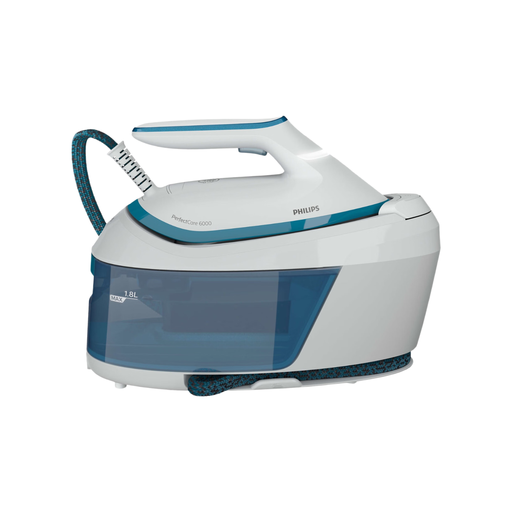
Why this choice suits this profile: This steam generator iron is designed for households that regularly iron shirts, trousers, bed linen or curtains and want to avoid refilling the tank every five minutes.
Its removable 1.8-litre tank avoids the main drawback of smaller models: limited running time. The Smart Calc-Clean system also indicates when descaling is needed, according to the information provided.
2,400 W, claimed pressure of up to 6.5 bar, continuous steam output of up to 150 g/min and automatic shut-off.
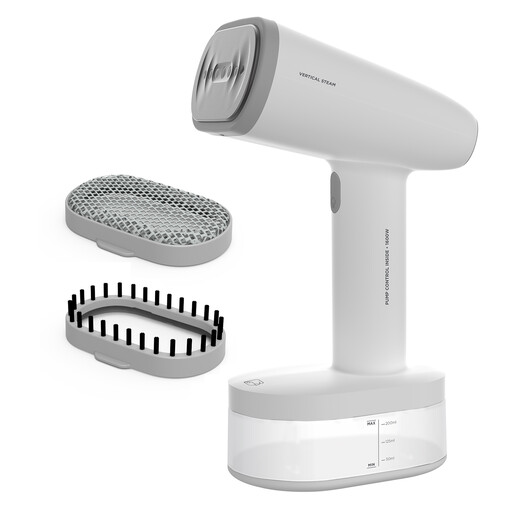
Why this choice suits this profile: Its upright design is ideal for clothes on hangers, curtains and certain upholstery fabrics, without having to get out the ironing board.
The removable 250 ml tank and anti-drip function address two common limitations of compact appliances. For delicate fabrics, however, it is still best to test the appliance on a concealed area first.
1,600 W, claimed steam output of 25 g/min, ceramic soleplate, lockable steam button and self-cleaning cycle.
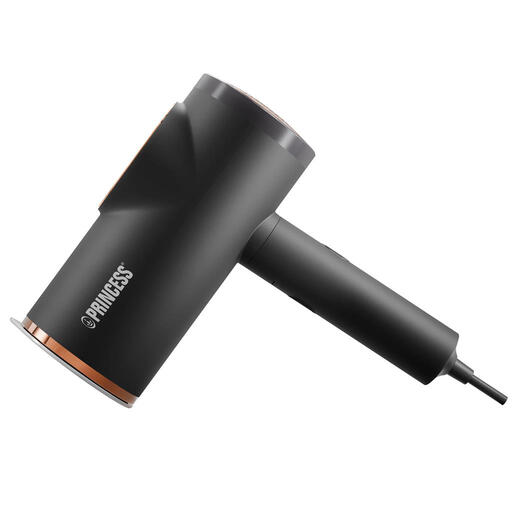
Why this choice suits this profile: Its foldable design and claimed weight of 0.80 kg make it easy to slip into a suitcase or store in a small home.
The foldable design reduces its footprint, while the automatic shut-off improves safety. With its 0.10-litre tank, however, the appliance is intended for shorter sessions.
1,300 W, claimed heat-up time of 30 seconds, lockable steam button and lint-removal function.
We have selected a complete, real-time updated list of products that meet these selection criteria as well as European safety requirements.
Hang the garment on a stable hanger and gently pull the fabric taut. Move the appliance head down along the fabric without holding it in the same place. A thick jacket or a pair of trousers may require several passes.
A vertical garment steamer is particularly convenient for clothes on hangers and curtains. A steam generator iron, or an iron with a steam generator, is better suited to stubborn creases, bed linen and large piles of laundry. In all cases, refer to the garment’s care label and the appliance instructions.
Empty the tank after each use, allow the appliance to cool down, then store it only once it is completely dry. Follow the manufacturer’s descaling procedure: vinegar and scented products are not always permitted.
Not always. A garment steamer is ideal for quick touch-ups, hanging clothes and fabrics that are difficult to lay out on an ironing board. A steam generator iron generally has a larger tank and steam output better suited to longer ironing sessions.
Consumption mainly depends on the appliance’s power and how long it is used. Used for a few minutes, a 1,100 W model will consume less during a session than a 2,400 W steam generator iron. The latter can, however, handle more laundry without interruption. When comparing models, consider the actual usage time rather than just the stated power.
It varies according to how often it is used, water quality and maintenance. Emptying the tank, following the descaling instructions and avoiding unauthorised additives all help preserve the steam circuit. Before buying, also check the availability of wear parts and the warranty terms.