
Livraison le jour même ou le lendemain

Qualité garantie

Débloquez vos offres de bienvenue: Livraison GRATUITE | Jusqu'à -80 % | 30 jours d'essai gratuits à JoyPlus
Téléchargez l'application
A creased shirt just before an appointment, a dress marked after travelling in a suitcase or curtains that are impossible to iron properly: a garment steamer can deal with these everyday frustrations without having to get out the ironing board. However, you still need to choose a model suited to your needs. Steam output, tank capacity, weight and safety are just some of the technical details worth examining before you buy.
Measured in watts, power mainly indicates how quickly the appliance can heat up. It does not determine the amount of steam produced. When comparing two models, also look at the continuous steam output, measured in grams per minute.
An output of 18 to 20 g/min is generally suitable for quick touch-ups and lightweight clothing. For jackets, curtains or thicker fabrics, a 25 g/min model will provide a stronger flow. However, this figure should be considered alongside the design of the soleplate, the temperature reached and the consistency of the steam flow.
A small tank makes the appliance more compact, but it may mean having to refill it several times when steaming a number of garments. A capacity of 70 ml is enough for a few touch-ups or for a travel steamer. For longer periods of household use, it is better to choose a model with a capacity of 150 to 300 ml.
Choose a removable tank with a sufficiently wide opening. Filling, emptying and cleaning will all be easier. Also remember to empty any remaining water after each use to help limit mineral deposits.
Steam reaches a high temperature. Always use the appliance in accordance with its instructions, keeping it away from children, your face and electrical appliances. Features such as automatic shut-off, anti-drip protection and low-water protection can help reduce certain risks, but they do not replace basic safety precautions.
Also check whether the steamer is designed solely for vertical use or whether it can also be used horizontally. This matters when freshening cushions, laundry laid flat or certain upholstery fabrics.
A heat-up time of 30 to 45 seconds is ideal for a quick touch-up in the morning or at the office. The continuous steam output should remain consistent enough to avoid going over the same area several times. If you are looking for a powerful garment steamer, prioritise a sensible balance between power, steam output and actual operating time.
A lightweight appliance is more comfortable to hold, particularly when steaming long dresses and curtains. Models weighing less than one kilogram can easily be stored in a drawer or suitcase. Conversely, a larger appliance will often have a more generous tank and provide longer operating time.
Cord length also plays a part. A 1.8 to 2.5 m cable makes it easier to use the appliance in front of a wardrobe or when the socket is a little further away.
A ceramic soleplate or one with a non-stick coating can help it glide more smoothly over fabric. A fabric brush helps support the fibres, while a self-cleaning function makes maintenance easier. However, these features do not guarantee the same results on every material: always test the appliance on an inconspicuous area and follow the care-label instructions.
An anti-crease steamer is primarily designed to relax creases and refresh the appearance of fabric. It cannot always replace a traditional iron when you need to create perfectly sharp creases on a shirt or pair of trousers.
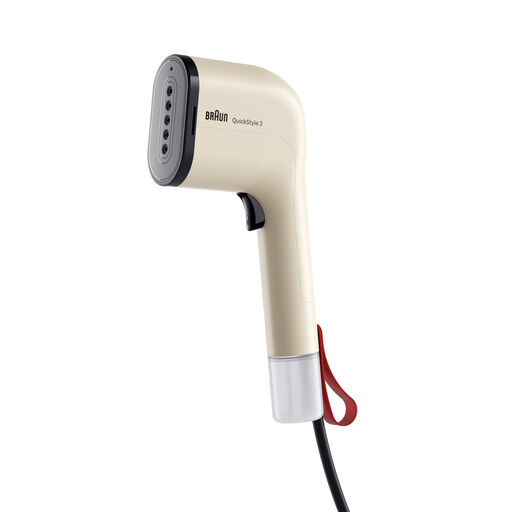
Why this choice suits this profile : Slim and lightweight, with a listed weight of 770 g, this model is ideal for students, smaller spaces and first-time buyers. It can be stored easily in a drawer or bag.
Its 70 ml removable tank has a wide opening, and the listed heat-up time is no more than 30 seconds. It is nevertheless intended for shorter sessions.
Listed continuous output of 20 g/min, 2 m cord and a heat-resistant pouch included.
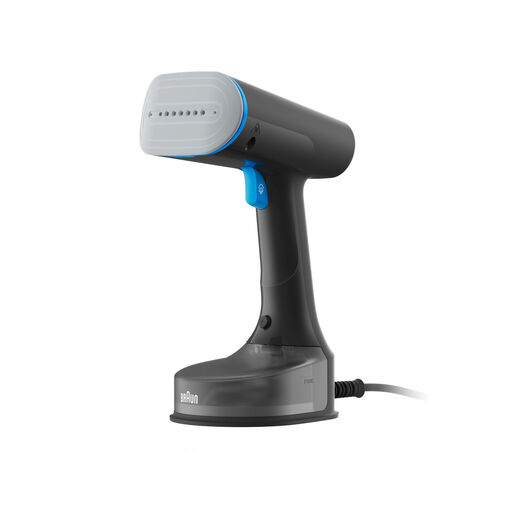
Why this choice suits this profile : This model is designed for those looking for a versatile handheld appliance that can steam both hanging clothes and laundry laid flat.
The anti-drip function helps prevent water marks, while automatic shut-off enhances safety. Its 150 ml capacity should nevertheless be considered in relation to the amount of laundry you need to treat.
Listed output of 25 g/min, 2.5 m cord and suitable for both vertical and horizontal use.
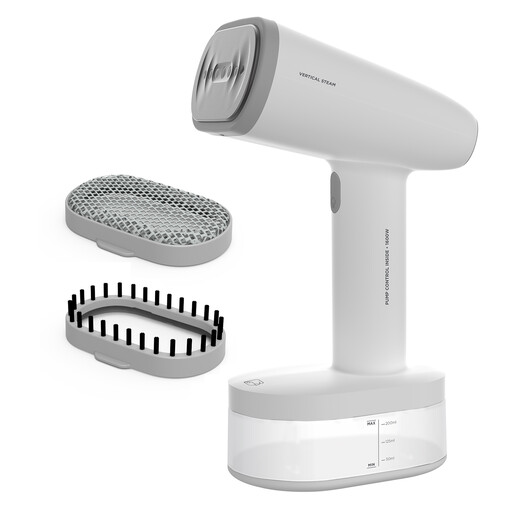
Why this choice suits this profile : With its 250 ml tank and listed output of 25 g/min, it is suitable for steaming several garments in a row, as well as suits, curtains and certain upholstery fabrics.
The anti-drip function reduces the risk of water marks, while the self-cleaning function makes it easier to remove mineral deposits.
Listed power of 1 600 W, steam lock and a stated operating time of 15 to 20 minutes.
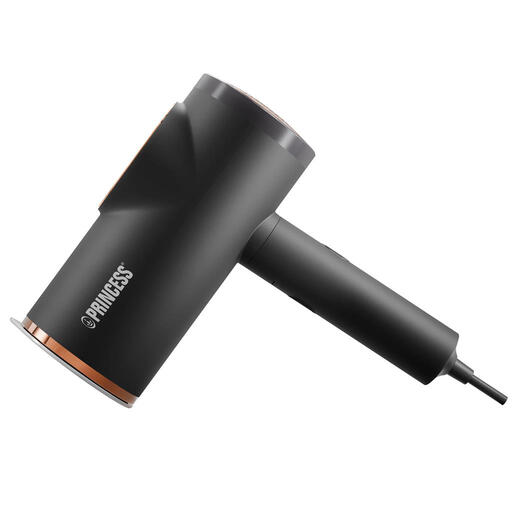
Why this choice suits this profile : Its foldable design and listed weight of 0.80 kg make it particularly suitable for suitcases, smaller homes and occasional touch-ups.
The 100 ml removable tank and automatic shut-off meet the demands of compact storage and safety. Its operating time remains suited to smaller batches.
Listed heat-up time of 30 seconds, lockable steam button and integrated lint-removal accessory.
We have put together a complete, real-time updated list of products that meet these demanding selection criteria and European safety standards.
For an even result, hang the garment on a sturdy hanger. Gently stretch the fabric with one hand and move the appliance from top to bottom without holding the steam jet in the same place. When working with delicate materials, start on an inconspicuous area and follow the distance recommended in the instructions.
Do not add perfume, essential oils or cleaning products to the tank. In areas with hard water, follow the manufacturer’s recommendations regarding the use of tap water or demineralised water. Always unplug the appliance before filling, emptying or cleaning it.
It can quickly remove creases from hanging clothes and some bulky textiles. It is a practical solution for touch-ups, but a traditional iron remains more effective for creating precise creases or treating a large quantity of laundry laid flat.
Consumption depends on the appliance’s power and how long it is used. A 1 100 W model used for five minutes theoretically consumes around 0.092 kWh. To calculate the corresponding cost, multiply this consumption by the tariff specified in your electricity contract. The heating phase, rather than the tank volume, accounts for most of the consumption.
It depends on how often it is used, the water quality and how well it is maintained. Emptying the tank after each session, cleaning the appliance in accordance with the instructions and avoiding additives will help preserve its performance. Before placing your order, also check whether a manufacturer’s warranty is available and how long it lasts, as this information is usually provided on the product page.