
Livraison le jour même ou le lendemain

Qualité garantie

Débloquez vos offres de bienvenue: Livraison GRATUITE | Jusqu'à -80 % | 30 jours d'essai gratuits à JoyPlus
Téléchargez l'application
By the Joybuy expert teamPublished: August 26, 2026
A flawless outfit in minutes, without pulling out the ironing board? It’s a tempting promise. The handheld garment steamer has become the essential accessory for express de-wrinkling in our daily lives. But beware of disappointment: behind the marketing claims often lie devices that leak, lack power, or whose water tanks empty in the blink of an eye.
To avoid buyer's remorse, here are the three main pitfalls to watch out for before you make a decision.
To make the right choice, ignore the advertising slogans and focus on objective data. Here are the three technical criteria to scrutinise to find a powerful and truly reliable garment steamer.
Wattage (W) mainly affects the heat-up time. The decisive criterion for vertical steaming effectiveness is the steam flow rate, measured in grams per minute (g/min).
The ideal steamer therefore combines sufficient power for a record-fast heat-up time (under 45 seconds) with a steam flow that is both constant and generous.
The autonomy of your device depends on the size of its water tank and its consumption.
Also, check that the tank is easy to remove, fill, and clean. A well-engineered pump system and quality seals are your best guarantee against leaks.
Comfort is paramount for a device you hold at arm's length. Consider the following:
To help you, we've selected a few models that excel on the criteria we've just discussed, each tailored to a specific user profile.
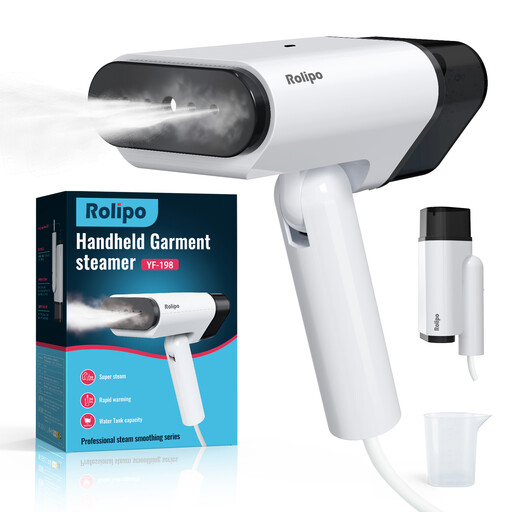
Why it's right for this user: Built for travel, its key strength is its compactness. It slips into a carry-on suitcase for a perfectly crisp shirt or dress just before an important meeting.
This model doesn't chase raw power; it focuses entirely on practicality. Its foldable design is made for travel, avoiding the bulk of more powerful but less portable home devices.
Unique foldable design for maximum space-saving. Integrated anti-leak system for peace of mind on the go.
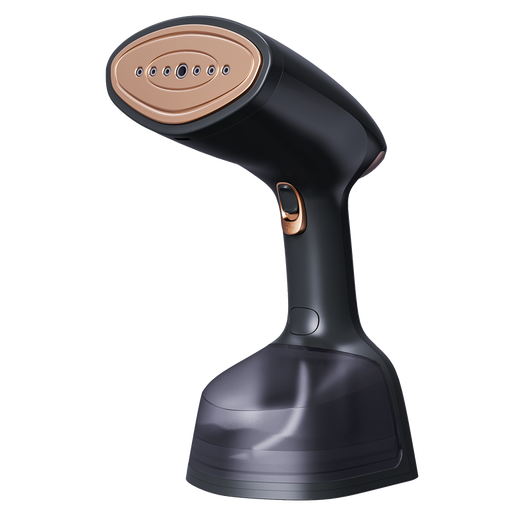
Why it's right for this user: For those who steam multiple items daily, from delicate shirts to winter coats. Its high power and steam output allow you to quickly treat several garments without losing effectiveness.
Here, the 1800W of power isn't just a number on the box. It translates into a genuinely powerful and adjustable steam output (up to 28±4 g/min), which tackles stubborn creases where others fail.
Two steam levels to adapt to different fabrics. Ceramic plate for a smooth glide and a better finish.
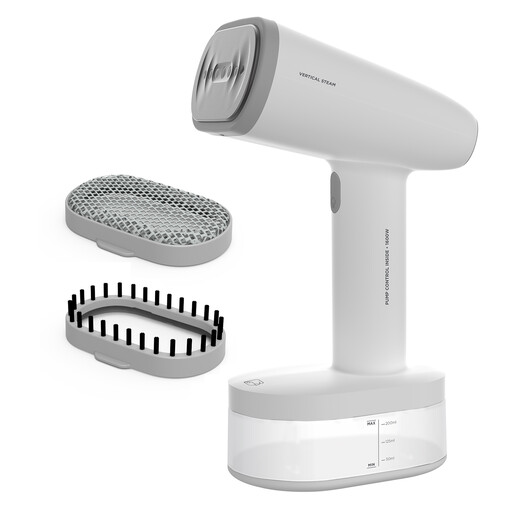
Why it's right for this user: This is the Swiss Army knife of steaming, an excellent choice for regular family use. It offers great performance (1600W, 25 g/min) and practical features that simplify maintenance.
It tackles leaks and limescale head-on with its anti-drip system and self-cleaning function. These features ensure better longevity and hassle-free use.
Self-cleaning function to maintain performance. Continuous steam flow of 25 g/min, an excellent balance for most textiles.
Explore our full selection of tested and approved products that meet our performance criteria and European safety standards.
Yes, most steamers are designed to work with tap water. However, if you live in an area with very hard water, it's safer to use a 50/50 mix of tap water and demineralised water. This will limit limescale buildup and extend the life of your appliance. Avoid adding perfumes or essential oils directly into the tank unless explicitly authorised by the manufacturer.
It all depends on your expectations and your wardrobe. For refreshing clothes, removing wrinkles from delicate fabrics (silk, velvet), or for last-minute touch-ups, a vertical steamer is often more practical and faster. However, for achieving crisp creases on thick cotton shirts or suit trousers, a traditional iron remains unbeatable. The steamer is an excellent supplement, but not always a complete replacement.
It's simple, but essential. Always empty the water tank after each use to prevent stagnation and bacterial growth. Descale it regularly, about every 2 to 3 months depending on your usage frequency and water hardness. Some models have a self-cleaning function that greatly simplifies this process. Regular descaling ensures a constant steam flow and prevents limescale residue from spraying onto your clothes.