
Livraison le jour même ou le lendemain

Qualité garantie

Débloquez vos offres de bienvenue: Livraison GRATUITE | Jusqu'à -80 % | 30 jours d'essai gratuits à JoyPlus
Téléchargez l'application
Pruning a rose bush, shortening a fruit tree branch or maintaining a hedge cannot all be done with the same tool. Yet many purchases are still based on handle length or a simple “high resistance” claim. To avoid paying more than necessary, it is better to compare cutting capacity, blade type and comfort in the hand.
This guide reviews the essential criteria for choosing garden secateurs, loppers, a pruning saw or any other pruning tool suited to typical conditions in France.
A cutting capacity of 25 or 30 mm does not mean that the tool will handle every branch of that diameter. Green wood, dry twigs and knotty branches put different demands on the blade. Secateurs designed for flexible stems may lose precision when faced with hard wood.
Always check the maximum stated diameter, then leave some margin for dry or irregular branches. For larger sections, loppers with long handles distribute effort more effectively than small secateurs.
The mention of SK5 steel blades is useful, but it is not enough to assess the tool as a whole. Also examine the coating, cutting geometry, spring, locking system and whether the blade can be maintained or replaced.
A corrosion-resistant coating does not remove the need to clean off sap and moisture after every use. Without proper maintenance, even a durable blade can lose its smooth action and eventually develop rust marks.
A long handle increases leverage, but can quickly become awkward in a dense flower bed. Conversely, compact secateurs offer greater precision, at the cost of more effort when cutting thicker branches. For fruit trees or branches located high up, a telescopic pruner can often eliminate the need for a ladder, provided the locking mechanism is used correctly.
Bypass secateurs use two blades that pass each other. They are generally suitable for green stems, roses, shrubs and small branches. When the diameter remains within the recommended limit, they produce a clean, precise cut.
On anvil models, the branch rests against a fixed surface. This design can be useful for drier wood, but is less suitable for delicate stems. For pruning roses and shrubs, bypass secateurs are usually the most versatile choice.
Handle length affects leverage, but also the overall weight and balance. A tool that is too heavy can quickly cause shoulder fatigue during a long pruning session.
After pruning, remove debris, wipe the blades and occasionally apply a thin layer of oil to the pivot. Then store the tool in a dry place with the lock closed. Wearing gloves and safety goggles is recommended, particularly when dealing with branches under tension or working at height.
Do not cut wire or any material harder than specified in the product details. Before each use, check the tightness, spring, locking mechanism and overall condition of the blade.
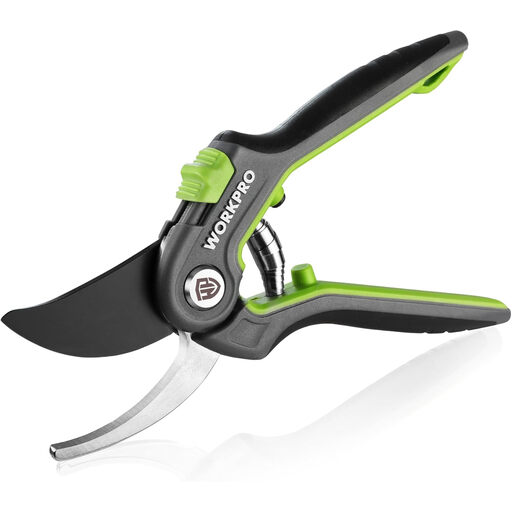
Why this choice suits this profile : These 210 mm manual secateurs are suitable for regular work on roses, shrubs, young trees and harvesting. Their stated capacity reaches 19 mm on green branches.
The 19 mm capacity and bypass system make the tool’s suitable uses clearer, rather than assuming that small secateurs can cut every branch.
Main SK5 steel blade, automatic opening spring, non-slip handles and safety lock.
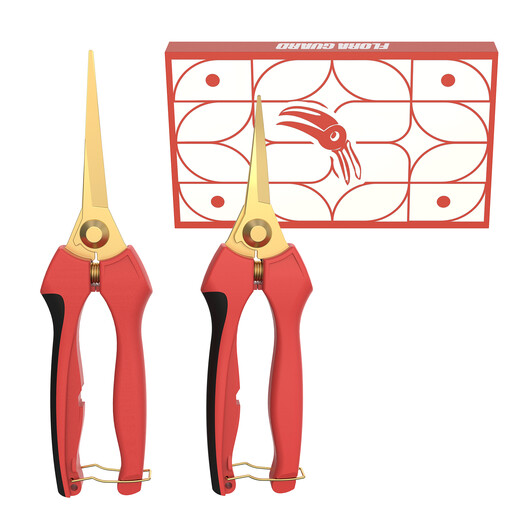
Why this choice suits this profile : This set is aimed at bonsai enthusiasts, flower arrangers and precision pruners who want two blade shapes for different tasks.
Having both a straight blade and a curved blade means you do not have to rely on a single tool for both delicate tasks and more demanding cuts.
Two secateurs made from titanium-coated stainless steel, with a stated hardness of HRC54 ± 2 and a stated capacity of up to 1.25 cm.
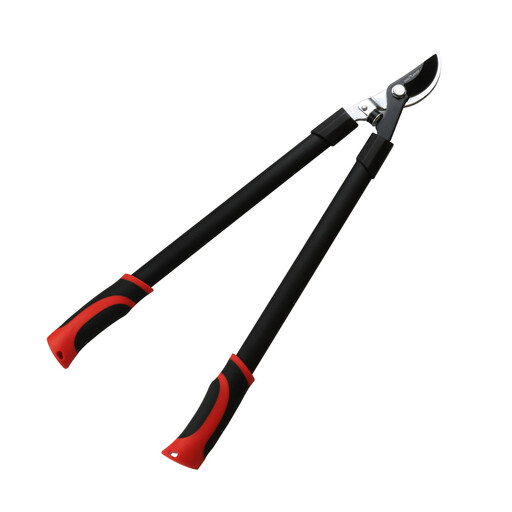
Why this choice suits this profile : With 66 cm handles and a stated capacity of 3.2 cm, these loppers are designed for maintaining bushes, hedges and thicker branches.
The handle length and bypass design are clearly intended for cuts requiring greater leverage, within the stated diameter limit.
SK5 carbon steel blade, stated Ilaflon anti-rust coating, reinforced metal tubes and polymer handles.
We have put together a comprehensive, regularly updated selection of products that meet these demanding criteria and European safety standards.
Secateurs are compact and designed for small stems and thin branches. Loppers have longer handles, which increase leverage while keeping your hands further away from the cutting area. They are generally better suited to thicker branches, while secateurs remain easier to handle and more precise in flower beds.
Clean the blade after every use, remove sap, dry the tool thoroughly and lightly lubricate the pivot. Sharpen or replace the blade when it starts to catch. Avoid cuts beyond the recommended capacity, wire and storing the tool in a damp shed.
Its running cost depends mainly on the battery, charger and replacement parts. Before buying, check the stated battery life, charging time and whether a compatible battery or blade is available. For just a few pruning sessions a year, manual tools are often simpler and less demanding to maintain.