
Livraison le jour même ou le lendemain

Qualité garantie

Débloquez vos offres de bienvenue: Livraison GRATUITE | Jusqu'à -80 % | 30 jours d'essai gratuits à JoyPlus
Téléchargez l'application
A balcony, patio or small garden can easily accommodate flowers, herbs and even a few vegetables, provided you choose equipment suited to the available space. Gardening accessories for balconies and vegetable gardens should not be chosen based on appearance alone: their dimensions, drainage system, resistance to the weather and ease of maintenance all have a direct impact on everyday convenience.
Before placing your order, it is worth anticipating a few common pitfalls. A product presented as versatile may turn out to be too bulky for a narrow balcony. A poorly drained container, meanwhile, may retain water after a shower. As for seedling protection, it loses much of its usefulness if it has to be removed completely whenever you need to water or ventilate the plants.
A 50 cm planter can easily fit on a railing or windowsill. However, its width and height should be checked just as carefully. On a balcony, measure the intended space precisely and consider door openings, room to move around and the weight of compost once saturated with water.
For a mini tunnel greenhouse, length is not everything. At 45 cm high, the Tenax Early Tunnel is suitable for young vegetables and low-growing seedlings, but it will not replace a structure designed for plants that are already well developed.
Moulded plastic, polyethylene and recycled polymers do not necessarily offer the same performance. Any stated resistance to UV rays or frost should be confirmed in the technical specifications and never means you can disregard the manufacturer’s recommendations.
Containers left outdoors also need to be cleaned regularly. In winter, stagnant water in a pot or planter can place additional pressure on the material when it freezes.
A vegetable growing tunnel protects young shoots from wind, rain and temperature fluctuations. However, leaving it permanently closed can prevent air from circulating properly. Models that retract or are easy to open make watering and ventilation much simpler.
Stability is just as important on a balcony. A full planter should stand on a flat, sturdy surface. Similarly, a tunnel must be securely fixed to the ground to prevent it from shifting in the first strong gust of wind.
When creating a balcony vegetable garden, choose containers suited to the width of the support and the depth required by the roots. A 50 cm rectangular planter can hold several flowers or herbs while remaining easier to move than a large-capacity trough.
For seedlings, always check three dimensions: length, width and height. A 0.6 × 3 m tunnel covers a narrow, elongated growing area. This configuration is well suited to rows of young vegetables, but it requires enough free space for installation and access at both ends.
Transparent polyethylene lets light through while providing light protection around the plants. Metal hoops reinforce the structure, but the whole unit must be securely fixed and kept away from flames and significant sources of heat.
When choosing a container for outdoor plants, compare the material, weight and manufacturer’s information. A frost- and UV-resistant pot can be left outside throughout the seasons, provided you follow the conditions of use and avoid impacts.
Before filling a planter, check that it has proper drainage holes. Without adequate drainage, water may accumulate in the growing medium. A flower pot with water reservoir works differently: the reservoir is separate from the planting volume. It can extend the time between watering, but you still need to monitor the moisture level of the compost.
In all cases, adapt watering to the weather, exposure and the plant’s needs. A south-facing balcony will generally dry out much faster than a shaded space.
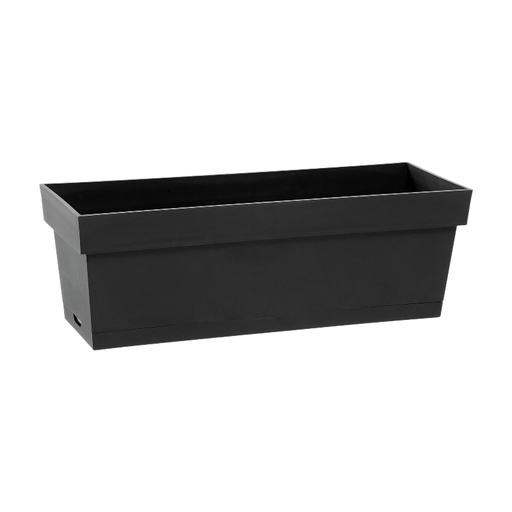
Why this choice suits this profile : Measuring 50 × 18 × 16.7 cm, this planter is ideal for getting started with flowers, herbs or a few small plants without taking over the entire balcony. Its moulded plastic construction and weight of 0.68 kg make it easy to install and move.
Its clearly stated dimensions reduce the risk of choosing a trough that is too bulky. However, check for drainage holes before planting and place the planter on a stable surface.
50 cm rectangular format, anthracite grey finish, lightweight moulded plastic and stated manufacture in France.
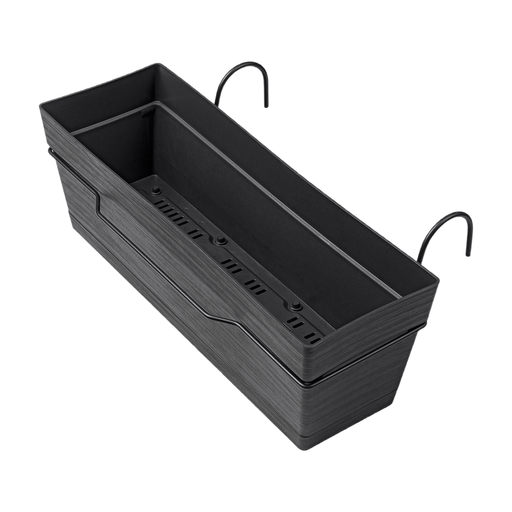
Why this choice suits this profile : This 49 cm planter with water reservoir is designed for those looking for a more functional container for a balcony, patio or indoor space. Its construction from recycled and recyclable materials may also appeal to shoppers seeking a more responsible purchase.
The water reservoir is clearly mentioned in the product description. This helps you avoid confusing a standard planter with a model featuring a separate water compartment.
Water reservoir, anthracite finish, recycled and recyclable materials, stated resistance to frost and UV rays.
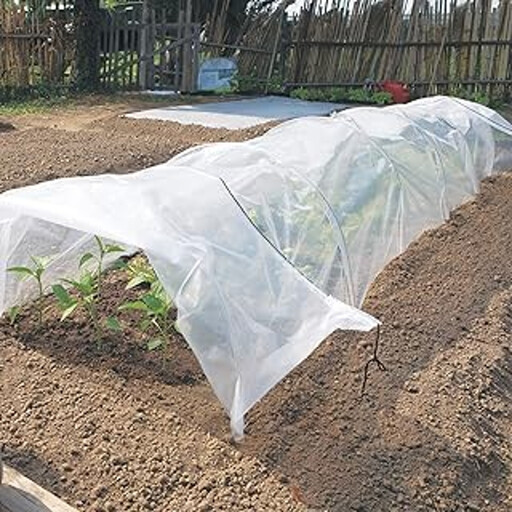
Why this choice suits this profile : This tunnel is designed for gardeners who want to protect seedlings or start growing young vegetables earlier in the season. Its 0.6 × 3 m structure covers a narrow row and can be opened to make watering and ventilation easier.
The retractable structure makes ventilation and access to the plants easier. There is therefore no need to remove the protection completely every time you tend to them.
Transparent polyethylene film, metal hoops, integrated fasteners, 3 m length and reusable seasonal storage.
We have selected a complete, real-time-updated range of products that meet these demanding criteria as well as European safety standards.
To enjoy your equipment without hassle:
These simple habits make gardening easy and help prevent equipment from needing to be replaced because of poor installation.
Start by measuring the depth of the windowsill or support. A 50 cm rectangular planter suits many balconies, but also allow enough room to move around and reach the plants easily. Remember to factor in the weight of wet compost before installation.
It is better to ventilate it regularly, especially when the temperature rises. The Tenax tunnel retracts to make watering, light exposure and air circulation easier. In windy weather, also check that the fixings are securely in place.
The budget depends on the plants you choose, compost, seeds and how often they need replacing. Reusable containers, a water reservoir and protection suited to the season can reduce the amount of maintenance required. However, no equipment replaces regular watering, cleaning and monitoring of the plants.