
Livraison le jour même ou le lendemain

Qualité garantie

Débloquez vos offres de bienvenue: Livraison GRATUITE | Jusqu'à -80 % | 30 jours d'essai gratuits à JoyPlus
Téléchargez l'application
The thought of a garden trampoline immediately brings to mind children's laughter and future family memories. However, the buying process can quickly become a headache. Faced with a jungle of options, it's easy to fall into traps that turn this fun investment into a source of frustration, or even danger. As a Product Recommendation Manager at Joybuy, my mission is to help you make a clear choice.
To ensure you don't regret your purchase, here are the 3 classic mistakes to avoid:
To make the right choice, price and size aren't the whole story, far from it. Instead, focus on the technical details that make all the difference in terms of safety and durability for your outdoor kids' trampoline.
Safety is the non-negotiable criterion. A safe trampoline relies on two key elements:
The lifespan of your trampoline is directly linked to the quality of its structure.
Before you buy a trampoline, take out your tape measure and assess the space you have available. Don't forget to allow for a clearance zone of at least 2 meters all around and 7 meters in height, free of any obstacles (trees, walls, fences, etc.).
Rather than an endless catalog, we've selected a few models that meet specific needs, strictly applying the safety and durability criteria we've just covered.
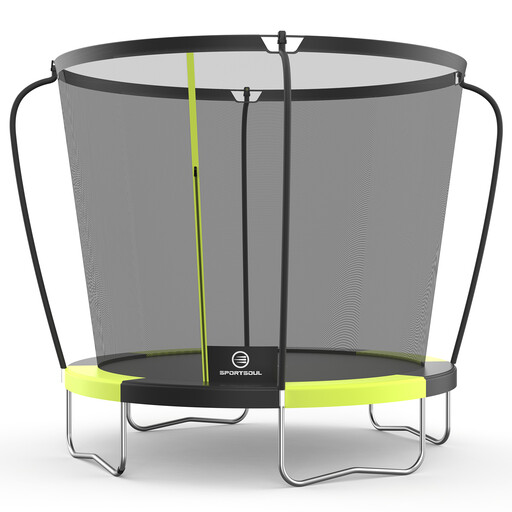
Why we chose it: At 2.44m (8ft) in diameter, it fits easily into smaller gardens. It's an excellent first trampoline for a family with young children, offering a safe play space without sacrificing the entire lawn.
This model is equipped with an internal safety net that completely isolates the jumping area from the 56 steel springs. A direct answer to the main danger of entry-level kits.
Its assembly system with patented T-joints promises a one-hour setup for two people. A major selling point for busy parents.
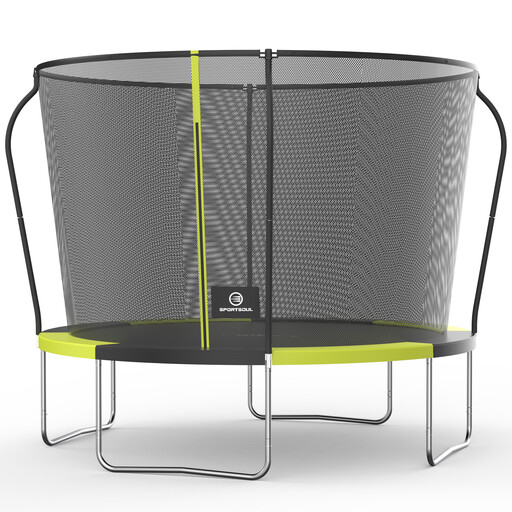
Why we chose it: With its 3.05m (10ft) diameter, it represents the perfect compromise for long-term family use. It offers a comfortable jumping surface for growing kids without requiring a massive lawn.
It addresses the problem of unstable frames with a solid 4-leg structure and 64 springs. This design ensures excellent stability and well-distributed tension for a quality bounce.
Its safety net features a patented steel top ring. The manufacturer's promise: seasonal disassembly and reassembly in 2 minutes with two people. A real bonus for winter storage.
A trampoline is a sure bet, but there are countless other ways to turn your garden into a playground. Discover our complete selection of outdoor games.
It all depends on the quality of the materials and the maintenance. A good galvanized steel frame can last 5 to 10 years, sometimes longer. However, wear-and-tear parts like the jumping mat, net, and protection pad are more fragile. Expect to replace them every 2 to 5 years, depending on sun exposure and frequency of use. The secret to longevity? A thorough inspection before each jumping session.
Yes, it is very strongly recommended. The weight of snow, frost, and strong winds are your trampoline's enemies: they can damage the mat, the springs, and even bend the frame. At a minimum, disassemble the net, pad, and jumping mat to store them in a dry place. The good news: some models are designed to make this seasonal disassembly easier.
Yes, provided you follow a few golden rules. The first is to choose a safe trampoline with a quality internal net and a pad that perfectly covers the springs. Next, it's imperative to establish clear rules (and stick to them!): only one jumper at a time, no dangerous stunts, and always under adult supervision. Finally, make sure to install it on a flat, stable surface, far from any obstacles.