
Livraison le jour même ou le lendemain

Qualité garantie

Débloquez vos offres de bienvenue: Livraison GRATUITE | Jusqu'à -80 % | 30 jours d'essai gratuits à JoyPlus
Téléchargez l'application
With the return of sunny days comes the desire to have lunch on the patio or dinner in the garden. While the idea is appealing, choosing the perfect garden table can often be a daunting task. The gap between manufacturer promises and real-world performance can be wide, and an impulse buy can quickly lead to disappointment.
To ensure you don't ruin your summer (or your budget), let's review the three most common pitfalls to avoid:
Fortunately, by asking the right questions, it's simple to avoid these pitfalls and make the right choice.
Beyond design, three points are crucial for a successful purchase: material durability, everyday practicality, and rock-solid stability.
The material influences not only the style but also the maintenance and longevity of your table.
Your daily routine and the size of your outdoor space will naturally guide you to the ideal model.
Stability is a non-negotiable safety criterion. Pay close attention to the leg structure and locking system, especially on folding models. A wide base or a cross-brace structure are good indicators of balance. For a camping table, light weight must be paired with a clever design to ensure a stable footing, even on uneven ground.
To put theory into practice, here are a few models that check all the right boxes, each meeting a specific need while avoiding the classic pitfalls.
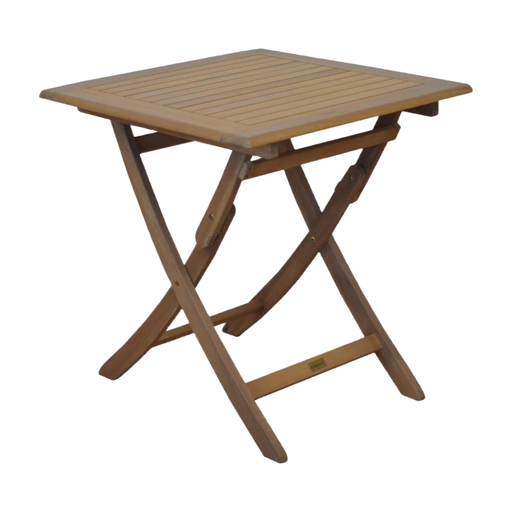
Why it stands out: Its 70 cm square format is perfectly sized for two people without eating up space. It's the ideal solution for meals for two on a balcony.
It's the perfect answer to limited space. Its folding system reduces it to a thickness of just 6 cm. Once folded, it slides in anywhere: against a wall, behind a door, or in a small shed.
Made from FSC certified acacia wood, it combines a warm aesthetic with sustainable forest management. Acacia is also a naturally durable wood species.
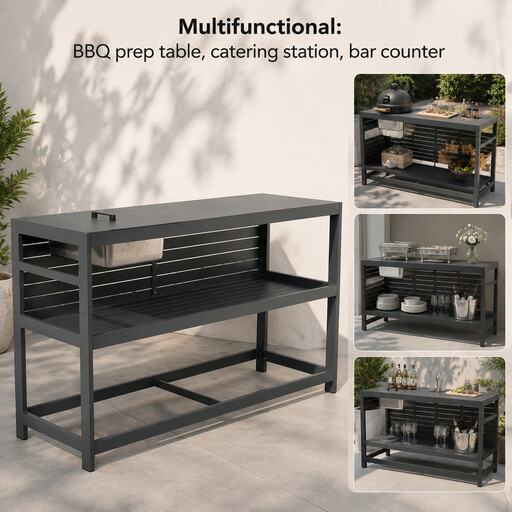
Why it stands out: Much more than a table, this is a true workstation that makes outdoor dining easier. Perfect as a bar counter, prep space for the barbecue, or a side buffet.
Its 100% aluminum structure gives it rock-solid stability and total resistance to rust. Say goodbye to the instability and corrosion that plague entry-level models.
Its thoughtful features make the difference: two large shelves to keep everything within reach and an integrated stainless steel ice bucket for consistently chilled drinks.
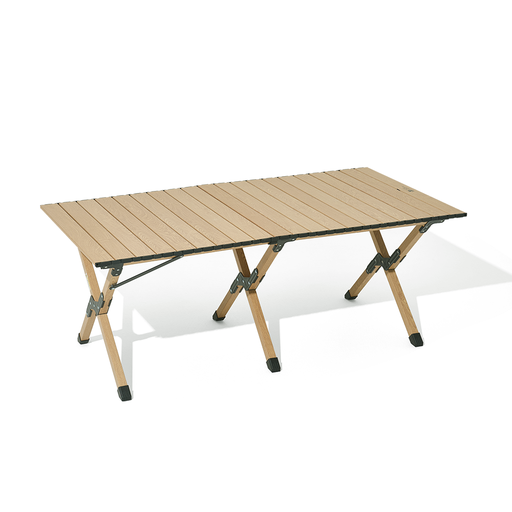
Why it stands out: Built for adventure, it's ideal for picnics, camping, or as a portable side table. Its roll-up top and folding frame pack away in a flash into its compact carrying bag.
It solves the typical instability problem of portable tables. Its cross-brace (X-cross) structure creates a rigid triangular support, while its non-slip feet ensure a firm grip on the ground.
Its feather-light weight is its best feature. The large model weighs in at only 4.9 kg, making it easy to transport without sacrificing a generous usable surface area once unfolded.
Discover our complete selection of editor-approved products, all of which meet our standards for quality, durability, and safety.
It all depends on the wood species. For a wood like acacia, applying an oil for exotic woods once or twice a year is good practice. It nourishes the wood, protects it from moisture and stains, and revives its colour. In winter, it's best to store it in a dry, ventilated area or, failing that, protect it with a breathable cover.
Aluminum is sturdy, but not indestructible. It can be scratched by contact with metal or abrasive objects. Regarding heat, avoid placing a dish straight from the barbecue directly on the tabletop: extreme heat could damage the paint or even warp the metal. The smart move: always use a trivet.
A folding table collapses onto itself using hinges to become flat and compact, with no detached parts. A demountable table, typical for camping, consists of several elements (top, legs, crossbars) that need to be assembled. It is often more compact once packed in its bag but requires a few minutes of assembly and disassembly for each use.