
Livraison le jour même ou le lendemain

Qualité garantie

Débloquez vos offres de bienvenue: Livraison GRATUITE | Jusqu'à -80 % | 30 jours d'essai gratuits à JoyPlus
Téléchargez l'application
Choosing a garden table might seem simple, but the process is often a minefield. Between promises of "total weather resistance" and designs that sacrifice practicality for aesthetics, it's easy to make a choice you'll later regret. The goal isn't just to find a pretty table, but a centrepiece that will last for years and perfectly suit both your space and your lifestyle.
Before you fall for a model in a photo, let's review the most common pitfalls and the essential criteria for making an informed choice.
Enthusiasm for outdoor design can lead to hasty decisions. Here are three common mistakes that turn the dream of sunny lunches into a daily frustration.
To avoid these traps, focus on objective features. Here are the two non-negotiable parameters to check before any purchase.
The material defines your table's durability, maintenance, and style.
The comfort and usability of your table directly depend on its dimensions and shape.
We have scrutinised several models based on these criteria of durability, practicality, and design. Here are some options that meet specific needs.
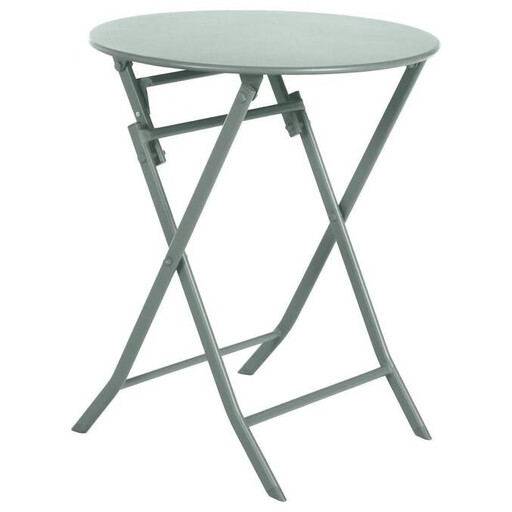
Why it's a great choice: Perfect for balconies and small patios, this two-person model combines a compact footprint with practicality. Its round shape and clean design fit anywhere without overwhelming the space.
It directly addresses the "footprint" trap with its folding function, which allows for ultra-compact vertical storage. The steel's epoxy coating is clearly presented as a basic protection, with the recommendation to store it indoors for optimal longevity.
Its folding garden table feature is its greatest asset, offering maximum flexibility. No assembly is required; it's ready to use right out of the box.
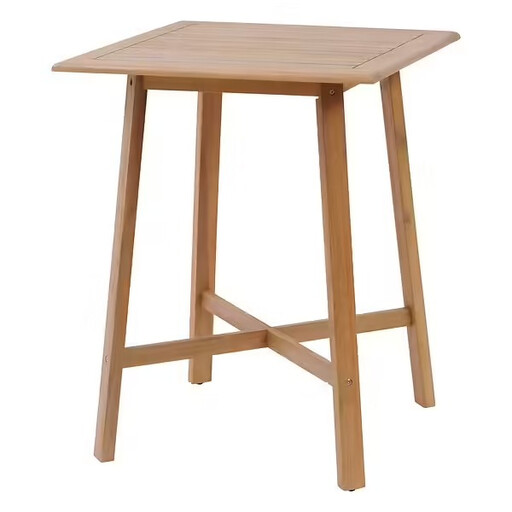
Why it's a great choice: This garden bar table is perfect for creating a relaxed bar area on a terrace. Its height and square format (80x80 cm) for 4 people encourage conversation and informal get-togethers.
It avoids the instability trap with a simple and robust solid wood structure. It also doesn't fall for the "zero-maintenance" myth: it's clearly stated that acacia, while durable, requires a protective oil to maintain its appearance and longevity.
The FSC-certified acacia wood guarantees responsible sourcing and excellent density. Its bar height creates a modern and convivial atmosphere, a refreshing change from a traditional table.
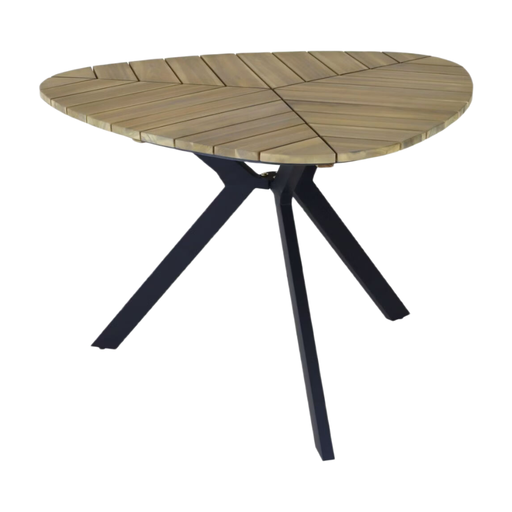
Why it's a great choice: For those who want a standout centrepiece. Its unique triangular shape is designed for 4 people and promotes conversation, while its central pedestal base frees up legroom.
The "tulip" style base ensures excellent stability and solves the problem of cumbersome legs on classic tables. The information is transparent about the limitations of steel in coastal areas and the need for annual wood maintenance, preventing any nasty surprises.
Its triangular design is both aesthetic and functional, creating a more intimate dining experience. The pairing of the FSC acacia wood top and the steel frame offers a striking visual contrast.
We've compiled a complete, up-to-date list of products that meet our strict selection criteria and quality standards.
The longevity of a wooden garden table mainly depends on two factors: the type of wood and its maintenance. A dense wood like acacia or teak, properly maintained with an application of oil or stain once a year and stored in a sheltered place during winter, can easily last over 10 years. Without this care, it can start to deteriorate (turn grey, crack) in just a few seasons.
For an epoxy-coated steel table, the key is to avoid damaging its protective layer. Prevent impacts and scratches. If a scratch appears, clean the area and quickly apply a touch-up of anti-rust paint. Using a protective cover and storing it indoors in winter are highly recommended. If you live by the sea, aluminium is a more durable solution as it does not rust.
Yes, quality models are designed with robust locking systems that ensure excellent stability once unfolded. A well-designed folding garden table, placed on a flat surface, is perfectly safe for daily use. Just make it a habit to check that the locking mechanism is fully engaged before placing heavy objects on it.