
Same-day & Next-day Delivery

Quality Guaranteed

Unlock Your Welcome Offers: FREE Delivery | Up to 80% OFF | Free 30-day JoyPlus trial
Download the APP
Roses, shrubs, hedges, fruit trees and bonsai do not all have the same needs. Choosing the wrong garden secateurs can crush stems, strain your hand or quickly reach its limits when faced with a branch that is too thick. Before comparing models, it is therefore best to define how you intend to use them and be wary of marketing claims that are difficult to verify.
A cutting capacity of 19, 25 or 30 mm does not mean that the tool can handle every branch of that diameter. These figures generally refer to green wood, which is still relatively flexible. A dry, hard or knotty branch requires considerably more effort and may damage the mechanism.
When choosing a pruning tool for fruit trees, check the maximum diameter as well as the type of wood you intend to cut. Bypass secateurs are particularly suited to fresh stems. For thicker branches, a pruning saw or loppers will give you much more comfortable leeway.
The term SK5 steel blade refers to a very common carbon steel used in cutting tools. On its own, it is not enough to assess how long the secateurs will last. Corrosion protection, blade geometry, pivot quality and everyday maintenance are equally important.
A stainless-steel blade can be useful in a damp environment, but no rust-resistant coating eliminates the need for regular cleaning. After each session, remove sap, wipe the metal parts and store the tool completely dry.
A handle that slips or an opening mechanism that is too resistant soon becomes tiring after several dozen cuts. Gardeners who regularly maintain their roses and shrubs should examine the handle shape, its non-slip coating, the spring and the locking system.
The safety lock should be easy to operate when the tool is not in use. With electric or telescopic models, also check the power button, locking devices and the instructions supplied by the manufacturer.
Bypass secateurs have two blades that cross over each other, like scissors. This design is suitable for fresh stems and branches, particularly those of roses, shrubs and young fruit trees. It provides a clean, precise cut, provided the branch is positioned correctly in the cutting head.
A micro-tip model is intended more for precision work. It is suitable for small stems, dead flowers and certain bonsai tasks. Its capacity is generally limited: the FLORA GUARD model shown below is rated for diameters of up to 6 mm.
For everyday gardening, a capacity of 19 to 25 mm is sufficient for cutting many fresh stems. The WORKPRO is rated for up to 19 mm, while the secateurs fitted with an SK5 blade and aluminium handle can handle up to 25 mm.
Weight has a direct impact on comfort during use. A lightweight handle makes long runs of cutting easier, but a tool that is too light may lack rigidity depending on its design. To reach a branch overhead, telescopic secateurs or telescopic loppers can save you from having to get out the ladder. In that case, check the length when folded, the reliability of the locking system and the stability of the head.
Rechargeable electric secateurs significantly reduce the effort required for repeated cuts. They may be useful for maintaining a large number of rose bushes, regularly caring for an orchard or carrying out intensive work. In return, you need to remember to recharge the battery, protect it from moisture and follow the safety instructions.
Before buying, check the stated battery life, charging time and availability of accessories. For occasional cutting, manual secateurs are still easier to store, maintain and use.
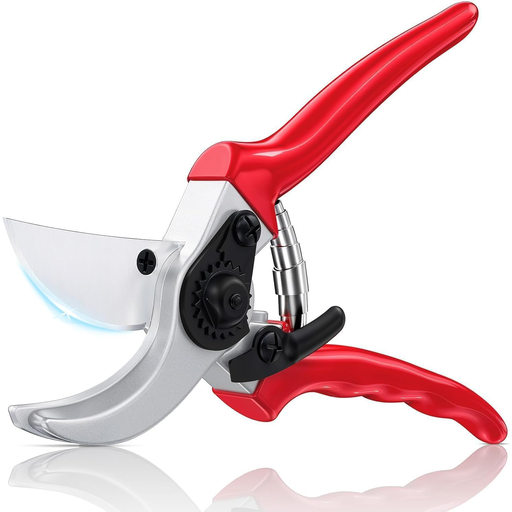
Why this choice suits this user: Their manual operation is ideal for routine maintenance of roses, shrubs, fruit trees and bonsai, with no battery or complicated adjustments required.
The stated capacity of up to 25 mm is a reminder that this tool is best reserved for fresh branches of that diameter, rather than being used on thick, dry wood.
SK5 steel blade, ergonomic aluminium handle and non-slip surface.
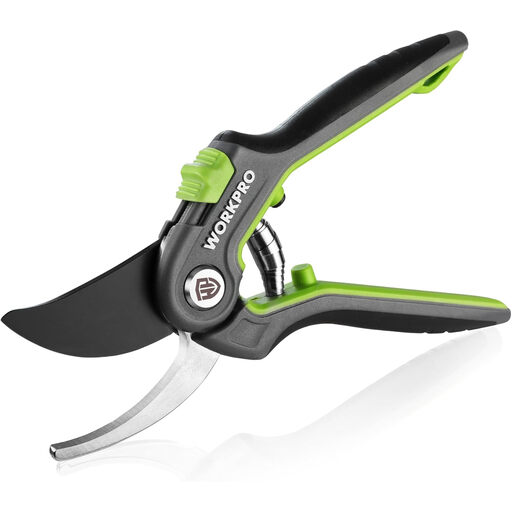
Why this choice suits this user: They are aimed at users looking for versatile manual secateurs for pruning, grafting and harvesting small branches.
Its 19 mm limit is clearly stated, helping to prevent it from being pushed beyond its capabilities on wider branches or hard, dry wood.
Rust-protected SK5 blade, automatic opening spring and safety lock.
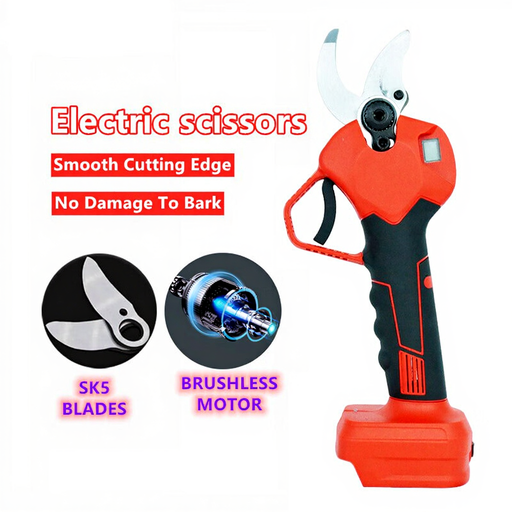
Why this choice suits this user: Its cordless operation and rechargeable battery are well suited to long pruning sessions and repeated maintenance work.
Recharging and storing the tool in a dry place are important usage precautions. It is therefore best to check the battery level before a long session.
Rechargeable power, cable-free use and ergonomic handle according to the product details.
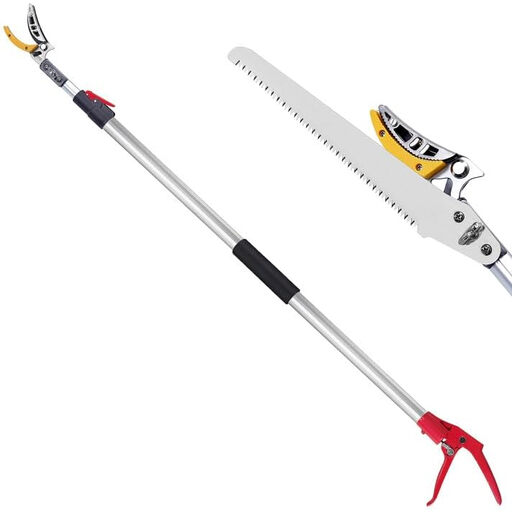
Why this choice suits this user: Its adjustable pole, extending from 135 to 223 cm, lets you reach certain branches and pick fruit without having to set up a ladder every time.
The locking button and the various locking devices must be properly secured before each use, in accordance with the safety instructions.
Aluminium-alloy pole, 30.5 cm SK5 blade with 3D teeth and adjustable length.
To keep your garden secateurs in good condition for longer, a few simple habits are all it takes:
Gardening scissors and micro-tip models should be limited to small stems. For thicker branches, choose a tool designed for the job rather than forcing the blade.
We have put together a complete, real-time updated selection of products that meet these demanding criteria, while also taking European safety regulations into account.
For small-diameter fresh stems, bypass secateurs are generally an excellent choice. Check their cutting capacity and make sure they feel comfortable and secure in your hand. A micro-tip model is better suited to delicate tasks, such as cutting small bonsai stems or trimming flowers.
Keep the blade clean, store the tool in a dry place and recharge the battery according to the manufacturer’s instructions. Before leaving it unused for a long period, check the recommendations for battery storage. The electric motor does not allow you to exceed the intended cutting capacity.
Telescopic secateurs are useful for reaching branches overhead or picking fruit from the ground. Long-handled loppers are better suited to lower, thicker branches, where leverage becomes essential. For hard wood or larger diameters, a pruning saw can be a useful addition to your equipment.