
Same-day & Next-day Delivery

Quality Guaranteed

Unlock Your Welcome Offers: FREE Delivery | Up to 80% OFF | Free 30-day JoyPlus trial
Download the APP
A garden secateur might seem simple to choose. Yet the wrong blade, an uncomfortable handle or an overestimated cutting capacity can quickly turn a gardening session into an unpleasant surprise. Roses, shrubs, young fruit trees, bonsai or high branches all have different requirements.
Here are the criteria to consider before buying, along with a selection of models suited to different types of gardeners in the UK.
The cutting capacity listed on a product page usually refers to the maximum diameter the tool can cut under good conditions. A fresh, supple branch doesn't offer the same resistance as dry, hard or fibrous wood.
A bypass secateur is primarily designed for fresh stems and branches. For thicker sections, it's better to move up to a lopper, which offers more power thanks to its long handles. Using a small secateur beyond its limits risks damaging the blade, spring or handle.
An SK5 steel blade uses a common carbon steel found in cutting tools. This label gives an indication of the material, but it isn't enough to judge the overall quality of the secateur. You also need to consider the anti-corrosion treatment, blade geometry, locking mechanism and maintenance recommendations.
Even a blade designed to resist oxidation should be wiped down after use, particularly after pruning in damp weather.
A slippery handle or a grip that's too stiff will quickly tire your hand during prolonged work. For a secateur for roses and shrubs, choose a non-slip handle and a soft-opening spring.
The locking system also matters for storage and transport. It reduces the risk of accidental opening, but doesn't replace the need to handle the tool with care or to wear suitable gloves.
For detailed work, a fine-tipped micro-secateur is particularly handy on small stems, dead flowers and bonsai.
The cutting capacity should match the plants you prune most often. A model designed for 6 mm is suitable for precision work, while a secateur rated up to 19 or 25 mm can tackle thicker fresh branches. These figures don't mean the tool can cut metal, wire or very hard dry wood.
For fruit trees, also check the handle length. A telescopic model from 135 to 223 cm can make harvesting and high pruning easier, but its locking system must be fully secured before each use.
A soft, non-slip handle improves grip, whether you're right-handed or left-handed. Regular users may also benefit from choosing an ergonomic secateur or a rechargeable electric secateur, which reduces the effort involved in repeated cuts.
With an electric model, check for a rechargeable battery, charging time and storage conditions. Battery life isn't always detailed on the product page, so it's best not to rely solely on a promise of extended use.
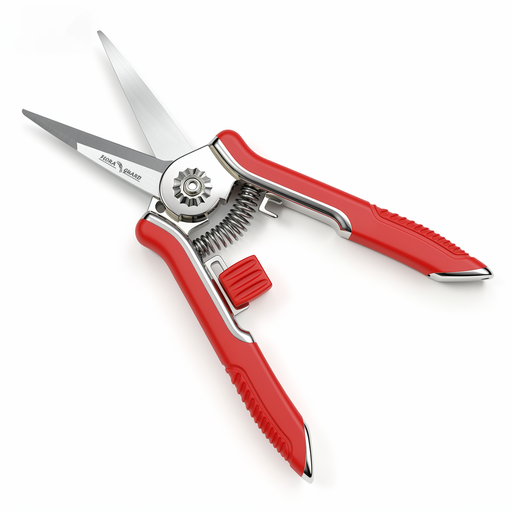
Why this choice suits this profile: Its 16.5 cm size is ideal for regular small jobs on flowers, fine stems and ornamental shrubs.
Its cutting capacity, clearly limited to 6 mm, encourages you not to use it on branches that are too thick.
A micro-tip, a stainless steel blade rated at 54 HRC and a padded non-slip handle.
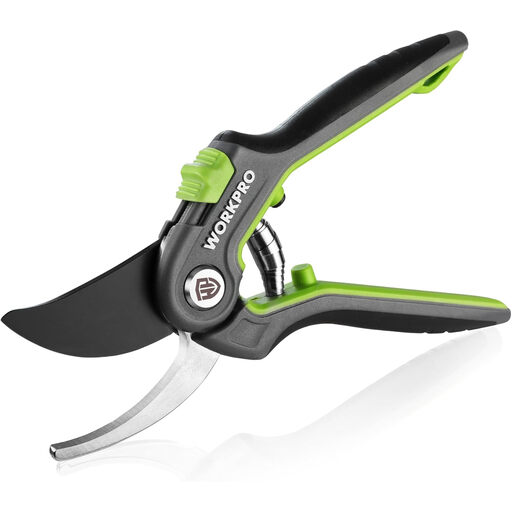
Why this choice suits this profile: This secateur is aimed at gardeners looking for a versatile tool for shrubs, harvesting and small fresh branches.
Its stated limit of 19 mm reminds you it's intended for fresh branches and that larger sections require a lopper.
A main blade in SK5 steel with anti-corrosion coating, an automatic spring and a safety lock.
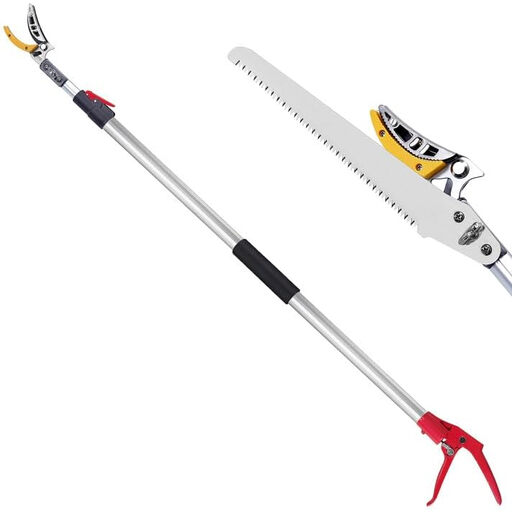
Why this choice suits this profile: Its adjustable pole makes pruning and harvesting fruit at height easier, without having to set up a ladder every time.
The adjustable length from 135 to 223 cm is clearly stated, as is the need to lock the pole properly before each use.
An aluminium pole, a 30.5 cm SK5 blade with 3D teeth and a handle designed for two-handed grip.
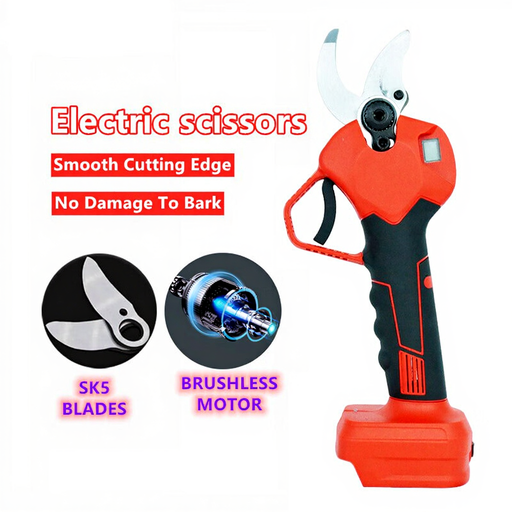
Why this choice suits this profile: The cordless operation is ideal for long gardening sessions and for those who want to minimise repetitive movements.
The rechargeable battery and cable-free use are clearly mentioned, without promising a battery life that isn't specified.
A rechargeable power source, cordless operation and an ergonomic handle designed for pruning work.
We've put together a comprehensive, real-time updated selection of products that meet these demanding criteria, as well as European safety standards.
To keep a reliable pruning tool season after season, a few simple steps are enough:
For roses, fine shrubs and bonsai branches, a precision tool is usually sufficient. For a fruit tree or a branch too large for the secateur, opt for a lopper or a suitable saw.
A bypass secateur with a fine blade and a non-slip handle is generally suitable for fresh stems and small branches. For roses, also check the precision of the tip and the ease of locking, so you can work between the stems without difficulty.
Clean the blade after each session, dry it thoroughly and lubricate the mechanism regularly. Don't use a secateur designed for 6, 19 or 25 mm on thicker branches, very hard wood or metal.
The running cost mainly depends on how often you recharge, the battery life and the price of a potential replacement. Before buying, check whether the battery and charger are included, as well as the maintenance and storage conditions stated on the product page.