People cooking for a group
If several recipes call for butter, a 500 g pack or several 250 g blocks could work, depending on the quantities you need. Président, Carrefour and Les Croisés offer 500 g options.


If you’re cooking several dishes, choose the amount of unsalted butter to suit your recipes: a 500 g block could save you opening several packs, while 250 g blocks let you keep different uses separate. If you’re mainly serving butter with bread, focus instead on whether you want unsalted or salted butter. Also plan how to keep it chilled during the get-together and store any leftovers.
If several recipes call for butter, a 500 g pack or several 250 g blocks could work, depending on the quantities you need. Président, Carrefour and Les Croisés offer 500 g options.
If you’re serving butter as it is, choosing between unsalted and salted matters more than it does for a recipe where you can adjust the seasoning. Président’s range includes both options, while Carrefour also offers a tub of soft unsalted butter.
If you’re not sure how much butter you’ll use, several smaller blocks let you divide it between cooking and serving. Check the date on each pack and plan how you’ll keep the butter chilled.
First decide whether you’ll mainly use the butter for cooking or serve it with the meal. Then choose the quantity and check the date and storage instructions for the product you’ve selected.
| What to consider | What to check | Who is it for? |
|---|---|---|
| Amount for cooking | Whether you need a 500 g net weight or a certain number of 250 g blocks; whether you can keep the butter chilled. | If I’m preparing several dishes for a group, I want to have the amount I need without opening extra blocks unnecessarily; around 36% of consumers would make this their top priority. |
| Managing leftovers | How much you’re likely to need and the date shown on the packaging. | When I don’t know how many guests will have butter, I’d rather be able to keep suitably sized portions after the party; this would be the main concern for around 29% of consumers. |
| Unsalted or salted | The type stated on the pack and whether it’s intended for cooking or serving at the table. | If I’m serving bread too, I want to choose the butter’s flavour without imposing the same seasoning on every recipe; around 21% of consumers would prioritise this choice. |
| Fat content | The stated percentage, product description and recommended use for your recipe. | For a particular recipe, I want to know whether an option with 60% fat is suitable; around 14% of consumers would put this criterion first. |
Auchan offers products with different fat contents. Don’t assume that a product will work in a recipe written for regular butter just because the packaging looks similar.
For your chosen recipe, check the exact product’s description, fat content, ingredients and usage instructions.
When serving food outdoors, what you’ll do with any leftovers and how you’ll keep the butter chilled matter just as much as the pack size. Anses notes that keeping food at a low temperature slows the growth of micro-organisms in the foods concerned.
Check the date, transport any butter that needs refrigerating in a suitable cool box, and chill leftovers promptly, following the instructions on the packaging.
Salted butter already contains salt, so it can affect a dish where salt is measured separately.
Use unsalted butter for recipes where you want to control the seasoning, and save salted butter for dishes where you want its flavour.
According to Président, its Plaquette Gastronomique range includes unsalted and salted options in 125 g, 250 g and 500 g sizes.
Carrefour offers, among other options, a 500 g block of unsalted butter and a 250 g tub of soft unsalted butter.
E.Leclerc lists a 500 g Les Croisés unsalted butter from Brittany, with a stated fat content of 82%.
Auchan offers 250 g blocks of unsalted butter, including an option listed as having 60% fat.
These three sizes of ghee, or clarified butter, may suit anyone planning to cook several dishes. They’re not a substitute for a block of unsalted or salted butter for spreading on toast or for a recipe that specifically calls for that type of butter.
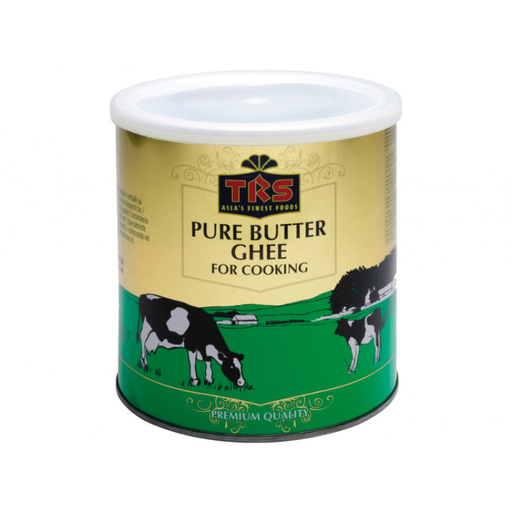 Image unavailable
Worth considering for several cooked dishes if ghee suits your recipes. This pack contains 500 g; check the storage instructions and date on the packaging.
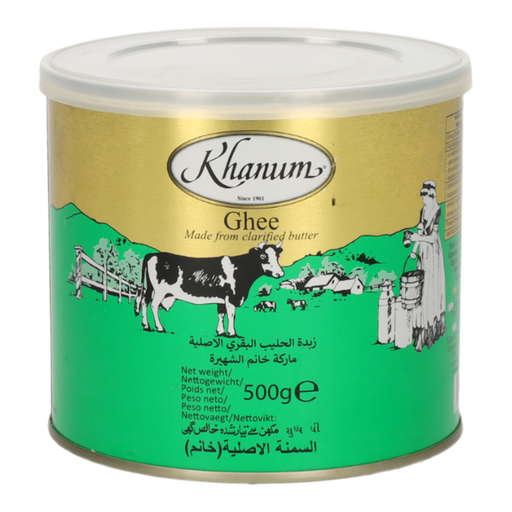 Image unavailable
This 500 g tin could be a good option for cooking several dishes with ghee. Check the storage instructions on the packaging, particularly after opening.
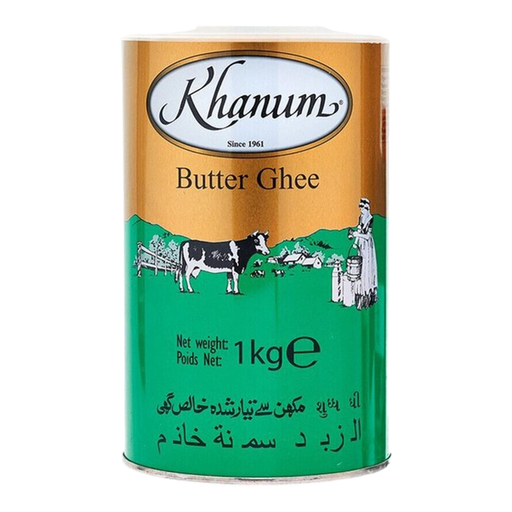 Image unavailable
The 1 kg size is designed for cooking larger quantities, if ghee suits your recipes. Think about how much might be left over, and check the date and storage instructions on the packaging.
The phrase alone doesn’t tell you the quantity, so check the net weight of the product you choose. Président, Carrefour and Les Croisés, for example, offer 500 g packs, while 250 g blocks may also suit you if you want to keep different uses separate.
Choose unsalted butter if you want to control the amount of salt in your recipes; salted butter works well at the table if you enjoy its flavour. If you’re planning to use butter both ways, two separate blocks let you avoid giving every dish the same seasoning.
Follow the packaging instructions and keep any butter that needs refrigerating chilled from transport through to serving. Return leftovers to the fridge promptly; Anses notes that keeping food at a low temperature slows the growth of micro-organisms.
Read the product description, net weight, ingredients, nutritional information and date. If a guest needs to avoid an ingredient or allergen, check the information on the exact pack rather than relying on the product name alone.