
Livraison le jour même ou le lendemain

Qualité garantie

Débloquez vos offres de bienvenue: Livraison GRATUITE | Jusqu'à -80 % | 30 jours d'essai gratuits à JoyPlus
Téléchargez l'application
Sunny days are here, and with them, the desire to enjoy your garden, patio, or balcony. But to ensure these relaxing moments don't end in sunstroke or a sudden downpour, a quality parasol is essential. Upright, cantilever, tilting, aluminium, wood... Faced with an overwhelming selection, it can be difficult to make the right choice.
Our editorial team's mission is to break down the market to help you see things more clearly. We've analysed dozens of models to bring you only the essentials: practical advice and objective recommendations, free from marketing hype. This guide is here to help you find THE perfect parasol for your needs and your space.
Before you jump on the first model you see, let's review the key points that will make all the difference in day-to-day use.
A parasol should be easy to handle. The crank-handle parasol is a must-have: it allows you to open and close the canopy effortlessly, a real bonus for larger models.
Don't forget that the sun moves! A tilting parasol is therefore a major asset for adjusting the shaded area throughout the day without having to move its heavy base. The most versatile models even add a 360° rotation for optimal protection at any time.
The size of the parasol must be suited to the area you want to shade. For a large table seating 6 to 8 people, aim for an outdoor parasol of at least 3 m in diameter. For a cosier space like a balcony parasol, a 2 m to 2.70 m model will be much more suitable and less bulky.
When it comes to materials, an aluminium pole is a safe bet. It combines lightness for easy handling with excellent rust resistance. For the canopy, don't skimp on quality: a polyester fabric of at least 180 g/m? with a water-repellent treatment is a good starting point. This treatment allows raindrops to bead on the surface without soaking in, keeping you dry during a passing shower.
After our analysis, here are two models that caught our eye, each catering to very specific needs and spaces.
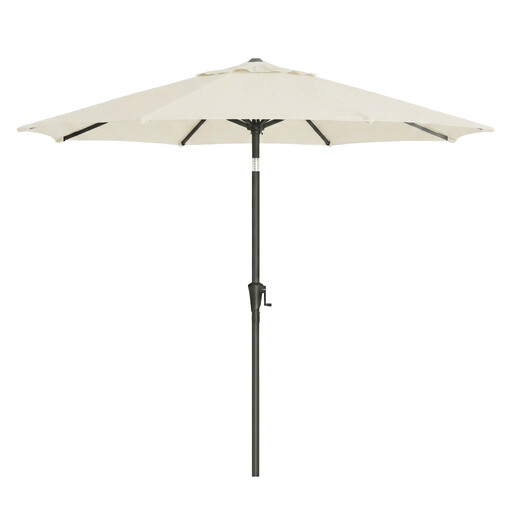
Why It Stands Out
This Ochama model thinks big. With its 3.4 m span, it's perfect for sheltering a large garden table or a complete outdoor lounge set. Its dual-sided tilt system, activated by a simple push-button, and its crank handle make it incredibly user-friendly for daily use.
Pros
Who is it for? This is the ideal choice for those with a large garden, patio, or terrace who love to host big family meals or groups of friends, sheltered from the sun and UV rays.
Please note: the parasol base is sold separately.
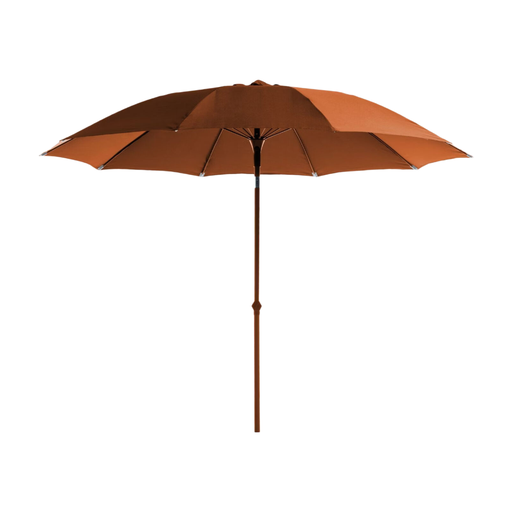
Why It Stands Out
The PROLOISIRS model is the perfect solution for smaller spaces. Its 270 cm diameter is ideal for balconies, small patios, or for creating a shaded reading nook. Its smart design combines a telescopic and tilting aluminium pole with 10 fibreglass ribs, making it both lightweight and flexible in windy conditions.
Pros
Who is it for? It's perfect for anyone looking for an effective, space-saving shade solution. Its light weight is a decisive advantage if you need to store or move it often.
Please note: a 35 kg base is recommended (sold separately).
Of course, technical specs aren't everything: colour and style are essential for creating an atmosphere that reflects your personality. If you're dreaming of an elegant cream-coloured parasol to match your furniture, feel free to explore other models to find that perfect gem.
1. What size parasol should I choose for my patio? The golden rule: the parasol should extend about 50 cm beyond the table on each side. For a 4-person table (~1 m in diameter), a 2.5 m parasol is ideal. For a table seating 6 to 8 people, you'll need an outdoor parasol of 3 m or more. On a balcony, a half-parasol or a compact 2 m model will do the job perfectly.
2. How do I maintain my parasol's canopy? To keep your water-repellent canopy effective, regular cleaning is essential. Start by dry-dusting it. Then, use a soft sponge, lukewarm water, and a neutral soap (like Marseille soap). Rinse thoroughly with clean water and, most importantly, let the canopy air-dry completely before folding it away. Avoid harsh detergents and high-pressure washers, as they will damage the treatment.
3. What base weight is needed for a 3-metre parasol? Never overlook stability—it's a matter of safety! For a 3-metre upright parasol, a 40 to 50 kg base is the bare minimum, especially in a windy area. If the parasol is secured through the centre of a heavy table, a slightly lighter base may suffice. In any case, always follow the manufacturer's recommendations.