
Livraison le jour même ou le lendemain

Qualité garantie

Débloquez vos offres de bienvenue: Livraison GRATUITE | Jusqu'à -80 % | 30 jours d'essai gratuits à JoyPlus
Téléchargez l'application
With sunny days upon us, the desire to enjoy your garden, patio, or balcony is irresistible. But to make the pleasure last without the sunburn, proper protection is essential. Faced with a vast array of choices, picking the right parasol can quickly become a headache. From the classic centre-pole parasol to the ultra-flexible cantilever parasol, sizes, materials, and options vary dramatically. But there's no need to worry! We'll guide you step-by-step to find the model that will create a shady spot that's as comfortable as it is stylish, and that will stand the test of time.
Before you start shopping, let's review the key points that truly distinguish a good parasol from a great one.
The choice between these two main types depends primarily on the layout of your outdoor space and how you plan to use it.
A parasol is a long-term investment. Its durability depends directly on the quality of its frame and canopy.
Certain details make all the difference in daily use. A crank-lift system, for example, is far more convenient than a simple push-up mechanism, especially on larger models. A tilting or rotating parasol saves you from having to move the base to track the sun's path. Finally, choose the shape (round, square, rectangular) and size, such as a 3x3 rectangular parasol, based on the specific area you want to shade.
To put theory into practice, here are a few models that perfectly illustrate this advice and cater to different needs.
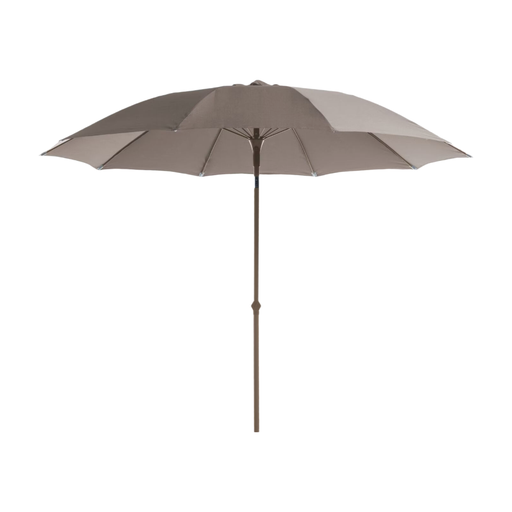
Why it stands out: Its simple design and feather-light weight make it the ideal shade solution for smaller spaces.
Advantages:
Who is it for? The smart choice for a balcony parasol or a secondary parasol, perfect for shading a small table or a sun lounger.
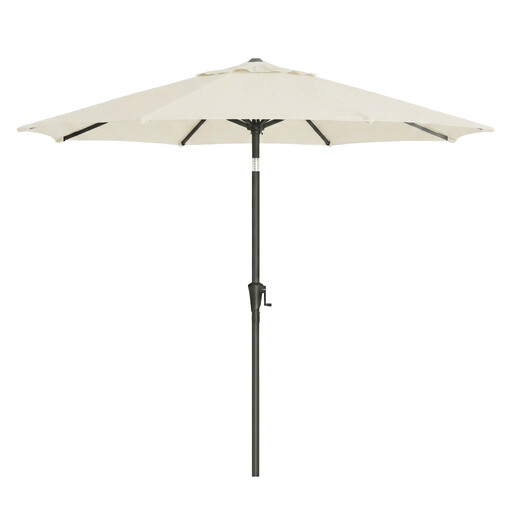
Why it stands out: Its wide diameter and easy-tilt function create a generous and adjustable shaded area.
Advantages:
Who is it for? A great all-rounder for medium-sized gardens and patios, capable of comfortably sheltering a family table or a small outdoor lounge set.
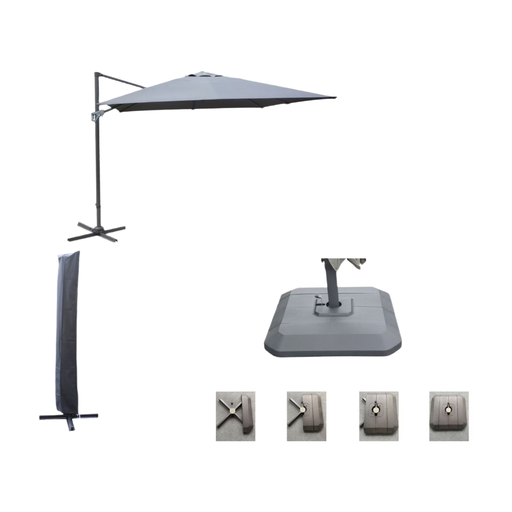
Why it stands out: This is the ultimate all-in-one solution, including the parasol, its weighted base, and a protective cover.
Advantages:
Who is it for? Perfect for those looking to equip a large patio or garden lounge set with a high-performance large parasol, without the headache of finding compatible accessories.
While a parasol is your best ally against the sun, the weather can be unpredictable. To protect yourself from rain and wind when you're on the go, take a look at our selection of ultra-durable umbrellas.
Discover our range of durable umbrellas
The size depends on the area you need to shade. For a 4-person table, a diameter of 2.5 to 3 metres is often sufficient. For a large garden lounge set, a 3x3 rectangular parasol or a cantilever model over 3 metres wide will be more suitable. Our advice: measure your space before buying to ensure that the parasol, once opened, won't be obstructed by a wall or a branch.
Stability is a major safety concern. For a cantilever parasol, the base weight is even more critical than for a centre-pole model due to the lever effect (the overhang). Aim for a weight of 70 to 100?kg, especially if you live in a windy area. Slabs that can be filled with water or sand are an excellent, practical, and flexible option. The PROLOISIRS kit, for example, includes a base designed to reach 76?kg when filled.
Regular maintenance will extend the life of your canopy. For a simple clean, mild soapy water and a soft brush are all you need. Rinse thoroughly and let it air-dry completely before closing the parasol. Also, consider using a protective cover whenever it's not in use for an extended period: it will shield it from the elements, UV-related fading, and pollution.