
Livraison le jour même ou le lendemain

Qualité garantie

Débloquez vos offres de bienvenue: Livraison GRATUITE | Jusqu'à -80 % | 30 jours d'essai gratuits à JoyPlus
Téléchargez l'application
From tree maintenance and shrub pruning to interior renovations and joinery, garden and DIY cutting tools cover a wide range of uses. A blade designed for wood is not necessarily suitable for metal, while secateurs intended for young branches may wear out quickly when used on dry wood.
Price alone is therefore not enough to distinguish between equipment. Here are the key criteria to consider before buying, along with a selection of tools suited to different needs.
A saw described as versatile may handle several materials, but each blade is still designed for a specific purpose. Reciprocating saw blades for wood, metal or plastic differ in their tooth pattern, length and thickness. Using a blade that is too thin on an especially hard material can slow down cutting, cause overheating or even lead to breakage.
The fitting system also deserves attention. The term universal shank makes compatibility with many reciprocating saws more likely, but it is still best to check your machine’s instructions.
Some cordless tools are sold without a battery or charger. This is particularly common with machines belonging to a range that shares the same battery. The actual cost therefore depends on the equipment you already own.
For a cordless circular saw, always check:
A dirty blade produces a less clean cut and is more likely to overheat. After each use, remove wood shavings and residue, then store metal components in a dry place. For secateurs, lightly lubricating the mechanism helps maintain smooth opening.
Protective equipment remains essential: safety glasses or a visor, suitable gloves, hearing protection when using powered tools, and secure support for the material being cut. Never handle a blade while the machine is plugged in or the battery is fitted.
Bi-metal blades generally combine HSS teeth with a more flexible alloy-steel back. This construction is suitable for cutting wood, metal or plastic, depending on the tooth pattern selected. It can also be suitable for wood containing nails, provided you use a blade specifically designed for this purpose.
For garden secateurs, SK5 steel is often used for the blade. However, check the maximum cutting capacity: this does not refer to the tool’s total length. Secateurs rated for 19 mm are suitable for fresh branches up to that diameter, but not for wire or dry, hard wood.
A long blade provides useful reach for larger sections, but it can be less manoeuvrable in confined spaces. For a pruning saw, the blade length and the reach of the telescopic handle directly determine the working height.
For DIY projects, choose a wood-metal-plastic reciprocating saw according to its tooth pattern and blade lengths. Longer wood blades make through-cuts easier, while thinner metal blades are intended for suitable profiles and sheet metal.
For a circular saw, check the cutting depth at 90° and 45°, as well as the available bevel adjustment range. This information is far more useful than a simple claim about power.
A lightweight tool will be more comfortable for occasional pruning, while regular users will appreciate a stable handle, smooth mechanism and convenient accessory storage. Cordless electric pruning shears reduce the effort required for certain pruning tasks, but you need to know their runtime, charging time and the types of vegetation they are designed for.
For work at height, telescopic secateurs must have a locking mechanism that is properly engaged. Avoid using them near power lines and check the stability of the handle before every cut.
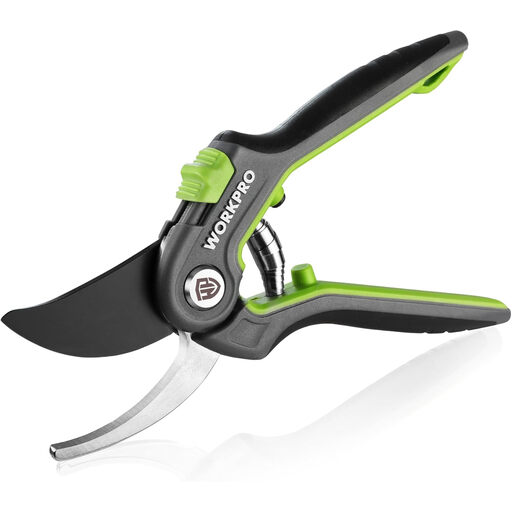
Why this choice suits this profile : These garden secateurs are ideal for everyday light pruning, shrub maintenance and fruit picking. At 210 mm, they are easy to store and comfortable to handle.
The stated maximum capacity of 19 mm helps prevent you from forcing the tool through branches that are too thick. The safety lock also helps prevent accidental opening during storage.
SK5 steel blade, automatic-opening spring, non-slip handles and a coating advertised as rust-resistant.
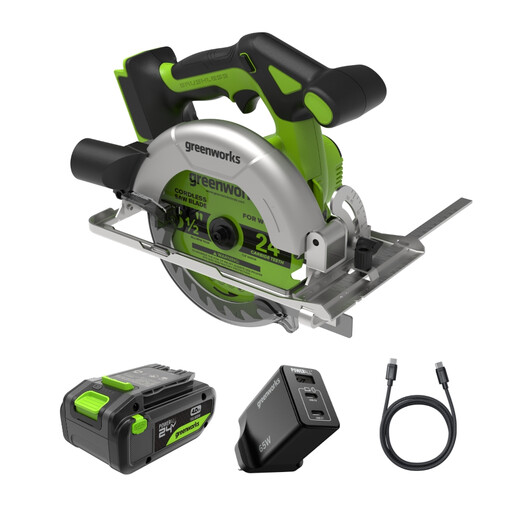
Why this choice suits this profile : This cordless circular saw is designed for renovation, joinery and home improvement projects requiring straight or angled cuts in wood.
The product details clearly state that the battery and charger are not included. This makes it easier to calculate the true budget and avoid compatibility surprises with another range.
165 mm carbide-tipped blade, stated maximum cutting depth of 57 mm at 90°, 0 to 45° bevel adjustment, LED light and dust-extraction port.
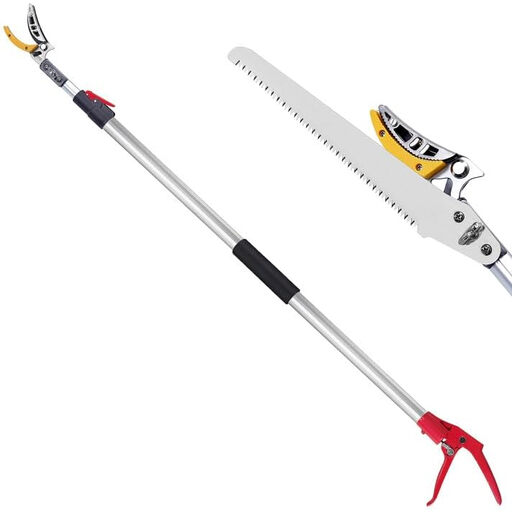
Why this choice suits this profile : These telescopic pruning shears feature a saw head, making it easier to prune trees and pick fruit from the ground.
The adjustment range is clearly stated, from 135 to 223 cm. The locking button must be engaged before each use to help limit movement of the handle.
Aluminium-alloy handle, 30.5 cm SK5 blade with 3D teeth and a non-slip grip designed for two-handed use.
Choose a set that includes separate blades for wood, metal and plastic. Bi-metal models may be suitable for several applications, but their length, tooth count and thickness must still be appropriate for the material and the saw’s power.
This depends on how often they are used, the diameter of the branches and how well they are maintained. Clean the blade after every session, dry it and regularly lubricate the pivot. Replace it or have it sharpened when it crushes the fibres instead of producing a clean cut.
They can reduce effort and speed up certain tasks, but their running cost depends on the battery, charging time and availability of replacement parts. Before buying, check the stated runtime, what is included in the case and whether a separate battery can be purchased.