
Livraison le jour même ou le lendemain

Qualité garantie

Débloquez vos offres de bienvenue: Livraison GRATUITE | Jusqu'à -80 % | 30 jours d'essai gratuits à JoyPlus
Téléchargez l'application
Birds can devastate seedlings, strawberries, cherries and tomatoes in just a few days. But choosing bird netting for your garden involves more than comparing lengths and prices. The wrong mesh size, flimsy fixings or a material that does not stand up to ultraviolet rays can make your netting ineffective — or even pose a risk of animals getting caught.
Before you buy, here are the main pitfalls to avoid and the features to check so you can choose the right protection for your vegetable patch, shrubs or fruit trees.
Balcony netting, a partition grid or netting designed to keep out small animals is not necessarily made to cover crops. Diamond-shaped mesh, like that used in fencing, may suit some boundary applications, but it is not always a substitute for square-mesh netting for vegetable gardens.
To protect your fruit and vegetables, check that the product is specifically described as crop protection netting or agricultural bird netting.
A net left out in the sun and exposed to rain and changes in temperature needs to retain its flexibility and strength throughout the season. Material that is not UV-stabilised can become brittle, tear when you take it down or prove difficult to reuse.
UV-treated polypropylene is one feature to look for in polypropylene netting designed to stay outdoors. However, this does not remove the need to follow the manufacturer’s instructions for use and storage.
Netting that is too short leaves gaps that birds can squeeze through. If laid directly over foliage, it may also be lifted by the wind or snag on branches. Measure the area you need to cover, then allow extra material for the sides, hoops and ground anchors.
The netting should be taut, but not overstretched. Secure the edges with pegs, ties or suitable clips, and check regularly that no gaps have appeared underneath.
A 10 × 10 mm mesh is a common size for netting intended for crops, shrubs and small fruit trees. It creates a physical barrier while still allowing air, light and rainwater to pass through.
Some products have a 10 × 12 mm mesh. This difference may matter depending on the birds in your garden and the type of crop you want to protect. The aim is to keep birds away from fruit and seedlings, not to turn the netting into a trap for wildlife.
Polypropylene is popular because it is lightweight and relatively easy to handle. Netting that can be cut to the size you need makes it easier to cover a flower bed, raised bed or individual shrub.
However, check how the edges hold up after cutting. The product details for the Tenax Ortoflex models below state that they can be cut without fraying. This is handy when fitting netting around a support or small structure.
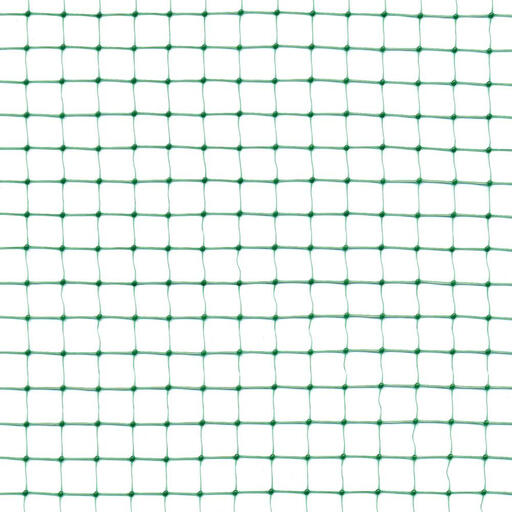
Why it suits this type of user: Its 2 × 5 m size is ideal for a small area, a few plants or a low-growing shrub, without the need for a complicated set-up.
Its 10 × 10 mm mesh and UV-stabilised polypropylene make it a better choice than a simple decorative grid that is not designed to protect crops.
An easy-to-handle size, a discreet green colour, edges that are stated not to fray when cut, and the option to reuse it after cleaning.
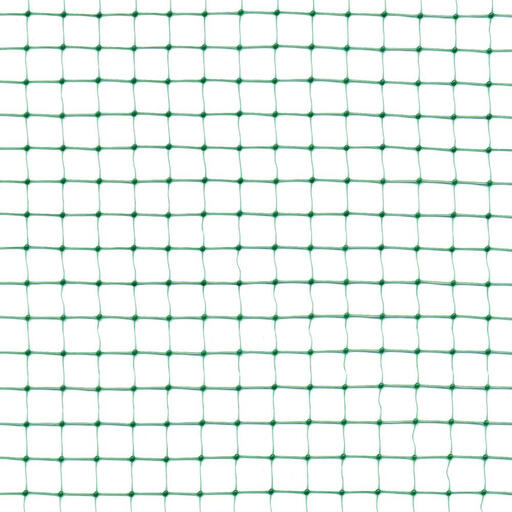
Why it suits this type of user: Covering 40 m², it can protect a long row, several shrubs or a large harvesting area.
Its generous width means fewer joins and fewer gaps between separate pieces of netting.
UV-stabilised polypropylene, a 10 × 10 mm mesh and a design that lets air, water and light through.
Why it suits this type of user: This extra-long roll is ideal for orchards, large growing areas and repeat installations that require several cuts.
The long roll means you need fewer small pieces of netting and makes it easier to fit different-sized supports.
A 4 × 250 m size, 10 × 12 mm square mesh and lightweight material that is UV-stabilised according to the product details.
We’ve put together a complete, real-time selection of products that meet these demanding criteria and comply with European safety regulations.
Netting should never be used to support a load, as a climbing frame or as a trap. Keep it out of children’s reach during installation and check its condition regularly.
A 10 × 10 mm mesh is often recommended to protect seedlings, vegetables and soft fruit from birds. For a particular crop, consider the size of the animals in your garden and check the product details for the manufacturer’s recommendations.
Yes, some models are designed to go over shrubs or fruit trees. If the foliage is delicate, it is better to use hoops or another support, then secure the edges carefully to the ground. Keep the netting taut to reduce the risk of animals getting caught.
Its lifespan depends on exposure to sunlight, handling, wind and storage conditions. A UV-stabilised model that is cleaned after use and stored somewhere dry can be reused under normal conditions. Always inspect the mesh before installing it again, and replace the netting if it has any significant tears.