
Livraison le jour même ou le lendemain

Qualité garantie

Débloquez vos offres de bienvenue: Livraison GRATUITE | Jusqu'à -80 % | 30 jours d'essai gratuits à JoyPlus
Téléchargez l'application
A well-equipped garage isn’t just about picking the jack with the highest capacity or the biggest tool board. For the home mechanic, the car enthusiast or the professional workshop, it’s often the finer details that make all the difference when it comes to manoeuvrability, stability and longevity.
The most common mistakes are, however, easy to avoid:
The goal, then, is to choose your garage and workshop equipment based on your vehicle, how often you work on it and the layout of your space.
For a standard car, a 3-tonne hydraulic jack can handle many routine maintenance jobs, provided you respect the load capacity and the manufacturer’s recommendations. You need to consider the total weight of the vehicle, but also the actual load applied to the area being lifted.
A jack for cars and SUVs must also offer a minimum height that’s compatible with the chassis and a maximum height suited to the suspension travel. The manufacturer’s designated lifting points must remain easily accessible. The jack should never be used on an unstable, sloping or insufficiently strong surface.
For professional use or heavier vehicles, a 5-tonne air jack can offer greater capacity and faster lifting. However, you’ll need a suitable compressor and enough space to position the unit correctly.
A clearly stated lifting range allows you to compare models on a concrete basis. For example, a unit rated between 135 and 460 mm won’t meet the same needs as a compact jack designed only for a low car.
Stability depends on several factors:
A rolling jack makes positioning easier, but its wheels must stay in contact with a sufficiently level floor. When working under a vehicle, always use proper axle stands after lifting. A jack should never be used alone as a permanent support.
A pegboard for tools should be chosen based on the available wall width and the type of accessories you want to hang. A 120 × 60 cm set made up of three panels can suit a garage wall, provided you select fixings appropriate for the surface: concrete, brick, block or reinforced partition.
Before ordering, check:
Wall storage for the garage frees up floor space, but it must be installed at a reachable height and far enough away from walkways. Heavy tools should ideally be placed on supports designed to bear their weight, rather than on a lightweight hook.
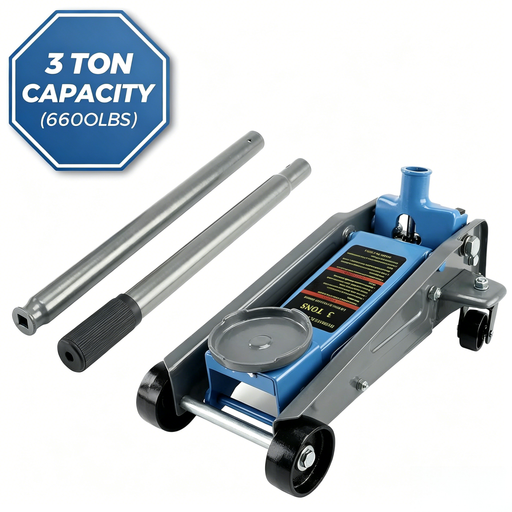
Why this choice suits this profile: Its 3-tonne capacity and 135 to 460 mm lifting range cover many common jobs on a car or SUV in a home garage or DIY workshop.
Its clearly stated minimum height lets you check compatibility with your vehicle before buying, rather than relying solely on the advertised capacity.
A steel construction, two large wheels and two 360° swivel casters make it easy to move around the workshop.
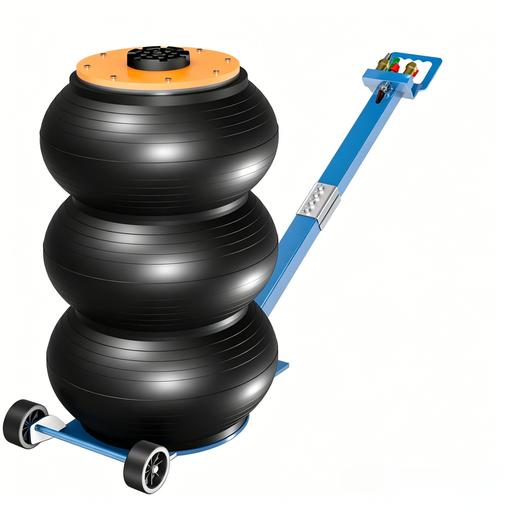
Why this choice suits this profile: This air-powered model is aimed at users who have a compressor and need a 5-tonne capacity for working on cars, trucks or workshop vehicles.
Its lifting range of 5.9 to 15.75 inches and its stated 5-tonne capacity provide concrete benchmarks to check it’s right for the intended use.
Pneumatic lifting claimed in 3 to 5 seconds, a handle adjustable to three positions and a detachable handle for easier storage.
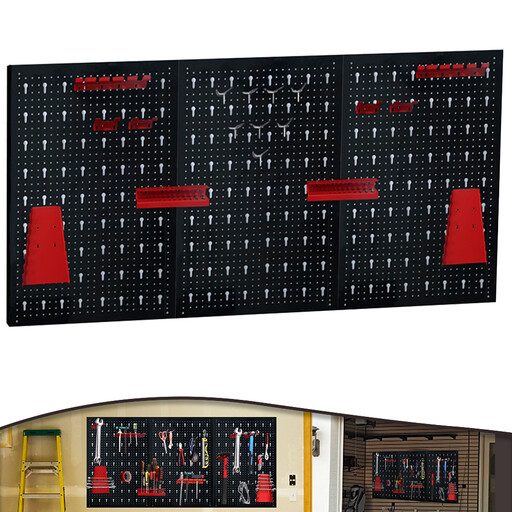
Why this choice suits this profile: This wall storage set is ideal for workshops that want to keep their automotive accessories visible and free up their work surface.
Its stated dimensions and contents — three panels and seventeen hooks — let you accurately assess the available space and the number of tools to organise.
A 120 × 60 cm wall format and a set of hooks included to keep your most-used tools within easy reach.
Before first use, inspect the general condition of the jack, its castors and its saddle. If it’s an air-powered model, also check the air lines. Park the vehicle on a level surface, apply the handbrake and locate the lifting points indicated by the manufacturer.
In a professional workshop, keep the manuals, load information and conformity documents supplied with each device. Also check the obligations that apply to your business and inspect the condition of the equipment in line with the manufacturer’s recommendations.
For storage, group your tools by function: spanners, sockets, screwdrivers, measuring instruments and safety accessories. A logical organisation saves time spent searching and makes it easy to spot a missing or damaged tool.
A 3-tonne hydraulic jack can suit many private vehicles, provided you check their weight, the jack’s minimum height and the lifting points. For an SUV, pay particular attention to the maximum height and the space available under the chassis. A higher capacity never excuses you from respecting the limits stated by the manufacturer.
Yes, provided you have a compatible compressor, a stable floor and enough space to manoeuvre the unit. This type of jack really comes into its own when lifting jobs are frequent or involve heavy vehicles. For just a few jobs a year, a hydraulic model will generally be simpler to set up and use.
Clean your tools after each use, store them away from moisture and never exceed their rated load. For a jack, keep an eye on the condition of the wheels, seals and welds, and watch for any signs of leaks. For a pegboard, regularly check the wall fixings and distribute the load rather than concentrating heavy tools on just a few hooks.