
Livraison le jour même ou le lendemain

Qualité garantie

Débloquez vos offres de bienvenue: Livraison GRATUITE | Jusqu'à -80 % | 30 jours d'essai gratuits à JoyPlus
Téléchargez l'application
A well-organised garage or cellar isn't just for looks: it's a matter of common sense, efficiency, and safety. Yet, choosing the right garage shelving can quickly become a headache. Between staggering maximum loads and baffling material names, it's easy to make the wrong purchase. This guide breaks down the key points and pitfalls to avoid, helping you find the perfect shelving for your needs (and your budget).
Before you pull out your credit card, let's review the common mistakes that can turn a great storage idea into a future problem.
To get it right, forget the marketing hype and focus on a few technical details. These are the true guarantees of quality and longevity for your future garage storage system.
Instead of the total load, look at the load capacity per shelf. A value of 150 kg or more per shelf is a good starting point for versatile use. Most importantly, check for reinforcement crossbars under each shelf. These metal bars are essential for distributing the load and preventing the shelf from bowing in the middle. The thickness of the steel in the vertical uprights is also a tell-tale sign of quality.
For cellar shelving or workshop use, the steel treatment is non-negotiable. Opt for powder-coated steel or galvanized steel frames. Both finishes create a highly effective barrier against rust and scratches, guaranteeing a longer lifespan. For the shelves, if you choose MDF, aim for a thickness of at least 8 mm—the bare minimum for heavy-duty shelving.
A good workshop shelving unit should be able to evolve with your needs. A modular shelf, with height-adjustable levels, allows you to store everything from paint cans to bulkier gardening equipment. Some models can even be converted into two lower workbenches: a real bonus. Boltless, clip-in assembly systems are not only faster to put together but also ensure excellent rigidity once the components are locked in place.
Because every garage is different, here are our recommendations for three typical user profiles.
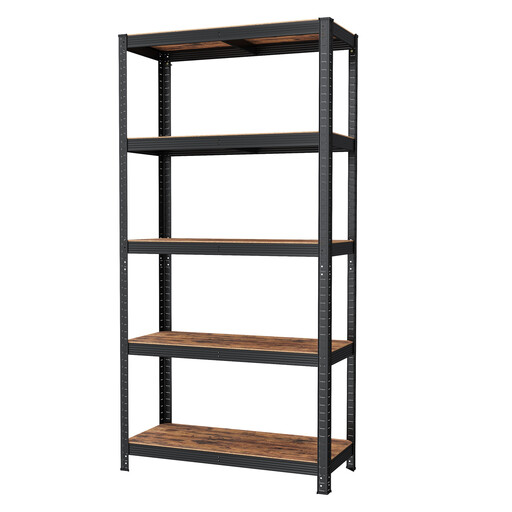
Why this choice? Ideal as a starter unit or for getting a standard-sized garage in order. It offers an excellent balance of capacity, dimensions, and versatility for storing DIY tools, archives, or seasonal items.
Its steel frame and 175 kg per shelf capacity provide rock-solid durability for everyday use. The clip-in assembly is a breeze and guarantees good rigidity.
Its ability to be configured as one tall shelving unit or two separate workbenches offers highly valuable layout flexibility.
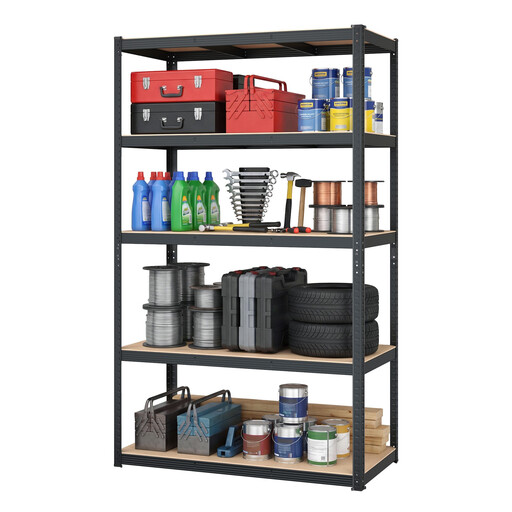
Why this choice? Designed for those who store heavy tools, mechanical parts, or large quantities of materials. Its generous dimensions (200x120x60 cm) and reinforced structure make it the perfect ally for workshops and garages that are put to the test.
The "reinforcement crossbars" make all the difference. They are the guarantee that the 150 kg per shelf capacity isn't just theoretical and that the shelves won't flex under a concentrated load.
Its wide span (1.20 m) is perfect for storing long or bulky items that won't fit anywhere else.
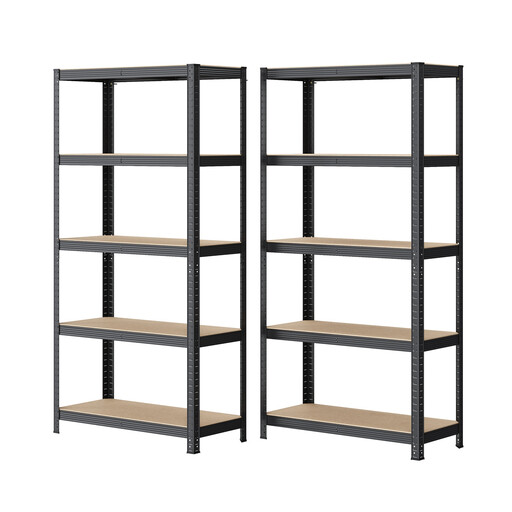
Why this choice? The perfect solution for lining an entire wall or creating a truly optimised storage area. Buying a set is not only more cost-effective but also ensures perfect visual and structural consistency.
This set of two identical units allows you to create one long, stable rack or four sturdy workbenches. The understated and durable grey powder-coated finish is ideal for a garage or cellar.
Modularity at its best: whether aligned, separated, or converted into workbenches, they adapt to your evolving storage and DIY needs.
Explore our full selection of products that tick all the boxes for quality, durability, and safety.
Should a garage shelving unit be fixed to the wall for safety? Although most heavy-duty shelving units are freestanding, fixing them to the wall is highly recommended. It's an essential safety measure to prevent any risk of tipping, especially if children are present or if you store heavy items up high. Wall-fixing kits (anti-tip straps or brackets) are often included. Simply screw them into the top of the shelving unit's upright and into the wall (using a wall anchor suitable for your wall type: plasterboard, brick, concrete, etc.).
What is the lifespan of a metal and MDF shelving unit in a damp cellar? In a damp room, it all depends on two things: the steel's treatment and the quality of the MDF. A powder-coated or galvanized steel frame will hold up well against corrosion. However, even high-quality MDF will eventually absorb moisture if it's not protected. A pro tip to extend its life: before assembly, apply a coat of water-repellent varnish to the shelves, paying close attention to the edges, which are the most porous parts. Also, remember to ventilate the room well—it always helps.
What tools are needed to assemble a heavy-duty shelving unit? It all depends on the assembly system. For traditional nut and bolt models, one or two wrenches or a ratchet wrench will do the job. For more modern, boltless systems, no tools are theoretically required. In practice, a simple rubber mallet is very useful for tapping the crossbars securely into the uprights without causing any damage. In any case, a pair of work gloves is strongly recommended to protect yourself from potentially sharp metal edges.