
Livraison le jour même ou le lendemain

Qualité garantie

Débloquez vos offres de bienvenue: Livraison GRATUITE | Jusqu'à -80 % | 30 jours d'essai gratuits à JoyPlus
Téléchargez l'application
An overflowing garage, a poorly organised cellar, a garden shed cluttered with tools… These situations can quickly become a headache. Choosing the right garage and outdoor storage solution seems simple on the surface. However, the market is flooded with products making tempting promises that often don't live up to the hype. Before pulling out your credit card, it's crucial to know the most common pitfalls to avoid regretting your purchase a few months down the line.
The two most frequent mistakes? Being lured by poor-quality materials and underestimating the actual load capacity. A cheap plastic storage cabinet is likely to warp or discolour under the effects of sun and frost, while a shelf marketed as "heavy-duty" can buckle dangerously under a weight that seemed reasonable. Another point to watch out for: supposedly waterproof garden boxes that end up letting moisture seep in, ruining your cushions or equipment.
To make an informed choice, it's better to rely on objective features rather than marketing hype. Here are the three points to systematically check before any purchase.
The choice of material is the cornerstone of durability and will determine the use of your storage unit.
Load capacity is often a source of confusion. It is imperative to distinguish between two values:
A true heavy-duty shelf is recognisable by its reinforcements (crossbars) under each shelf and its thick frame. The ability to secure it to the wall with an anti-tip kit is an essential safety feature.
For outdoor storage furniture, waterproofing is not an option. A waterproof garden box must have a closing system that properly covers the edges, as well as discreet vents to prevent condensation without letting rain in.
Indoors, modularity is a real asset. A modular shelf allows you to adjust the height of the shelves to accommodate items of various sizes, thus optimising cellar and workshop storage space. Also, consider wall-mounted solutions, like a wall-mounted hose holder, which can free up valuable floor space.
Here are a few solutions that meet specific needs, selected based on our criteria for durability and functionality.
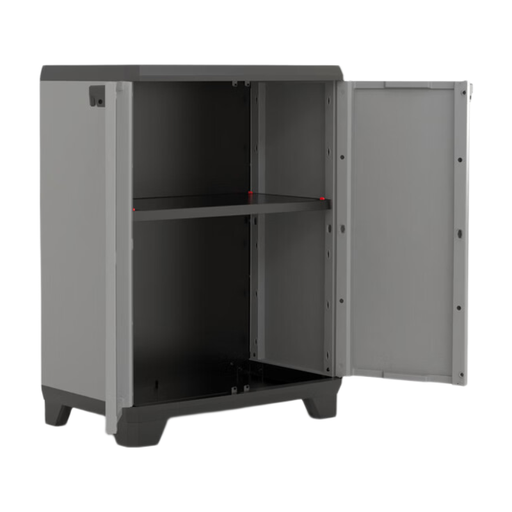
Why we chose it: Ideal for a utility room, entryway, or balcony, this low cabinet offers a discreet and functional storage solution, perfect for compact spaces.
Its sturdy polypropylene construction protects it from moisture and impacts, unlike low-end plastics. Its load capacity is clearly stated, preventing unpleasant surprises.
It includes an adjustable shelf for greater flexibility and a spot for a padlock to secure its contents. Its minimalist design fits in anywhere.
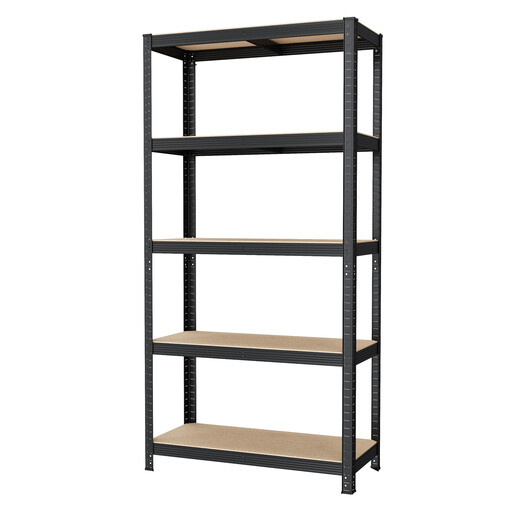
Why we chose it: Perfect for organising a garage, workshop, or cellar, this shelving unit is designed to support very heavy loads and optimise vertical storage.
Its high-quality steel frame and maximum static load capacity of 875 kg (or 175 kg per shelf) deliver on the "heavy-duty" promise with no risk of buckling. The included anti-tip kit is a real safety bonus.
The shelves are height-adjustable, and the unit can be assembled as one tall shelf or two smaller workbenches, offering maximum versatility.
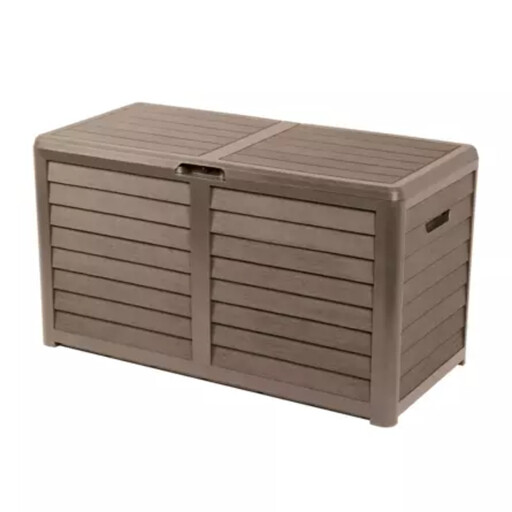
Why we chose it: This large box is the ultimate practical and stylish solution for storing garden furniture cushions, children's toys, or pool equipment, keeping them safe from the elements.
The polypropylene's anti-UV and anti-frost treatment prevents material degradation over time. Its design ensures effective protection against rain, unlike low-end boxes. It even includes anti-pinch and anti-suffocation safety features.
Its large 420-litre capacity, easy tool-free assembly, and the option to lock it with a padlock. The French manufacturing is a real plus.
We have compiled a complete and up-to-date selection of products that meet our strict selection criteria and current standards.
It all depends on what you plan to store. For light boxes and small tools, a load capacity of 50 to 80?kg per shelf may be sufficient. For heavier equipment like engines, anvils, or large toolboxes, aim for a heavy-duty shelf certified for at least 150 to 200?kg per shelf. Always remember to distribute the weight by placing the heaviest items on the bottom shelves.
Yes, provided you choose a quality model. Look for the "UV-treated" label on the product sheet. Without this protection, the plastic can become brittle and discolour over time. It is also advisable to place it in a somewhat sheltered area (under an awning, against a wall) to maximise its lifespan, especially in regions with extreme weather conditions.
Most modern products, whether metal shelves or resin cabinets, are designed for quick and easy assembly. Shelves often use a screwless interlocking system (clip-on), and cabinets are assembled with clips. However, it is always recommended to read the instructions carefully, wear protective gloves for metal shelves, and have a second person to help handle the largest structures.