
Livraison le jour même ou le lendemain

Qualité garantie

Débloquez vos offres de bienvenue: Livraison GRATUITE | Jusqu'à -80 % | 30 jours d'essai gratuits à JoyPlus
Téléchargez l'application
The promise of USB-C was simple: one cable and one charger for all our devices. Yet, today's market is saturated with options, and choosing the right GaN USB-C fast charger has become a real headache. Between promises of high power and ultra-compact designs, it's easy to make the wrong choice.
As the head of product selection at Joybuy, my mission is to help you make sense of it all. Together, we'll break down the common pitfalls to avoid and the essential criteria for finding the power adapter that truly meets your needs—without falling for marketing hype.
Before diving into the spec sheet, it's crucial to know the most common mistakes that lead to disappointment and wasted money.
compact charger that constantly overheats will not only see its performance drop but also have its lifespan reduced.To make an informed decision, focus on these three fundamental parameters. They are the guarantee of your future charger's performance, versatility, and safety.
Power, measured in watts (W), is the primary criterion. Make sure it matches the needs of your most power-hungry device (usually a laptop).
65W charger is a versatile option.100W charger or higher for fast and efficient charging.Also, verify compatibility with the Power Delivery (PD) protocol. This is the standard that allows the charger and your device to communicate to negotiate the optimal and safest charging speed. Without PD, even a high-wattage charger will operate at a crawl.
Gallium Nitride (GaN) is a semiconductor material that replaces traditional silicon. Its main advantage is superior energy efficiency. In practical terms, a GaN charger wastes less energy as heat, which allows for a smaller and lighter travel charger without sacrificing power or safety.
A multi-port charger is ideal for reducing clutter. Pay close attention to how the power is distributed when multiple ports are in use. A good charger will clearly state the power delivered by each port in different configurations (e.g., 65W on one port, or 45W + 20W across two ports). Prioritise models with at least two USB-C ports to be future-proof.
Rather than searching for a non-existent "perfect" model, it's better to choose one that fits your daily use. Here are a few options we recommend, each tailored to a specific need.
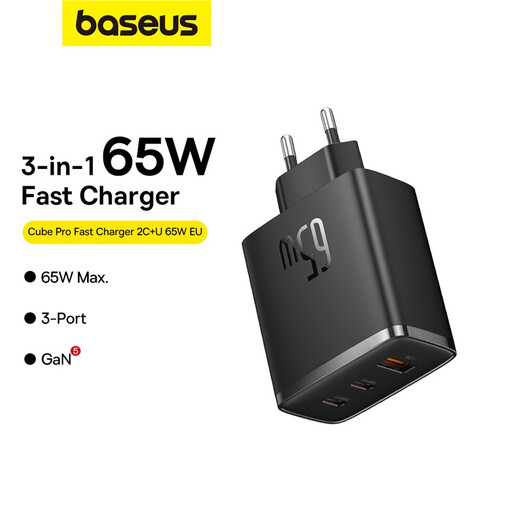
Why we chose it: This is the most balanced solution for those who juggle a laptop (like an ultraportable), a smartphone, and earbuds. It offers ample power for both work and travel, all in a very compact form factor.
The manufacturer clearly details the power distribution (e.g., 45W + 20W), avoiding the misleading 'total wattage' trap. Its GaN5 technology ensures good thermal management despite its compact size.
Three ports (2 USB-C, 1 USB-A) in an ultra-compact body, offering maximum flexibility for modern and legacy devices alike.
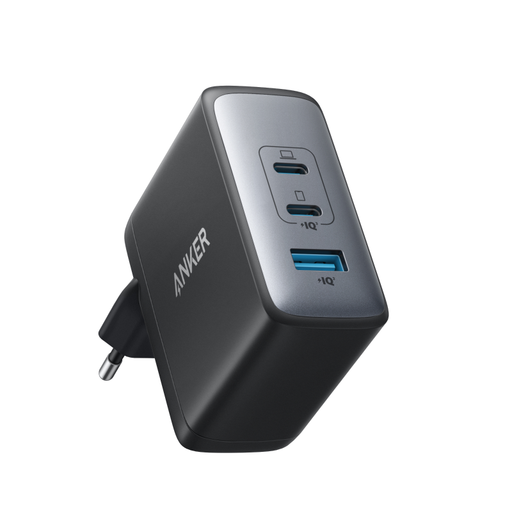
Why we chose it: For those who need to power a `MacBook charger` for a Pro model or another powerful laptop, while keeping power in reserve for a phone and tablet. It's the quintessential desktop or travel solution for power users.
It can deliver a full 100W from a single USB-C port, a fact clearly specified by the brand. Anker's GaN II technology is designed to manage the heat generated by such high power in a compact form factor.
The ability to deliver 100W from a single port, enough power for nearly any USB-C laptop, even under heavy use.
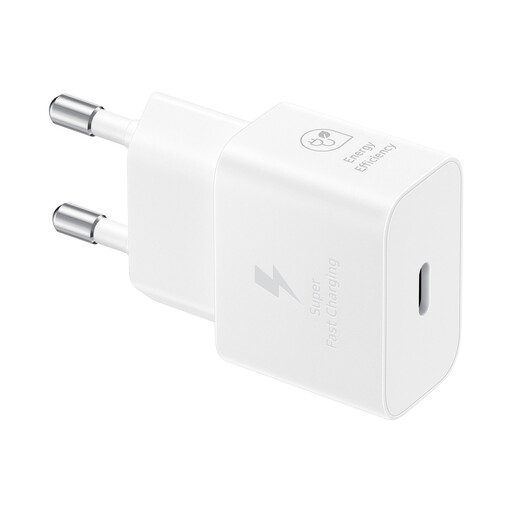
Why we chose it: For those who only need to fast-charge a smartphone or tablet. It's a simple, reliable, and affordable solution from a reputable manufacturer.
With its single port, there's no ambiguity about the power delivered. By choosing an official brand product, you get rock-solid safety and compatibility guarantees.
An effective 'plug-and-play' solution that includes a quality USB-C cable, offering excellent value for money for single-device charging.
We have compiled a complete and up-to-date list of products that meet our strict selection criteria and safety regulations.
No, there is absolutely no risk. Thanks to the Power Delivery (PD) protocol, the charger and your phone "talk" to each other to determine the maximum power the phone can safely accept. The charger will only supply the necessary 25W, not its full capacity.
Yes, but the answer is nuanced. A GaN charger is more energy-efficient: it converts more electricity into charging power and loses less as heat compared to a silicon charger of the same wattage and size. It can still get warm during heavy use (which is normal), but it generally manages this heat more effectively.
The lifespan of a GaN charger is comparable to that of a high-quality traditional charger. It primarily depends on the quality of the components and how you use it. For a model from a reputable brand used under normal conditions, you can expect it to last for several years.