
Livraison le jour même ou le lendemain

Qualité garantie

Débloquez vos offres de bienvenue: Livraison GRATUITE | Jusqu'à -80 % | 30 jours d'essai gratuits à JoyPlus
Téléchargez l'application
By Joy, our product expert at Joybuy
Tired of a bag weighed down by a tangled mess of cables and chargers? One for your phone, a bulkier one for your laptop, and yet another for your tablet? It's a situation that professionals and travellers know all too well. Fortunately, those days are over. GaN (gallium nitride) technology has changed the game, offering solutions that are powerful, compact, and capable of powering multiple devices at once.
This guide is designed to help you navigate the jungle of GaN chargers and choose the model that's right for you, without getting bogged down in marketing jargon. We'll break down the essential criteria to consider and present our selection of the best models to optimise your setup in 2026.
Before you dive in, there are a few key concepts to master to make the right choice. The best charger is, above all, one that perfectly fits your daily use.
Power, measured in watts (W), is the name of the game. It determines the charging speed and the types of devices you can power.
One of the great advantages of GaN is the ability to pack multiple ports into a pocket-sized multi-port charger.
Verify that the charger supports your devices' fast-charging protocols (Power Delivery, Quick Charge, etc.). Most modern GaN chargers are universal, but a quick look at the spec sheet will help you avoid any unpleasant surprises.
Here is our selection, designed to meet the needs of different user profiles.
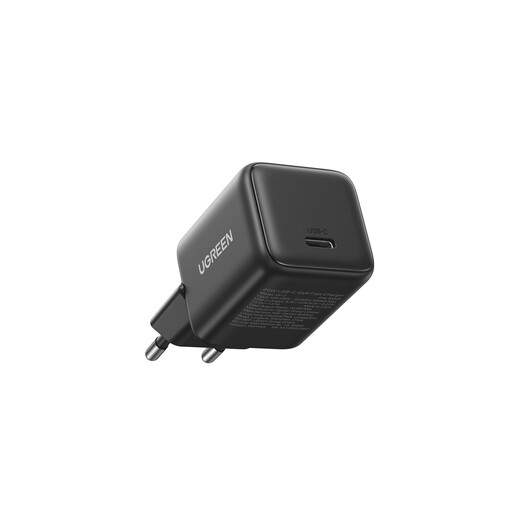
Why it stands out: This charger is the promise of GaN in its purest form: compactness. Barely larger than Apple's old 5W charger, it delivers 20W, enough to fast-charge most current smartphones. Its minimalist design makes it a discreet travel companion or a desktop charger that knows how to stay out of the way.
Pros:
Who is it for? For those looking for a minimalist and efficient solution to quickly charge their smartphone. Ideal to replace the original charger (which is often missing from the box!) or as a secondary charger for the office or travel.
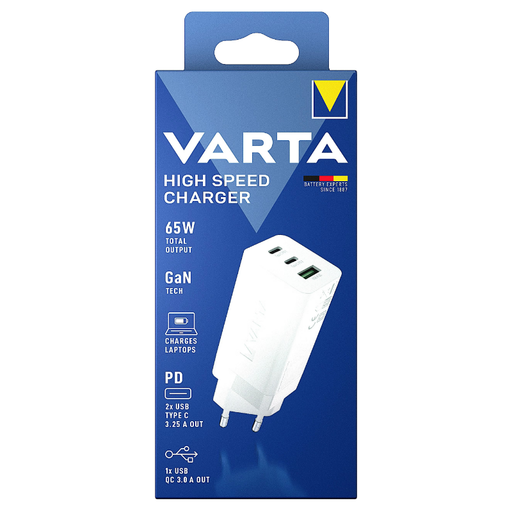
Why it stands out: VARTA delivers an excellent balance of power and versatility here. With its 65W and three ports (two USB-C PD, one USB-A), it can handle an ultrabook, a smartphone, and another accessory at the same time. Its elongated design is a real plus for plugging it into crowded power strips without blocking adjacent outlets.
Pros:
Who is it for? For the mobile professional or frequent traveller who wants a single charger for their laptop, phone, and tablet. A remarkably well-balanced all-in-one solution.
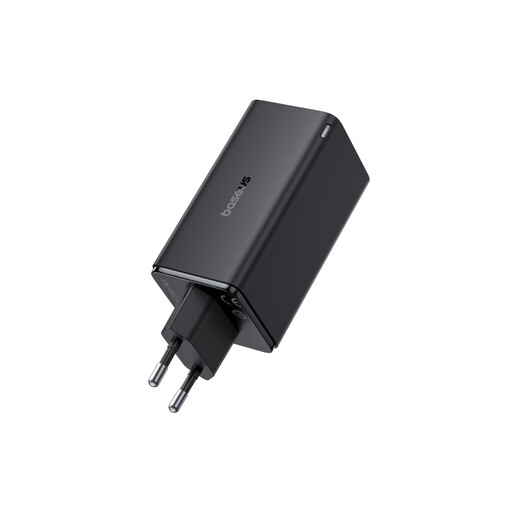
Why it stands out: Here, we're moving upmarket with a true charging station for your desk... or your travels. With its 100W of power and four ports (two USB-C, two USB-A), it's aimed at the most demanding users. It can power a MacBook Pro at full speed while simultaneously recharging three other devices. The magic of Baseus's GaN6 technology is packing all this energy into a case that remains stunningly compact.
Pros:
Who is it for? For the power user, creative professional, or tech enthusiast who juggles a powerful laptop, a smartphone, a tablet, and a myriad of other gadgets. The ultimate solution to declutter your desk and your travel bag.
Our selection highlights models that meet specific needs, but the GaN charger market is much broader. If these models don't check all your boxes, feel free to explore our full catalogue to discover other power ratings and configurations.
Discover our full range of battery chargers
GaN is the acronym for gallium nitride, a semiconductor material that is replacing the silicon traditionally used in our chargers. Its advantage? It can handle higher voltages and dissipates heat much more efficiently. The result: for the same power output, chargers are much smaller, lighter, and waste less energy.
No, there's no risk if you choose a quality charger that complies with safety standards (CE marking, etc.). Modern chargers, especially those with Power Delivery (PD), communicate with the connected device to deliver precisely the right amount of power. A 100W charger will never "force" 100W into a smartphone that only requires 20W. So you can safely use a very powerful charger to recharge smaller devices.
Absolutely. The cable is the often-overlooked link in the charging chain, yet it's just as crucial as the charger. To get the full power from your charger, especially above 60W, it's imperative to use a USB-C cable designed to handle that level of current. A low-quality or unsuitable cable will not only throttle the charging speed but can also pose an overheating risk. So, always remember to check the specifications of your cables.