
Livraison le jour même ou le lendemain

Qualité garantie

Débloquez vos offres de bienvenue: Livraison GRATUITE | Jusqu'à -80 % | 30 jours d'essai gratuits à JoyPlus
Téléchargez l'application
The laptop charger, the smartphone charger, the tablet charger... Who hasn't sighed at the tangled mess of cables at the bottom of their bag? It's a headache that's not only bulky but also completely inefficient. Fortunately, one technology is changing the game?: gallium nitride, or GaN. The concept? A GaN charger packs impressive power into an ultra-compact form factor, capable of single-handedly replacing your entire collection of adapters.
As the Head of Product Recommendations at Joybuy, my mission is to guide you through this tech jungle. This guide will reveal the key criteria for choosing the right charger and present our selection of the best models for 2026.
Before diving into our selection, let's review the key points for making the right choice.
This is the heart of the matter. Expressed in watts (W), power determines charging speed and compatibility. A modern smartphone needs about 20?W, while a power-hungry laptop like a MacBook Pro will require up to 100?W or more for optimal charging.
A multi-port charger is the key to simplifying your life. Check the number and type of available ports?:
Ideally, a configuration with two USB-C ports and one USB-A port offers maximum flexibility. This allows you to power your MacBook and iPhone simultaneously, while also recharging your headphones or a power bank.
GaN technology uses semiconductors that are far more efficient than traditional silicon. The result?: smaller components that generate less heat and waste less energy. For digital nomads and frequent travellers, the space and weight savings in their luggage are simply phenomenal. A compact travel charger is one of the major benefits of this technology.
We have selected three models that cater to distinct use cases, from a power monster to an ultra-portable option.
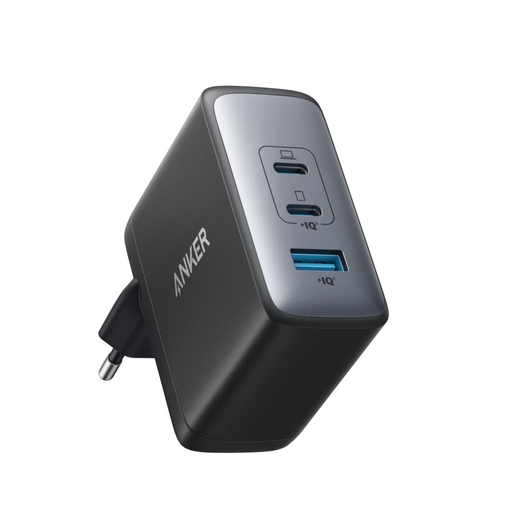
Why we chose it?: This model is a small marvel. It combines a colossal 100W of power with three ports, all in a stunningly compact form factor thanks to Anker's GaN II technology. It's tailored for demanding users who need to power a power-hungry laptop while charging other devices.
Advantages?:
Who is it for? For professionals and creatives who juggle a complete ecosystem (powerful laptop, smartphone, accessories) and want a single charger for both the office and travel.
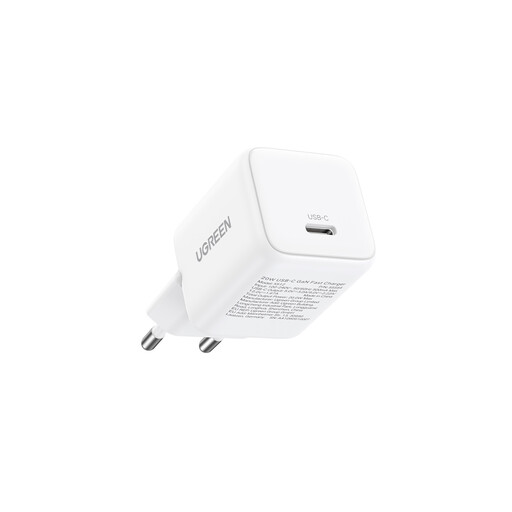
Why we chose it?: Here, the keyword is compactness. With its 20W of power and single USB-C port, it's barely larger than Apple's ancient 5W charger, yet it offers unparalleled charging speed, perfect for modern smartphones.
Advantages?:
Who is it for? For those looking for a second, ultra-compact charger for their smartphone, or who simply need to quickly charge one device at a time (phone, headphones, etc.).
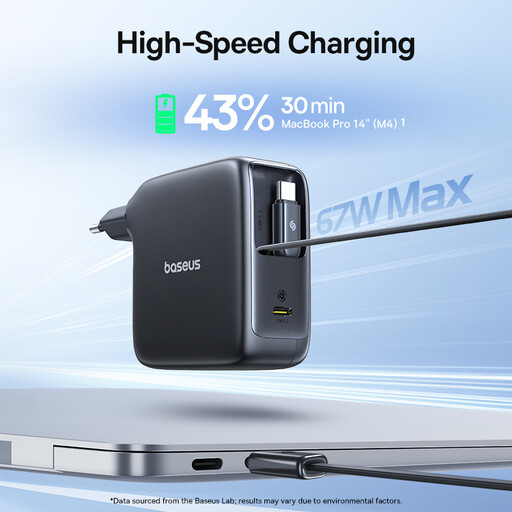
Why we chose it?: Its design is simply brilliant. It integrates two retractable cables (one USB-C and one Lightning). No more tangled mess at the bottom of your bag! With 67W of power and a spare USB-C port as a bonus, it's the quintessential all-in-one solution.
Advantages?:
Who is it for? For travellers, minimalists, and anyone who hates dealing with cables. It is arguably the most convenient charging solution on the market for on-the-go use.
View the Baseus EnerCore on Joybuy
This selection is just a glimpse of what's available; the GaN charger market is booming. If you have specific needs or are simply curious to see other models, feel free to explore our full catalogue.
There you will find a much wider selection in terms of power, connectivity, and design. Take a look at our complete category of USB-C chargers.
1. What exactly is a GaN charger? A GaN charger replaces silicon, traditionally used in electronics, with components made of gallium nitride (GaN). This next-generation semiconductor material can handle higher voltages and conducts current with much greater efficiency. In practical terms, this allows for the creation of chargers that are much smaller, lighter, and generate less heat, while being just as powerful (if not more so).
2. Is a GaN charger compatible with all my devices? Yes, absolutely. Modern GaN chargers rely on universal standards like USB Power Delivery (PD). They are therefore capable of charging a huge variety of devices, from smartphones to laptops, regardless of the brand. The charger and the device constantly "communicate" to determine the fastest and safest charging power.
3. Is it risky to use a 100W charger for my smartphone that only needs 20W? No, there is absolutely no risk. The USB Power Delivery (PD) protocol is designed for precisely this scenario. It's a smart system?: the 100W charger "knows" that your phone can only accept 20W, so it will only deliver that amount of power. Your device never receives more current than it can handle, which ensures safety and preserves its battery health.