
Livraison le jour même ou le lendemain

Qualité garantie

Débloquez vos offres de bienvenue: Livraison GRATUITE | Jusqu'à -80 % | 30 jours d'essai gratuits à JoyPlus
Téléchargez l'application
The drawer overflowing with chargers, the travel bag weighed down by a collection of power adapters, the smartphone that's barely charging right before an important trip... We've all been there. Fortunately, a new technology has arrived to bring order to this chaos?: the GaN charger.
Behind this acronym is Gallium Nitride (GaN), a material that has enabled the creation of chargers that are at once smaller, more powerful, and more efficient. The idea?? To centralise charging for all your devices into a single outlet, whether you're at the office, at home, or on the go. In this guide, we'll explain how to choose the right one and present our favourite models of the moment.
To ensure you make the right choice, here are the key technical points to check before you buy.
Power, measured in watts (W), is the most critical factor?: it dictates charging speed. A MacBook charger or one for another laptop will require at least a 65W power adapter. Conversely, an iPhone charger or an Android smartphone will be satisfied with 20 to 30W for effective fast charging. If you plan to plug in multiple devices at once, calculate their combined power needs. Be aware?: on a multi-port USB charger, the advertised total power is distributed among the ports as soon as more than one is in use.
The main appeal of a GaN charger is finally being able to retire all your other power bricks. Take stock?: how many devices do you charge daily?? A model with two USB-C ports and one USB-A port is often the winning combination, offering excellent versatility. The USB-C fast charger has become the standard for modern devices (laptops, tablets, smartphones), thanks to its power and reversible connector. Keeping a USB-A port remains a valuable bonus for older accessories like a smartwatch or headphones.
Your use case will dictate the most suitable form factor.
Here are the models that caught our eye, each one designed for a specific need.
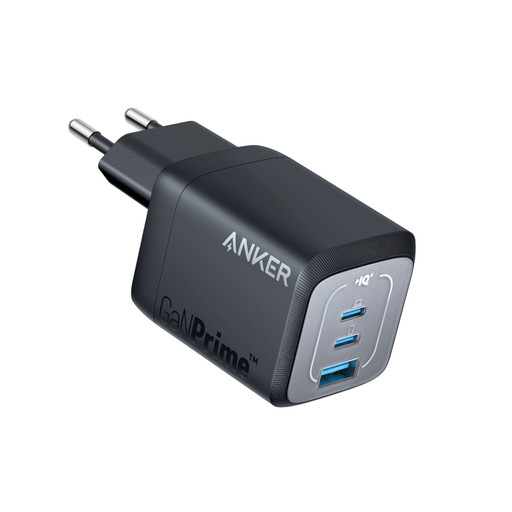
What sets it apart This Anker charger strikes the perfect balance between power, portability, and versatility. With 67W, it can power a MacBook Air or a Dell XPS while also recharging a phone and a tablet. Featuring foldable prongs and a design 51?% smaller than Apple's original 67W charger, it's the ideal travel companion.
Pros
Who is it for?? The perfect choice for mobile professionals and travellers who want a single power brick for their laptop, smartphone, and other gadgets without the bulk.
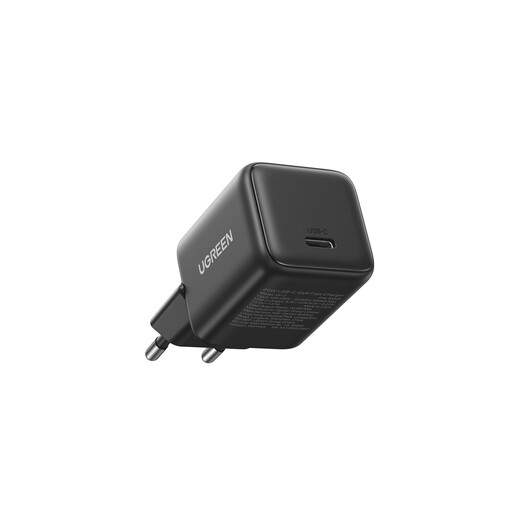
What sets it apart Sometimes, simplicity is best. This UGREEN charger gets straight to the point?: delivering a fast, efficient charge to a single device via its USB-C port. Its 20W output is perfectly calibrated for modern smartphones like the iPhone or the latest Samsung and Xiaomi models. GaN technology gives it a tiny form factor and a featherlight weight.
Pros
Who is it for?? Perfect for those who simply need an efficient, ultra-compact, and affordable iPhone charger or Android charger, without needing multiple ports.
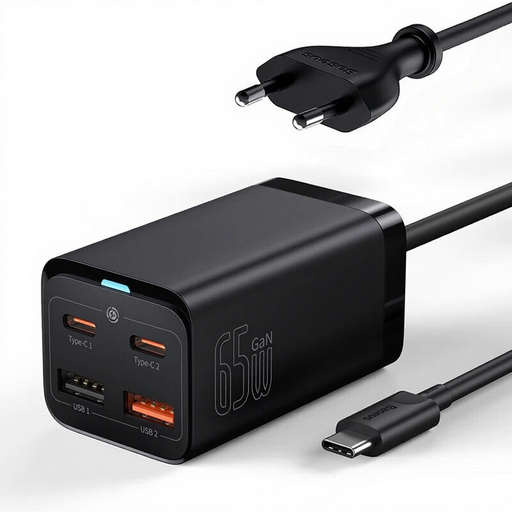
What sets it apart The Baseus GaN3 Pro is designed to declutter your desk. Unlike traditional wall chargers, it's a desktop charging station that sits directly on your table, connected to the outlet by a 1.5m cord. This solution makes its four ports (two USB-C, two USB-A) always accessible, without you having to twist and turn.
Pros
Who is it for?? The ideal companion for anyone with a fixed desk (at home or in the office) who wants a charging setup that is powerful, clean, and well-designed.
Our selection covers the most common use cases, but the GaN charger market is filled with options. Need more power?? Looking for a very specific form factor?? Feel free to explore our complete collection of portable fast chargers to find the model that checks all your boxes.
GaN technology is based on Gallium Nitride, a semiconductor that is far more efficient than the silicon historically used in our chargers. It conducts electricity better and therefore generates less heat. The result?? Less heat means manufacturers can create much more compact chargers with the same power output, without ever compromising on safety.
No, there is absolutely no risk. Modern chargers, especially those compatible with the USB Power Delivery (PD) standard, communicate with the connected device to deliver only the power it requests. A 65W charger will power a smartphone at its maximum charging speed (e.g., 20W or 25W) without ever sending an excessive amount of power that could damage it.
Yes, and this is a crucial point that is often overlooked?! The cable is just as important as the charger. To take full advantage of a USB-C fast charger's power, especially for a laptop, it is essential to use a USB-C to USB-C cable rated to handle that power (for example, a 65W or 100W certified cable). If you use a low-quality cable, charging will work, but it will be limited by the cable's capacity, not by the much higher capacity of your new charger.