
Livraison le jour même ou le lendemain

Qualité garantie

Débloquez vos offres de bienvenue: Livraison GRATUITE | Jusqu'à -80 % | 30 jours d'essai gratuits à JoyPlus
Téléchargez l'application
By the editorial team, 18 July 2026
The proliferation of electronic devices has turned our bags and desks into a tangled mess of accumulating cables and chargers. One block for the laptop, another for the smartphone, a third for the tablet… It's a real hassle, especially when travelling.
Fortunately, GaN (Gallium Nitride) technology is a game-changer. A GaN charger packs more power into a much more compact form factor than traditional silicon chargers. This guide is here to help you cut through the noise and choose the perfect model for your needs, breaking down the best options that combine performance, compactness, and versatility.
Before you dive in, let's review a few essential criteria to ensure you make the right investment.
This is the most critical factor. Expressed in watts (W), the power determines the charging speed and the types of devices you can power.
Ensure compatibility with the Power Delivery (PD) standard. This technology allows the charger to communicate with your device to provide the right amount of power, guaranteeing a charge that is both fast and safe.
The multi-port USB-C charger has established itself as an indispensable tool for mobile professionals and tech enthusiasts. With multiple USB-C ports, you can plug in your computer, phone, and headphones all at the same time using a single adapter. Some models retain a USB-A port to remain compatible with older devices. Simply consider how many devices you use daily to choose a charger with the right number of ports.
This is the trump card of a GaN charger?: its incredibly small size. This is a decisive criterion if you are looking for a compact travel charger. Some models are extra-slim to slide behind furniture, while others have a cubic design to blend in on a power strip. Think about where you will use it most often: at home, in the office, or on the go.
We have scoured the market to bring you a selection tailored to different profiles, from the minimalist traveller to the fully-equipped professional.
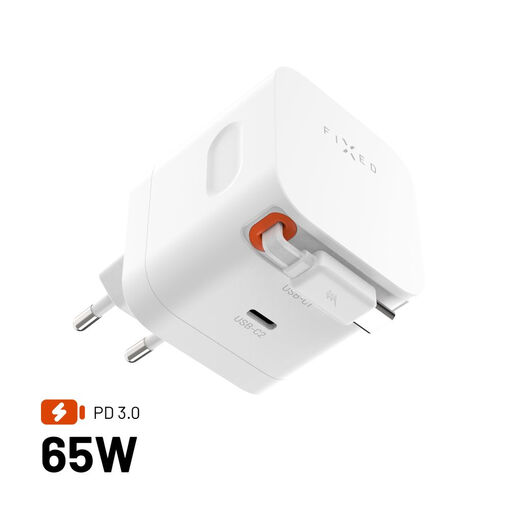
Why it stands out?: This model tackles one of the traveller's worst nightmares: the tangled mess of cables. Its integrated 64?cm USB-C cable retracts automatically and attaches magnetically. The result?? A charging solution that is always ready and perfectly organised.
Highlights?:
Who is it for? The frequent traveller and the mobile professional who appreciate simplicity, organisation, and efficiency. It's the perfect solution for those who want a fast USB-C charger with its own integrated cable, without any of the clutter.
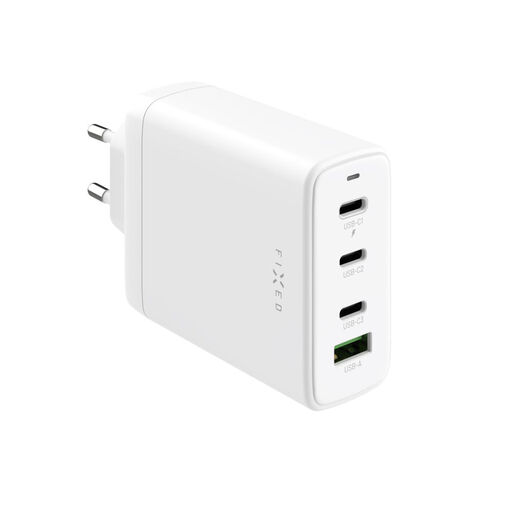
Why it stands out?: With 120?W of total power and four ports, this charger is a true pocket-sized power station. It can power a complete ecosystem of devices, including the most demanding laptops.
Highlights?:
Who is it for? Power users, families, or teams who need to charge several large devices (laptops, tablets, smartphones) at the same time. It turns any wall socket into a high-powered charging hub.
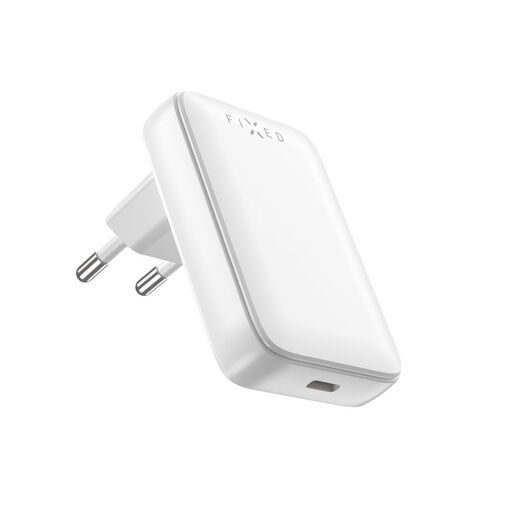
Why it stands out?: Its unique L-shaped design and ultra-slim profile mean it's completely out of the way once plugged in. It's designed for awkwardly placed sockets, like those hidden behind a bed, sofa, or TV stand.
Highlights?:
Who is it for? Those looking for a discreet and efficient charging solution for daily use, both at home and in the office. It's also an excellent secondary compact travel charger for a smartphone.
Our selection highlights models for specific needs. If you have other criteria or simply want to explore other options, many other solutions are available.
Discover our full range of USB travel chargers
GaN is the acronym for Gallium Nitride. It is a semiconductor material that is much more efficient than the silicon used in conventional chargers. Its properties allow energy to be transferred with far less loss in the form of heat. As a result, components can be packed more tightly, making a GaN charger significantly more compact and efficient at the same wattage.
No, as long as you use a certified, high-quality charger. Modern chargers, especially those equipped with Power Delivery (PD) technology, are smart. They communicate with the connected device to supply only the maximum power it can safely handle, without any risk. This means a 100?W charger will only deliver 20?W to a smartphone that can't handle more.