
Livraison le jour même ou le lendemain

Qualité garantie

Débloquez vos offres de bienvenue: Livraison GRATUITE | Jusqu'à -80 % | 30 jours d'essai gratuits à JoyPlus
Téléchargez l'application
Choosing a gaming mechanical keyboard can be a real challenge, given the overwhelming number of options. Switches, form factors, connectivity… it's easy to get lost. Today, we're not just looking for a responsive peripheral for gaming, but a true centrepiece for our setup that combines performance, typing comfort, and aesthetics.
As product experts at Joybuy, our mission is to guide you with clear and objective information. This guide is designed to demystify the topic and help you find the keyboard that perfectly meets your needs, whether you're a hardcore gamer, a content creator, or simply a tech enthusiast.
Before diving into our selection, let's review the essential criteria for making the right choice.
The core of a mechanical keyboard is its switches. They define the tactile feel, sound, and responsiveness of each key. There are three main families:
For those who love to experiment, a hot-swappable keyboard is a godsend. It allows you to change switches on the fly, without any soldering, for total customisation of your typing experience.
The days when all keyboards sported a 104-key layout are long gone. Compact form factors are gaining serious traction: they free up precious desk space and promote better ergonomics.
Innovations like the gasket mount are finally becoming mainstream. This design uses silicone gaskets to "suspend" the key plate within the chassis. The result: vibrations are absorbed, producing a softer, more pleasant sound—the famous thock.
On the connectivity side, the wireless mechanical keyboard has established itself as the new standard. Recent models often offer three modes:
Finally, the RGB mechanical keyboard remains a customisation staple, allowing you to synchronise lighting effects with the rest of your ecosystem.
Here are three models that caught our attention for their features, design, and price-to-performance ratio.
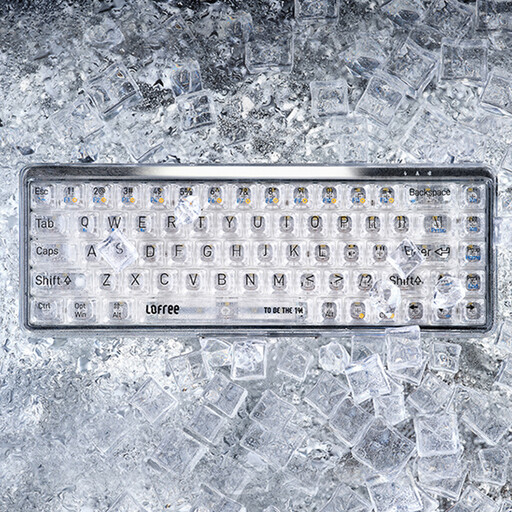
Why it stands out: The Lofree OE907 takes a bold approach with a futuristic aesthetic: its chassis and keycaps are entirely transparent. Its compact 65% layout (68 keys) makes it a prime choice for desks where space is at a premium, without sacrificing the arrow keys.
Key Features:
Who is it for? Aesthetes looking for a minimalist and modern design. It's the ideal companion for Mac and Windows environments, for those who want a keyboard that is as high-performing as it is beautiful.
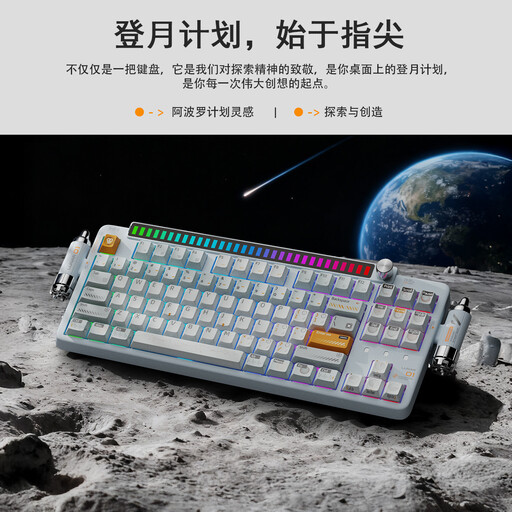
Why it stands out: The KEYSME Lunar 01 is aimed at custom keyboard enthusiasts seeking a refined acoustic profile and a velvety smooth typing feel. Its dual-dampened gasket mount structure produces that famous deep and satisfying "thock" sound, while its interactive modules add a touch of originality.
Key Features:
Who is it for? Enthusiasts and content creators who demand a premium typing experience and sound signature, all with advanced customisation options and a head-turning design.
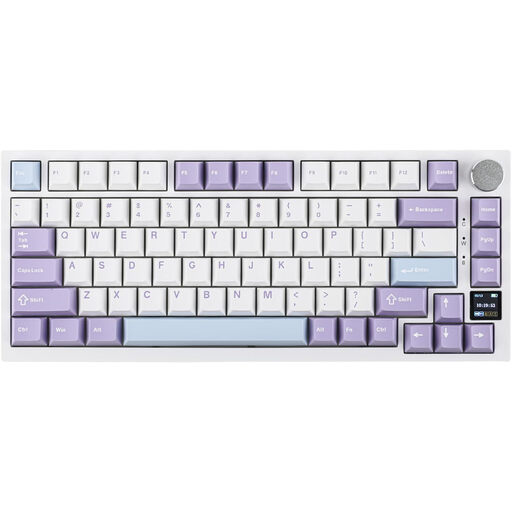
Why it stands out: The Ajazz AK820 Pro distinguishes itself with a feature as rare as it is practical: a customisable TFT colour screen. This screen displays crucial real-time info (battery life, connection mode, time...) and can even play GIFs. A true dashboard at your fingertips.
Key Features:
Who is it for? Gamers and power users who love to have complete control over their hardware. The screen is a game-changing feature for checking info without leaving your game, while its internal design makes it a workhorse for both intensive typing and gaming.
Our selection highlights a few models that are emblematic of current trends. But the world of mechanical keyboards is vast! If you're looking for other form factors, brands, or price points, feel free to explore our full catalogue.
? Explore our full range of PC mice and keyboards
A membrane keyboard relies on a rubber dome under each key, which often results in a mushy and imprecise typing feel. In contrast, a mechanical keyboard integrates an independent switch under each key. The result: superior responsiveness, much better durability, and a crisp, satisfying typing feel.
Absolutely. While Bluetooth can still have some perceptible latency, 2.4 GHz wireless technology (via a USB dongle) now offers performance that is indistinguishable from a wired connection. Many professional gamers have adopted it without any compromise on responsiveness.
A hot-swappable keyboard is equipped with sockets that allow you to change the mechanical switches without any soldering. It's a feature highly valued by enthusiasts because it offers the freedom to test different types of switches (linear, tactile, clicky) or to replace a faulty switch in an instant.