
Livraison le jour même ou le lendemain

Qualité garantie

Débloquez vos offres de bienvenue: Livraison GRATUITE | Jusqu'à -80 % | 30 jours d'essai gratuits à JoyPlus
Téléchargez l'application
Choosing a gaming headset can quickly become a headache. Between marketing promises, overwhelming spec sheets, and flashy designs, it's easy to end up with a disappointing product. Muddy sound, a crackling microphone, a headband that becomes painful after an hour of play... the list of potential letdowns is long.
As a product expert at Joybuy, my mission is to cut through the noise for you. Let's forget the marketing jargon and focus on what truly matters. Together, let's decode the pitfalls to avoid and the key criteria that will make all the difference.
To make sure you make the right choice, focus on these three pillars. Once you've mastered them, you'll be able to read between the lines of any product sheet.
The classic showdown between a wired gaming headset and a wireless gaming headset comes down to your usage and your budget.
A note on console compatibility: For a PS5 headset, verify that it fully supports Sony's 3D Tempest Audio. For an Xbox headset, compatibility must be explicitly stated, as Microsoft uses its own proprietary wireless protocol.
A good gaming headset with a mic is crucial for being heard clearly by your teammates. Don't get bogged down in specifications; focus on these three concrete points:
A headset can have the best sound in the world, but if it gives you a headache after an hour, it will end up in a closet.
Rather than an endless list, here is our targeted selection, designed for specific gamer profiles.
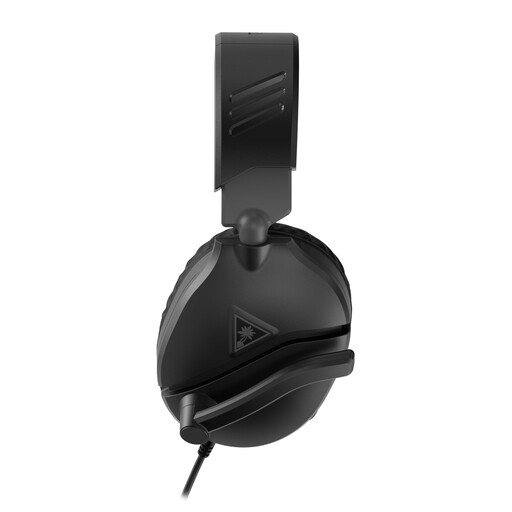
Why we recommend it: A reliable choice for anyone who wants the essentials without breaking the bank. It gets straight to the point: clean stereo sound, an effective mic, and a feather-light design for gaming on PC, PlayStation, Xbox, or Switch.
It doesn't fall for the gimmick trap. Its strength is its simplicity: a 3.5mm jack ensures nearly universal multi-platform headset compatibility, without the hassle.
Its sensitive mic with a flip-to-mute function is a real bonus at this price point. Lightweight and surprisingly comfortable for its class.
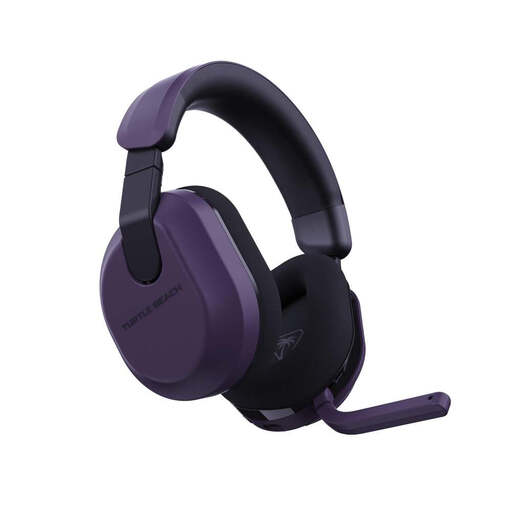
Why we recommend it: For gamers who put in long hours across multiple platforms and can no longer stand being tethered by a wire. This wireless gaming headset checks all the boxes: massive battery life and effortlessly simple multi-platform connectivity (Xbox, PS, PC, Switch).
Here, the promise of freedom is no empty boast. With 80 hours of battery life, low-battery anxiety is a thing of the past. The QuickSwitch technology, which lets you switch between 2.4GHz and Bluetooth on the fly, is a true game-changer.
Record-breaking battery life. AI-enhanced microphone for a crystal-clear voice. 50 mm drivers for rich and precise sound.
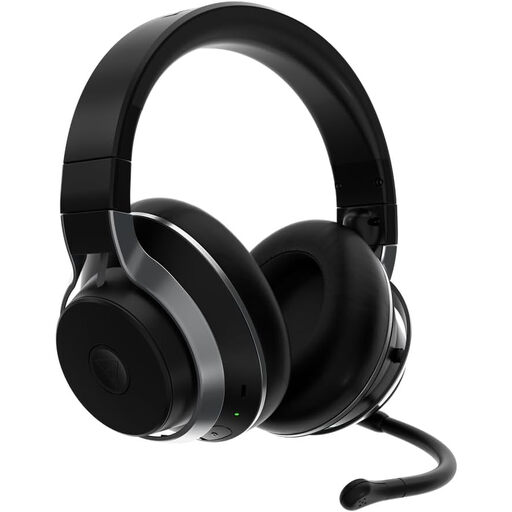
Why we recommend it: The ultimate headset for demanding gamers and content creators who want a perfect sound bubble. It combines formidable active noise cancellation (ANC) with a simply brilliant swappable battery system.
It tackles the Achilles' heel of all wireless headsets: running out of power. Its system of two swappable batteries (one in the headset, the other charging on the base) guarantees infinite battery life. This isn't a gimmick, but a real solution.
Non-stop gaming thanks to the dual-battery system. High-performance active noise cancellation (ANC). Simultaneous 2.4GHz wireless and Bluetooth connectivity.
Discover our full selection of products that meet our rigorous selection criteria and current standards.
Not necessarily. The wired gaming headset remains the king of reliability: no latency, no battery, and often a more affordable price. However, a good wireless gaming headset (using 2.4GHz) now offers nearly imperceptible latency and unmatched freedom of movement. It all depends on your priorities: budget and simplicity (wired) or comfort and total freedom (wireless).
For wireless, the only guarantee is to look for the official "Designed for Xbox" logos or an explicit mention of PS5 compatibility. With wired, it's simpler: for a PS5 headset, plugging it into the DualSense controller's 3.5mm jack ensures compatibility with 3D Audio. The same goes for an Xbox headset; connecting to the controller is a safe bet. For wireless on Xbox, compatibility must be clearly specified by the manufacturer.
Yes, if you play in a noisy environment. ANC (Active Noise Cancellation) creates a true bubble of immersion by filtering out constant background noises (fans, traffic, etc.). However, for most gamers, good passive isolation (the kind offered by over-ear cups that fully enclose the ear) is often sufficient and much more affordable.