
Livraison le jour même ou le lendemain

Qualité garantie

Débloquez vos offres de bienvenue: Livraison GRATUITE | Jusqu'à -80 % | 30 jours d'essai gratuits à JoyPlus
Téléchargez l'application
The gaming headset market is overflowing with options, technological promises, and flashy designs. Faced with this avalanche of information, it's easy to feel lost or, worse, experience buyer's remorse. As a product expert at Joybuy, my mission is to help you cut through the noise. Let's forget the marketing jargon and focus on what's essential?: your gaming experience. Together, let's break down the 3 most common pitfalls and the criteria that truly matter for making the right choice.
Too many gamers end up with an unsuitable headset, falling victim to slick marketing promises. Here are the most frequent traps.
To avoid making a mistake, focus on these three pillars that will make all the difference.
The choice between a wired gaming headset and a wireless gaming headset depends on your usage.
This is THE criterion you should never overlook. Always check for explicit compatibility with your machine(s).
A gaming headset with a mic is essential for team play. A good microphone should offer clear voice capture and, ideally, ambient noise reduction. The "flip-to-mute" feature (raising the boom arm to mute the mic) is a great quality-of-life feature, saving you from fumbling for a button mid-game.
Here are a few options that cater to distinct user profiles, taking into account the criteria we've just discussed.
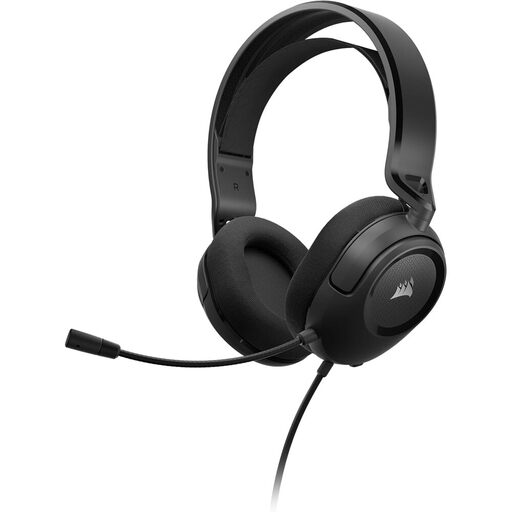
Why we love it : It's the simple, reliable, and effective solution for the gamer who doesn't want to break the bank. Its 3.5 mm wired jack connection ensures near-universal compatibility (PC, consoles via the controller, mobile), completely hassle-free.
It skips marketing gimmicks like low-end virtual surround sound to focus on the essentials : respectable audio quality delivered by its 50 mm drivers and comfort designed to last.
Near-universal compatibility thanks to its 3.5 mm jack. Discord-certified unidirectional mic with the very convenient flip-to-mute feature.
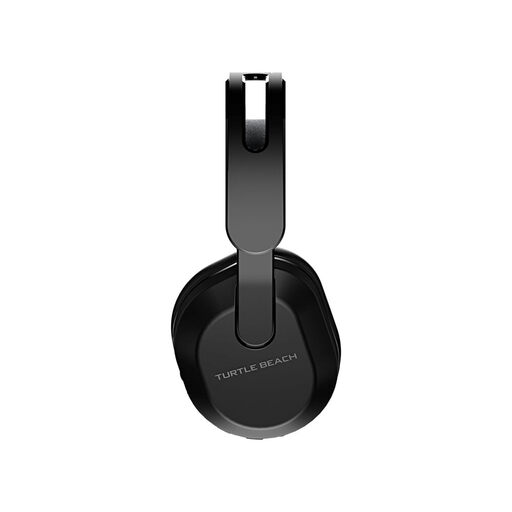
Why we love it : Specifically designed for the Xbox ecosystem, it ensures a low-latency 2.4 GHz wireless connection. At the same time, its Bluetooth connectivity opens it up to PC, Switch, or mobile, for well-designed versatility.
It doesn't fall for the false "universal" promise. It directly addresses the need for a high-performance wireless connection on Xbox, while adding Bluetooth as a secondary compatibility solution. It's honest, and it works.
Dual wireless connectivity (2.4 GHz + Bluetooth) with a QuickSwitch button to toggle on the fly. Up to 40 hours of battery life.
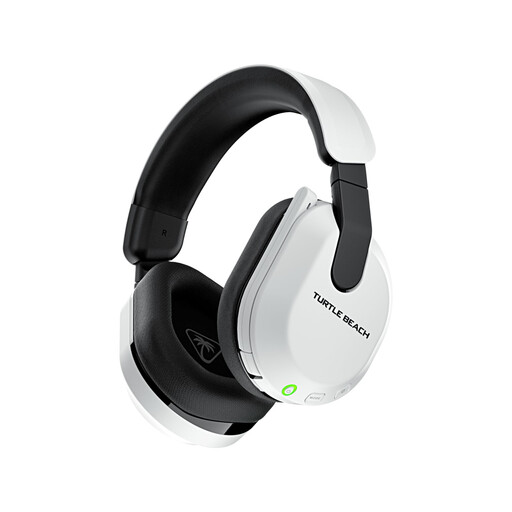
Why we love it : The ultimate wireless solution for the gamer who juggles Xbox, PlayStation, PC, and Switch. Its unique dongle is designed to work on all these platforms, finally solving the compatibility headache. Its monster 80-hour battery life will delight marathon gamers.
It delivers on its promise of a wireless multi-platform headset by providing the right technology (a compatible dongle and QuickSwitch) to make everything work seamlessly, instead of hiding behind a vague marketing claim.
Record-breaking 80-hour battery life. Broad 2.4 GHz wireless compatibility (Xbox, PS, PC, Switch). Mic with AI-powered background noise isolation.
We have curated a full range of products that meet these strict selection criteria.
Generally, no. Wireless headsets designed for Xbox use a proprietary direct-connection technology. To work on a PS5, the headset must offer an alternative?: a dongle with a "PlayStation" mode, a 3.5?mm wired jack connection, or Bluetooth (even though the PS5 doesn't natively support game audio via Bluetooth). Always check the product page for an explicit "PS5/PS4 compatible" mention.
In the vast majority of cases, the lithium-ion battery is integrated and not designed to be user-replaceable. Its lifespan is measured in hundreds of charge cycles, which is why battery life is such an important criterion at the time of purchase. A few rare, very high-end models, like the Turtle Beach Stealth Pro, offer a swappable battery system, but this remains the exception.
Absolutely not. Excellent stereo sound, delivered by good drivers, will always be more accurate and clearer than poorly executed virtual 7.1 sound. Spatial audio technologies like Windows Sonic (free on Xbox/PC), Dolby Atmos, or DTS Headphone:X (often paid) can be enabled at the console or PC level and work with any stereo headset. It's better to choose a headset for its intrinsic audio quality and comfort, rather than for a 7.1 logo on the box.