
Livraison le jour même ou le lendemain

Qualité garantie

Débloquez vos offres de bienvenue: Livraison GRATUITE | Jusqu'à -80 % | 30 jours d'essai gratuits à JoyPlus
Téléchargez l'application
Spending long hours in front of a screen, whether for gaming or remote work, puts a strain on our bodies. A good chair isn't a luxury, but an investment in your comfort and well-being. Yet, the gaming chair market is a jungle where it's easy to get lost between marketing promises and product reality.
Before you dive in, it's essential to know how to avoid the most common pitfalls. Many are lured in by an aggressive design, only to regret an uncomfortable and short-lived purchase. Here are the traps to avoid to make a truly informed decision.
To turn your purchase into a long-term investment, focus on objective technical specifications rather than aesthetics alone. Here are the three pillars of an excellent gaming chair.
Foam density, expressed in kilograms per cubic metre (kg/m?), is the most reliable indicator of the seat's durability and support.
High-density foam is a mark of quality that justifies a higher price, but it ensures consistent comfort year after year.
A truly ergonomic office chair must adapt to you. A lack of customisable adjustments is a red flag. Check for the following features:
The sturdiness of your gaming chair relies on its skeleton. Demand a full metal (steel or aluminium) frame and star base. They guarantee stability and resistance that are incomparable to plastic alternatives.
As for the upholstery, the choice depends on your priorities:
Rather than an endless list, here is a targeted selection that meets specific needs, based on the quality criteria we've just detailed.
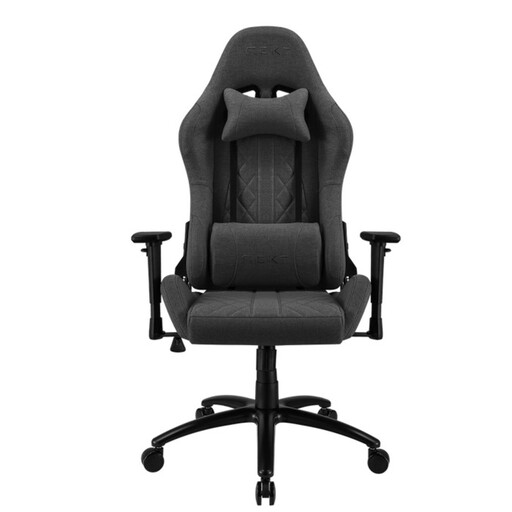
Why this choice: Ideal for those who alternate between long gaming sessions and remote workdays. Its versatility and technical features make it the perfect chair for intensive use, without ever sacrificing comfort.
This REKT chair checks all the boxes: 55 kg/m? high-density foam to prevent sagging, breathable Elastron fabric upholstery to say goodbye to faux leather wear and tear, and a 100% metal frame for rock-solid durability.
It offers a full range of adjustments, including 3D armrests and adjustable lumbar/neck cushions, for tailor-made ergonomics. Its feature-to-quality-to-price ratio is particularly well-balanced.
We have compiled a complete, up-to-date selection of chairs that meet our quality criteria and current safety standards.
A gaming chair's longevity primarily depends on the quality of its components and the intensity of its use. A model with a steel frame, metal base, and high-density foam (> 50 kg/m?) can easily provide over 5 years of reliable service. Conversely, an entry-level chair will show serious signs of wear after only 1 to 2 years.
Not always. An excellent ergonomic office chair will be just as, if not more, effective. The difference often comes down to the approach: good gaming chairs integrate more advanced adjustments (4D armrests, deep recline) and support optimised for very long sessions of concentration, making them ideal for both gamers and remote workers. The key is to compare the technical specifications (foam density, materials, adjustments) and not just rely on the "gamer" or "office" label.
Maintaining a fabric gaming chair is quite simple. For dust, regular vacuuming with a brush attachment is sufficient. In case of a stain, act quickly: use a clean cloth and an upholstery cleaner. Always test the product on a hidden area first and avoid harsh chemicals. Finally, always consult the manufacturer's instructions for specific recommendations.