Whether you're working from home or racking up online wins, spending hours in front of a screen puts a strain on your body. A good chair isn't a luxury; it's an essential investment to protect your back and maintain your focus. The problem: the gaming chair market is a jungle of marketing promises that often hide major design flaws.
To prevent a promising purchase from turning into a costly regret, here are the pitfalls to avoid and the key points to watch out for to make an informed decision.
- The low-grade faux leather trap: While appealing at first glance, many polyurethane (PU) coverings wear out at lightning speed. After a few months of heavy use, they crack, peel, and lose all their appeal.
- The myth of fixed lumbar support: A gaming chair with a lumbar pillow is a good thing, but only if it's adjustable. Poorly positioned or non-adjustable support can create more tension than it relieves, producing the opposite of the intended effect.
- Fragile construction: A plastic base or an overly thin metal frame? Steer clear! Instability and poor-quality casters can not only scratch your floors but also compromise your safety.
The Essential Criteria for a Lasting Purchase
To find a comfortable office chair that truly performs, you need to read between the lines of the spec sheet. Three criteria are decisive for guaranteeing comfort and longevity.
Foam Density: The Secret to Long-Term Comfort
The foam is the heart of your chair. Its density, expressed in kilograms per cubic meter (kg/m?), is the true indicator of its ability to support you over the long haul without sagging.
- Low-density foam (< 40 kg/m?): Very (too) soft right out of the box, it quickly flattens and loses all support. The result: you end up feeling the metal frame beneath the seat.
- High-density foam (≥ 50 kg/m?): This is the gold standard for an ergonomic office chair worthy of the name. Foam with a density of 55 kg/m? or more offers a perfect balance between firmness and comfort. It holds its shape for years, ensuring consistent support, which is ideal for a gaming chair designed for long sessions.
The Upholstery: Breathable Fabric or Faux Leather?
The choice of upholstery directly impacts your daily comfort and ease of maintenance.
- Faux Leather (PU): Easy to clean if you spill something, but it tends to retain heat and cause sweating during long summer sessions. Its quality varies widely, with low-end versions being particularly prone to wear and tear.
- Fabric: A fabric gaming chair is often the best alternative. Today's technical fabrics are highly breathable (a major plus against heat), durable, and offer a softer, more welcoming feel.
Essential Adjustments: Armrests and Recline
True ergonomics is the ability of a chair to adapt to your body, not the other way around.
- 3D or 4D Armrests: Skip fixed armrests. 3D armrests adjust in height, forward/backward, and rotation. 4D models add side-to-side adjustment. The goal is to perfectly align your arms with your desk to reduce tension in your shoulders and neck.
- Backrest Recline and Lumbar Support: A good chair should offer a multi-position locking backrest recline. The lumbar pillow, meanwhile, must be height-adjustable to fit precisely into the small of your back.
Our Recommended Selection
Keeping these criteria in mind, certain models clearly stand out for their design focused on ergonomics and durability.
IDEAL FOR: THE VERSATILE USER (GAMING & REMOTE WORK)
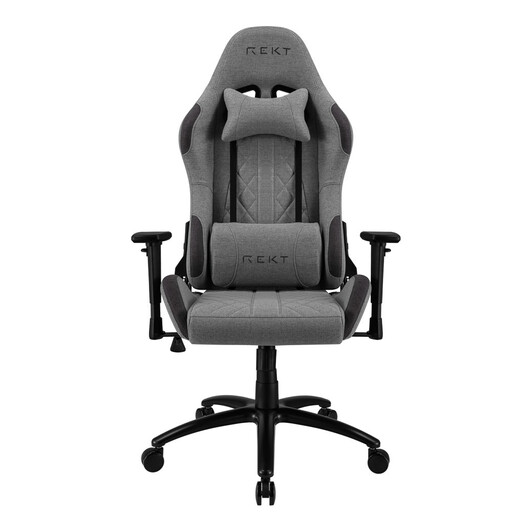
Why it stands out: This REKT gaming chair checks all the boxes for versatility. Its understated design and premium materials make it an excellent choice for both gamers and remote professionals. A true investment in everyday comfort.
Its advantages over common pitfalls
Its breathable and durable Elastron fabric upholstery puts an end to the problem of peeling faux leather. Its frame and base are made entirely of metal, and its pillows (lumbar and neck) are fully adjustable.
The key advantage
Its high-density foam of 55 kg/m? and 3D armrests ensure firm, customisable support, designed to last for thousands of hours without sagging.
Looking for other models?
Explore our full selection of chairs that meet our quality criteria and current safety standards.
Frequently Asked Questions (FAQ)
What is the lifespan of a gaming chair?
The lifespan of an ergonomic gaming chair primarily depends on the quality of its materials. A model with a steel frame, a metal base, and high-density foam (over 50 kg/m?) can easily last you 5 to 10 years. Conversely, entry-level models with plastic bases and low-grade foam show significant signs of wear after just 1 to 2 years.
How do you properly adjust a gaming chair to prevent back pain?
Every body shape is unique, but here are the universal basics for an optimal setup:
- Seat Height: Your feet should rest flat on the floor, with your knees forming a 90-degree angle.
- Lumbar Support: Position the pillow in the small of your back. It should follow the natural curve of your spine without forcing it forward.
- Armrests: Adjust them to the same height as your desk so your forearms rest on them naturally, without you having to shrug your shoulders.
- Recline: For work, an upright or slightly reclined position (90-100°) is ideal. For relaxing or gaming, a more pronounced recline (110-130°) will be more comfortable.
Is fabric a good choice for a gaming chair?
Absolutely. In fact, it's often the wisest choice. A fabric gaming chair offers much better breathability than faux leather, making it infinitely more comfortable in the summer or during long sessions. Contrary to a stubborn misconception, modern technical fabrics are both durable and easy to maintain with the right products. They are also less prone to cracking, making them a more durable investment.