
Livraison le jour même ou le lendemain

Qualité garantie

Débloquez vos offres de bienvenue: Livraison GRATUITE | Jusqu'à -80 % | 30 jours d'essai gratuits à JoyPlus
Téléchargez l'application
Whether you're pulling all-night gaming sessions or spending your days working from home, a good chair is no longer a luxury—it's a matter of health. A worthy gaming chair can be the difference between correct posture and nagging pain. The problem? The market is a jungle of marketing promises, flooded with models that boast alluring aesthetics but questionable reliability. To help you see clearly, we've broken down the topic: here are the mistakes to avoid and the key points to check before pulling out your credit card.
Don't be fooled by aesthetics. A chair's visual appeal guarantees neither its comfort nor its longevity. Here are the three most common pitfalls that turn a good investment into a bitter regret.
Many entry-level chairs are upholstered in polyurethane (PU) to mimic real leather. While the effect is often impressive right out of the box, disillusionment quickly follows. This material ages very poorly: it cracks, peels, and turns your back into a radiator, making long sessions unbearable, especially in the summer. A quality technical fabric is almost always a more durable and far more breathable alternative.
Don't trust a few minutes' trial in a store. That "plush" initial comfort often hides low-density foam that collapses in no time. Within a few weeks, the support vanishes, and you'll feel like you're sitting directly on the chair's rigid frame. The real quality indicator to look for? The foam density, expressed in kg/m?. Foam that flattens is the signature of a disposable product.
Spec sheets love to list a myriad of adjustments. Be wary: most are more cosmetic than genuinely useful. Fixed or height-only adjustable (1D) armrests provide mediocre support. As for a simple, non-adjustable lumbar pillow, it's more often a poorly placed gadget than a real asset. A true gaming chair with lumbar support must allow for precise adjustments to perfectly match the curve of your back.
To make a rational choice, focus on the features that truly separate a gimmick from a long-term investment.
Foam Density: This is the guarantor of lasting support. Aim for high-density foam, ideally above 50 kg/m?. This firmness is the secret to a chair that will keep its shape and comfort for years, which also makes it an excellent comfortable office chair for intensive use.
The Upholstery: For long hours of use, a fabric gaming chair is often the best choice. Modern technical fabrics are breathable, wear-resistant, and easy to maintain. They spare you the discomfort of sweat and hold up much better over time than entry-level faux leathers.
The Frame and Adjustments: The backbone of a quality chair is its metal frame. It alone guarantees unwavering stability and robustness, far superior to plastic or composite wood frames. For adjustments, aim for at least 3D armrests (adjustable in height, forward/backward, and rotation) or 4D for perfect alignment with your desk and less shoulder strain.
Enough theory, let's get practical. Here are models chosen to meet specific needs, applying the quality criteria we've just discussed.
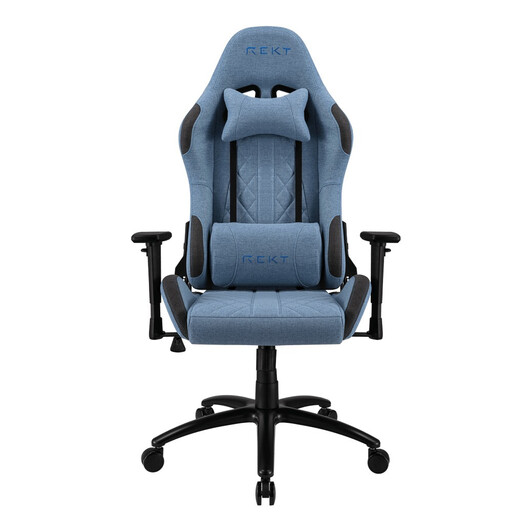
Why it's a match for this profile: Its "French Blue" color makes it a statement piece for a gaming setup with character. It combines a bold aesthetic with performance-driven ergonomic features.
It features a breathable and durable Elastron fabric that won't crack like low-end faux leather. Its high-density foam of 55 kg/m? ensures support that won't sag over time.
A 100% metal frame and base, combined with 3D armrests, for rock-solid durability and a custom-tailored fit.
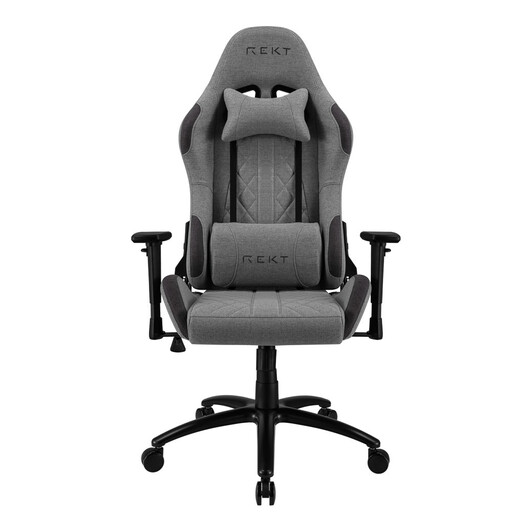
Why it's a match for this profile: Its understated and elegant "Dark Grey" color blends seamlessly into a home office, while hiding the advanced ergonomics of a gaming chair for evening sessions.
It offers a true ergonomic gaming chair with adjustable lumbar support and a head pillow, avoiding the trap of fixed supports that create more problems than they solve.
Remarkable versatility: it's an excellent comfortable office chair for long workdays and a powerful ally for gaming sessions.
Explore our full selection of chairs that meet our standards for quality and durability.
It all depends on the quality of its components. A model with a metal frame, a sturdy base, and high-density foam (over 50?kg/m?) can easily last you more than 5 years. Conversely, an entry-level chair with plastic parts and low-grade foam will start showing serious signs of wear after just a year or two.
It's a valid concern, but modern fabrics have made huge strides. Upholstery like the Elastron on the REKT ULTIM8-RS is treated to resist stains and is easy to clean. A regular wipe-down with a soft, damp cloth or a suitable cleaning product is enough to keep it looking new. In the long run, it's often easier to maintain than faux leather that inevitably ends up cracking.
Absolutely—it's a non-negotiable feature. A good gaming chair with adjustable lumbar support is designed to hug the natural curve of your lower back. This keeps the spine in a neutral position, which reduces pressure on the intervertebral discs and prevents lower back pain during long sitting sessions. A simple fixed cushion can never offer this level of personalized support.