Gamers comparing sugar content
You want to check the claim on the biscuit, then look at the sugar content per 100 g without assuming that this claim alone tells you about its overall nutritional profile.


For a gaming session, choose a biscuit labelled “reduced in sugars” if reducing sugar is your top priority. With a “sugar-free” option, check whether it contains sweeteners; a classic biscuit may suit you better if taste or format matters most. In every case, compare the nutritional values per 100 g, ingredients, allergens and portion size. Nutri-Score can be a useful guide when displayed, but its use is voluntary in France, as the Ministry of the Economy explains.
You want to check the claim on the biscuit, then look at the sugar content per 100 g without assuming that this claim alone tells you about its overall nutritional profile.
You’re weighing up a reduced-sugar recipe and a sugar-free one. The list of sweeteners, allergens and any ‘may contain’ warnings can help you decide between products.
You want to decide how many biscuits to have before you start playing. The number of packets, the weight and the nutritional values per portion, where provided, matter just as much as the apparent size of the pack.
Worth considering: if you’re specifically looking for this claim on the product you buy.
Bear in mind: the reduction claim doesn’t tell you about fat, energy or allergens on its own.
Worth considering: if this is your main priority and the recipe suits you.
Bear in mind: some products contain sweeteners; “sugar-free” doesn’t mean “low in calories”.
Worth considering: if you’d rather choose a familiar recipe or format than look for a sugar claim.
Bear in mind: neither the brand nor the pack size tells you the nutritional values of a particular product.
| Criteria | What to check | Who is it for? |
|---|---|---|
| Comparing sugar content | The exact claim on the pack and the “sugars” line per 100 g. | If reducing sugar is my main priority, I want to compare the claim with the nutritional information for each biscuit. Around 31% of consumers might put this comparison first. |
| Ingredients and allergens | The ingredients list, highlighted allergens and any sweeteners. | A recipe won’t necessarily suit me just because it says “sugar-free”: I also need to check for ingredients I want to avoid. This could be the first consideration for around 31% of consumers. |
| Pack size and portion | The weight, number of packets and nutritional values per portion, if shown on the pack. | When preparing a snack before gaming, I’d rather know how much I’m opening than rely on the size of the pack. Portioning could be the top priority for around 23% of consumers. |
| Nutri-Score | Whether it is displayed, followed by the detailed nutritional values and ingredients. | When comparing biscuits quickly, I find a front-of-pack guide useful, but I then check the detailed label. Around 15% of consumers might put this guide first. |
The Ministry of the Economy explains that displaying it is voluntary in France. Its absence therefore doesn’t tell you anything conclusive about a biscuit’s nutritional quality.
If it appears on the pack, use it alongside the nutritional declaration and ingredients list, rather than as your only criterion.
A claim about sugar content doesn’t tell you about a product’s energy or fat on its own.
Compare these values, along with sugar and salt per 100 g, across the products you’re considering.
According to its product listing, Petit Beurre Karéléa, which is described as “sugar-free”, contains sweeteners such as maltitols and isomalt. Allergens also vary between biscuits.
Check the ingredients list and allergen information on the specific pack you’re buying.
Information about one LU, BN or St Michel recipe doesn’t necessarily apply to the brand’s other biscuits.
Check the product name, ingredients and nutritional values of the specific product you choose.
Carrefour’s product listing features organic whole-oat biscuits labelled “reduced in sugars”.
A Gerblé Bio wholemeal biscuit is described on its product listing as having “40% less sugar”.
Petit Beurre Karéléa, described as “sugar-free”, meets a different need from a biscuit labelled “reduced in sugars”.
LU may be worth considering if you prefer a familiar recipe to a claim about reduced sugar.
Consider BN biscuits for their recipe or format, rather than as a range of reduced-sugar biscuits.
St Michel offers several types of biscuits and baked goods, so choose based on the individual recipe.
These two products may suit you if you’re looking for biscuits to take with you or prepare for a gaming session. Their product names alone don’t confirm a comparative “reduced in sugars” claim, so check the packaging if that’s your deciding factor.
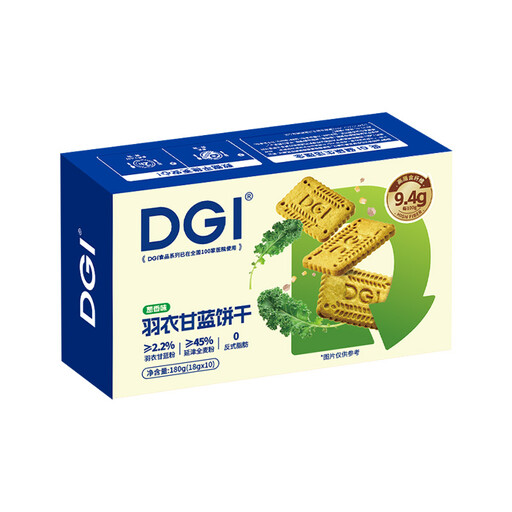 Image unavailable
If you prefer a savoury biscuit while gaming, this 180 g pack comes in green onion flavour. The product listing mentions maltitol and a warning about excessive consumption. Read the warning and check the packaging for wheat. Also check the exact claim before considering it a “reduced in sugars” biscuit.
 Image unavailable
Planning biscuits ahead of a gaming session? This pack weighs 425 g. Its name says “no added sugar”, which doesn’t establish that it has less sugar than another product. Check the values per 100 g, ingredients and allergens on the product you buy, particularly if wheat or barley are a concern for you.
No. The Ministry of the Economy explains that displaying it is voluntary in France. The DGCCRF says that a nutritional declaration is generally compulsory for prepacked foods and is given per 100 g or 100 ml.
No: these claims describe different things. EU rules govern the use of nutrition claims. When choosing a biscuit, check the exact claim, then read the ingredients and the “sugars” line per 100 g. The claim “no added sugar” doesn’t, on its own, prove that a biscuit has less sugar than another.
Read the ingredients list on the product you’re buying: the DGCCRF says allergenic ingredients must be highlighted there. Also look for any ‘may contain’ warnings, as ingredients can vary between biscuits from the same brand.
No. A claim about sugar content isn’t enough to tell you how much energy a biscuit provides. Compare the energy and fat, as well as the sugar, in the nutritional values per 100 g for the products you’re considering.