
Livraison le jour même ou le lendemain

Qualité garantie

Débloquez vos offres de bienvenue: Livraison GRATUITE | Jusqu'à -80 % | 30 jours d'essai gratuits à JoyPlus
Téléchargez l'application
By Joybuy, your product recommendation specialistPublished August 26, 2026
Choosing new gaming accessories can quickly become an obstacle course. Between the siren song of marketing and opaque technical jargon, it's easy to end up with subpar gear. A controller whose joysticks start drifting after a few months, a mouse with inflated specs that does nothing to improve your performance—you're likely all too familiar with these disappointments.
Before you dive in, let's review the two most common pitfalls that await gamers:
This guide will help you decode spec sheets to make an informed choice, prioritising real-world performance and durability.
To avoid disappointment, focus on the technologies that have a direct impact on your gaming experience. Here are the three essential points to check.
For controller durability, the game-changing technology is Hall effect sensors. Unlike traditional potentiometers, which detect movement through physical contact, Hall effect sensors use magnetic fields.
For a gaming mouse, there are two values to master:
A lightweight gaming mouse paired with a good polling rate will often be more effective than a heavy model with outrageous DPI.
The debate between wired and wireless is no longer as clear-cut as it once was.
Rather than a random list, here are a few common profiles and the products that meet their needs, keeping the common traps in mind.
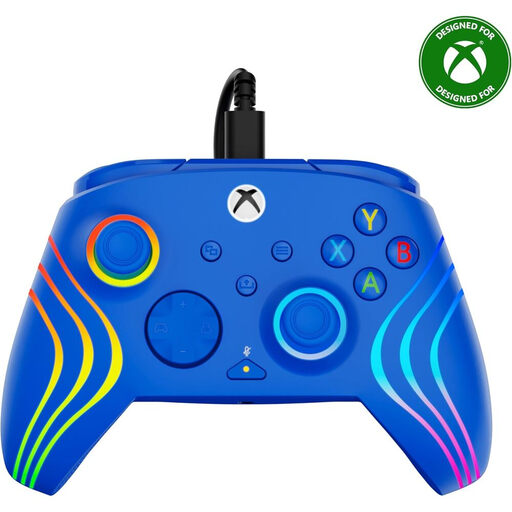
Why we recommend it: Perfect for Xbox and PC gamers who are tired of replacing controllers due to wear and tear. Its wired connection eliminates all latency and battery worries, while its transparent design with RGB lighting adds a touch of originality.
This wired Xbox controller features Hall effect triggers, which are based on contactless magnetic sensors. This makes them immune to the wear that causes a loss of precision in traditional triggers.
Durable triggers, D-pad integrated audio controls for quick volume adjustments, and two programmable back buttons for custom actions.
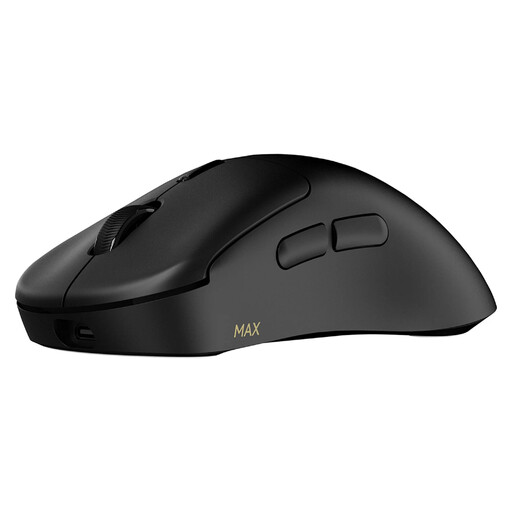
Why we recommend it: Built for competition, this lightweight gaming mouse (53 g) minimises fatigue and maximises reaction speed. Its cutting-edge wireless technology ensures flawless responsiveness, which is essential in FPS and other fast-paced games.
It doesn't rely on marketing-driven DPI. It focuses on tangible performance: a native 8000 Hz polling rate for extreme fluidity and optical switches that eliminate the risk of accidental double-clicks.
Feather-light 53 g weight, optical switches rated for 120 million clicks, and marathon battery life (up to 750 hrs at 1000 Hz) thanks to a low-power chip.
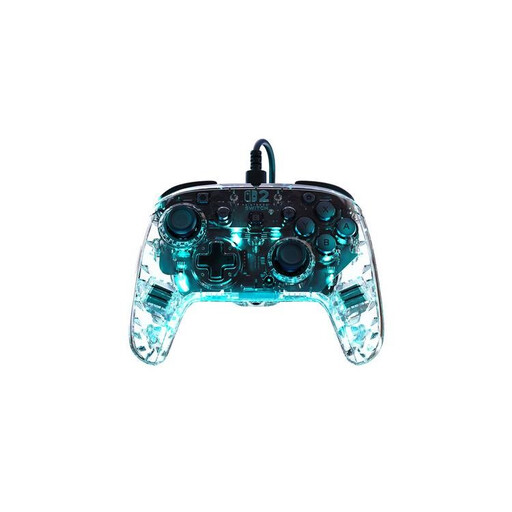
Why we recommend it: Specially designed for the Switch 2 controller ecosystem, it packs modern features into a transparent design that showcases its internal RGB lighting. A smart choice for those who want to combine performance and aesthetics.
It tackles the plague of "Joy-Con drift" head-on by incorporating Hall effect joysticks. This technology prevents wear and ensures precision that won't degrade over time. A long-lasting investment.
Hall effect joysticks for rock-solid precision, customisable RGB lighting, and two programmable back buttons to adapt the controls to your playstyle.
We've compiled a complete, up-to-date selection of products that meet our strict selection criteria and current safety standards.
In theory, Hall effect sensors have a much longer lifespan than potentiometers, as there is no physical contact or friction-based wear. The controller's longevity will then depend on its other components (buttons, battery, etc.), but the risk of "stick drift" is virtually eliminated.
No, not for the vast majority of gamers. An extreme DPI makes the cursor very difficult to control. For the most common screen resolutions (1080p, 1440p), a sensitivity set between 1600 and 4000 DPI offers an excellent balance of speed and precision. Sensor quality and a stable polling rate are far more relevant performance indicators.
Not anymore. For models using a dedicated 2.4?GHz technology (via a USB dongle), the latency difference has become imperceptible to a player. Technologies like Rapoo's or ASUS's ROG SpeedNova offer performance identical to a wired connection. However, latency remains more noticeable with a standard Bluetooth connection, which is less optimised for gaming.