Guests keeping an eye on protein after exercise
You’re looking for a savoury snack and want to know how much protein it contains, rather than guessing based on the presence of cheese or pulses.


If protein is your main priority after exercise, compare the amount per 100 g on the label rather than relying on the recipe name or a sports-related claim. For a games night, also check the portion you’ll serve, the salt content and allergens. A classic savoury snack can be great for sharing without being a high-protein product. Nutri-Score can provide an additional point of reference when it appears on the packaging, but its use is voluntary in France, according to the Ministry of the Economy.
You’re looking for a savoury snack and want to know how much protein it contains, rather than guessing based on the presence of cheese or pulses.
You want to choose a format that’s easy to serve to a group, and be able to check the ingredients if a guest has dietary restrictions.
You check the protein, salt, sugars and fat, then consider the portion actually being served. Nutri-Score can add to this information if it’s displayed.
If protein is guiding your choice, start with the nutritional values per 100 g, then consider what that means for the portion you’ll serve during the game.
Worth considering: if you want to compare a specific amount of protein in a post-exercise snack.
Bear in mind: protein content alone doesn’t tell you about salt, allergens or how much everyone will eat.
Worth considering: if choosing a format to share matters more than finding a particular protein content.
Bear in mind: a recipe containing lentils, seeds or cheese isn’t enough to establish that a snack is high in protein.
| Criteria | What to check | Who is it for? |
|---|---|---|
| Protein | The amount per 100 g, then the amount in the portion you’re considering. | After training, I want to know what my snack provides rather than relying on its name. Around 42% of consumers would prioritise this verifiable protein content. |
| Format and portion | The net weight and the amount you plan to serve each guest. | To make it easy for players to help themselves, I’m looking for packaging that works on the table. Easy sharing would be the main priority for around 25% of consumers. |
| Label and allergens | Salt and fat per 100 g, as well as ingredients and allergens before serving. | If guests have dietary restrictions, I need to be able to check the product before sharing it. Around 33% of consumers would put nutritional information and allergens at the heart of their choice. |
This claim doesn’t sum up the other nutritional information that’s useful when comparing savoury snacks.
Check the salt, fat and the portion you plan to serve too. If the products you’re comparing display Nutri-Score, use it as an additional guide.
The presence of lentils, seeds or cheese in a recipe doesn’t tell you how much protein the finished snack contains.
Before choosing a product on this basis, compare the “protein” figure per 100 g for the exact product.
Someone with an allergy needs information about the product being served, not just its name or appearance.
Ask about dietary restrictions before the games night and keep the packaging to hand. The DGCCRF reminds shoppers that allergenic ingredients must be highlighted in the ingredients list.
A performance-related claim doesn’t prove that a snack meets every sportsperson’s needs. Anses cautions against the idea that an everyday diet is always inadequate.
For this snack, start with the product’s nutritional information and the portion you’re considering, rather than a promise of results.
These names are a useful starting point when looking for savoury snacks. Check the values for the specific product before choosing it for its protein content.
Vico offers savoury snacks, including mixes featured on its website and lentil crisps available in the Auchan range.
Belin features in Carrefour’s savoury snacks range, including Monaco, Croustilles and Chipster.
The retailer’s savoury snacks range includes crackers, breadsticks, pretzels and assortments.
Its savoury snacks range includes biscuits, crisps, crackers, seeds and mixes.
For an individual portion during the evening, this selection includes a 30 g chickpea cracker. If protein content is guiding your purchase, compare its label with those of the other snacks you’re considering.
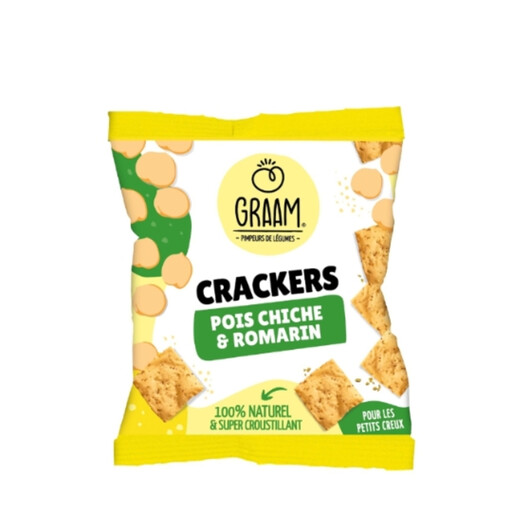 Image unavailable
This 30 g pack is a good option if you’d like to serve individual portions during the game rather than put out a shared pack. Before serving it to someone with an allergy, check the ingredients and allergens directly on the packaging.
No. According to the Ministry of the Economy, displaying it is still voluntary. If it appears on the products you’re comparing, it can complement the nutritional information; its absence alone doesn’t tell you whether a snack is a good choice.
Compare the nutritional information per 100 g, particularly protein, fat, saturates, sugars and salt, then take the portion you’ll serve into account. The DGCCRF explains that nutrition declarations generally apply to prepacked foods, subject to certain exceptions.
Read the ingredients list on the exact product before serving it, rather than relying on the recipe name alone. The DGCCRF says allergenic ingredients must be highlighted in the list; keep the packaging so guests can check it for themselves.
A sports-related claim alone isn’t a good reason to choose it. Compare the nutritional values and the portion you’re considering first. Anses notes that the idea that an everyday diet is always inadequate for sportspersons is unfounded.