
Livraison le jour même ou le lendemain

Qualité garantie

Débloquez vos offres de bienvenue: Livraison GRATUITE | Jusqu'à -80 % | 30 jours d'essai gratuits à JoyPlus
Téléchargez l'application
Choosing a new game controller often feels like an obstacle course. The market is a real jungle, saturated with models whose marketing promises can be far from reality. Whether you're looking to replace your worn-out pad or optimise your performance, it's easy to fall into certain traps. As the Head of Product Recommendations at Joybuy, my mission is to help you separate fact from fiction to make an informed choice that perfectly suits your playstyle and budget.
Before you dive in, here are the 3 most common pitfalls that can turn your purchase into a nasty surprise?:
To avoid these disappointments, it's crucial to understand a few technical concepts. These are what truly determine the quality and longevity of a game controller.
This is the most important point for putting an end to "joystick drift." The majority of controllers on the market use potentiometer-based sensors, where mechanical parts rub against each other, leading to inevitable wear.
In contrast, Hall effect sensors rely on magnetic fields. With no physical contact, there is no friction and no wear. Opting for a controller with Hall effect joysticks and triggers is therefore a guarantee of lasting precision and rock-solid longevity, especially if you play intensively.
The connection type has a direct impact on latency and user comfort.
These options are no longer gadgets reserved for the pro-gamer elite.
To put theory into practice, here are a few models that meet distinct needs and budgets.
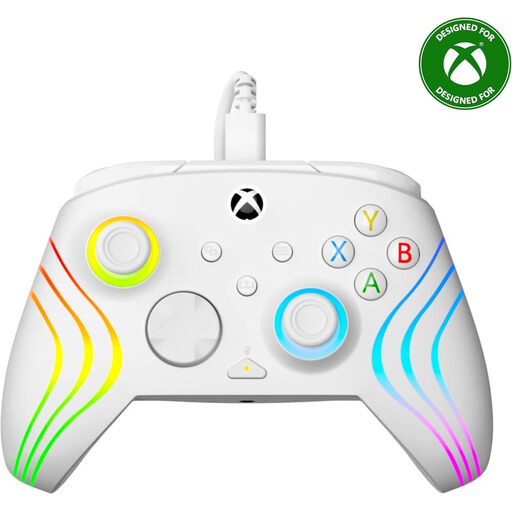
Why we chose it : Perfect for Xbox controller or PC gamers who want reliability without breaking the bank. Its wired connection eliminates latency and battery issues, and its official Microsoft license guarantees flawless compatibility.
It features Hall effect triggers, a durable technology that prevents wear—a rare feature for an entry-level model. The wired connection solves the battery life issue right away.
Premium features for its price : 2 programmable back buttons, integrated audio controls, and customisable RGB lighting via a dedicated app.
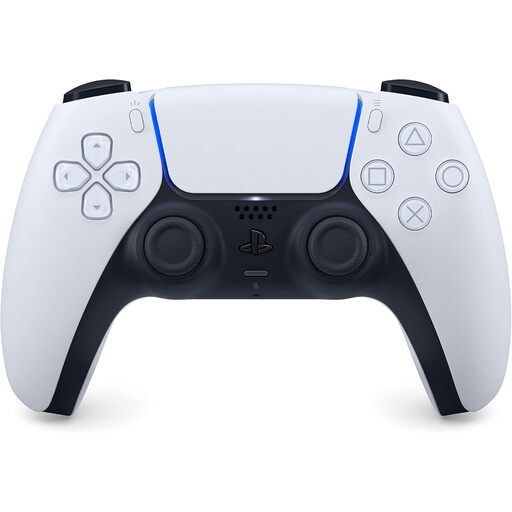
Why we chose it : For any PlayStation 5 owner, the PS5 controller DualSense is simply a must-have. It was designed by Sony to leverage 100% of the console's capabilities and deliver a unique sensory immersion.
As an official product, it guarantees full compatibility. There's no risk of ending up with haptic feedback or adaptive triggers that are acting up, as is often the case with third-party controllers.
The combination of haptic feedback and adaptive triggers. When this technology is well-utilised by games, it transforms the experience by providing sensations (textures, tensions, impacts) with stunning realism.
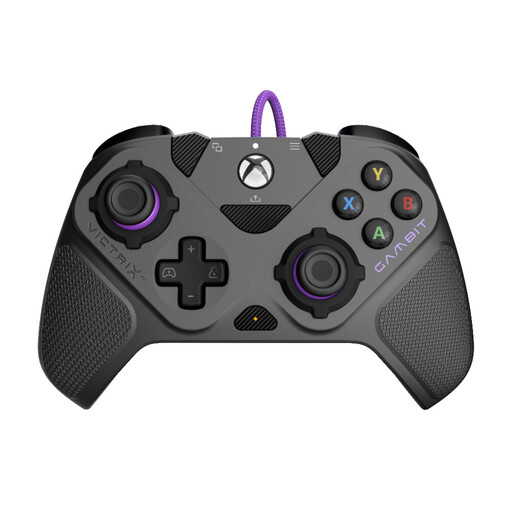
Why we chose it : A pro controller built for pure performance. It's aimed at competitive Xbox and PC gamers who want total control over their hardware to shave off the milliseconds that make all the difference.
Its modular design offers a long-term solution to "drift" : if a joystick wears out, you replace the module, not the whole controller. Its 2.4 GHz connection ensures flawless responsiveness, on par with a wired connection.
Customisation taken to the extreme : 12 interchangeable components, 4 back paddles, and patented "Clutch Triggers" with 5 stopping points for surgical precision.
Explore our full selection of controllers, all of which meet our demanding requirements for quality and durability.
"Joystick drift" is a hardware defect that occurs when the joystick's sensors wear out. They then send movement inputs to the console or PC, even when the stick is stationary. To avoid it, the most reliable long-term solution is to choose a controller with Hall effect technology joysticks, which do not suffer from mechanical wear. Regular cleaning with compressed air can also help extend the life of standard controllers with potentiometers.
For a casual player, the difference will be barely noticeable. However, for an avid or competitive player, a pro controller offers tangible advantages. Back buttons allow you to perform actions without taking your thumbs off the sticks, adjustable-travel triggers increase firing speed, and interchangeable sticks improve aiming precision. When added together, these marginal gains can clearly make the difference in a close match.
It varies enormously depending on the build quality, sensor technology, and, of course, how often you play. A standard controller used daily can show signs of wear (especially "drift") in just 1 to 2 years. More robust models, particularly those equipped with Hall effect sensors, are designed to last much longer, which can justify a higher initial investment.