
Livraison le jour même ou le lendemain

Qualité garantie

Débloquez vos offres de bienvenue: Livraison GRATUITE | Jusqu'à -80 % | 30 jours d'essai gratuits à JoyPlus
Téléchargez l'application
A game controller is much more than a simple accessory; it's an extension of your hands in the virtual world. Yet, buying a new one can quickly become a headache. Between marketing promises and hidden flaws, it's easy to make the wrong choice. To save you from buyer's remorse, let's review the most common pitfalls that can ruin your gaming experience.
To navigate the jungle of controllers, you need to understand a few technical points that make all the difference in a pad's quality and lifespan.
The infamous "stick drift" primarily comes from the wear on potentiometers, components that measure movement through physical contact. Fortunately, there's a solution: Hall effect technology. These sensors use magnetic fields to detect the stick's position without any contact. The result: virtually zero wear and precision that doesn't degrade over time. An anti-drift controller with this technology is a much more durable investment.
A wireless controller relies on two main technologies:
Always look for an official license (e.g., "Licensed by Nintendo" or "Official Licensed Product for PlayStation"). This guarantees perfect compatibility and support for future system updates.
The features of a pro controller are more than just gimmicks, provided they meet a real need.
Analyse your habits: if you're an FPS or fighting game enthusiast, these options can genuinely give you a competitive edge.
To guide you, we've matched player profiles with models that meet specific needs, applying the criteria we've just discussed.
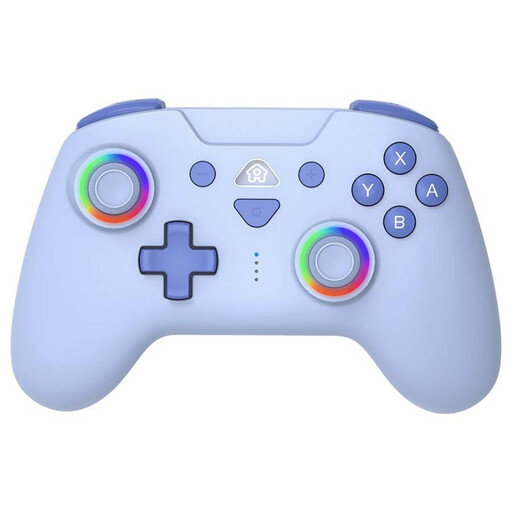
Why we recommend it: It's the affordable and comfortable alternative to Joy-Cons for multiplayer sessions. It offers a classic grip that's much more pleasant for long games of Mario Kart or Super Smash Bros. with family and friends.
It packs features often reserved for more expensive models, like programmable back buttons and adjustable vibration, without the hefty price tag of an over-equipped "pro" controller.
Unbeatable features for the price; integrated motion sensors (gyroscope); console wake-up function.
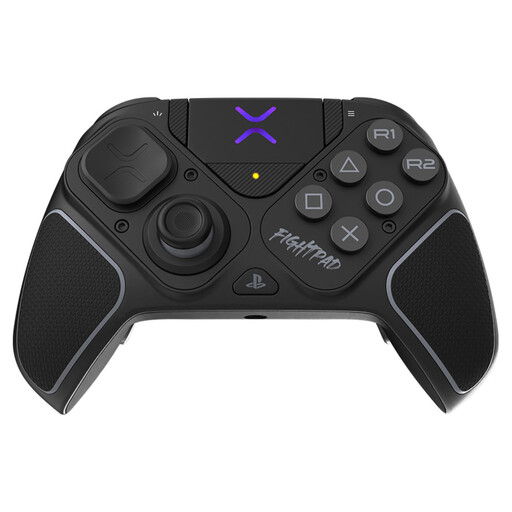
Why we recommend it: Engineered for performance, this officially licensed PlayStation controller is the weapon of choice for demanding gamers on PS5 and PC. Its interchangeable modules and ultra-responsive triggers allow for fine-tuned customisation for every game and playstyle.
It tackles the most frustrating problem head-on by integrating Hall effect sticks. This anti-drift controller technology prevents wear and tear, guaranteeing rock-solid precision and saving you from having to replace it after a year.
Extreme modularity (stick layout, 6-button fight pad module); anti-drift Hall effect sticks; multi-position trigger stops.
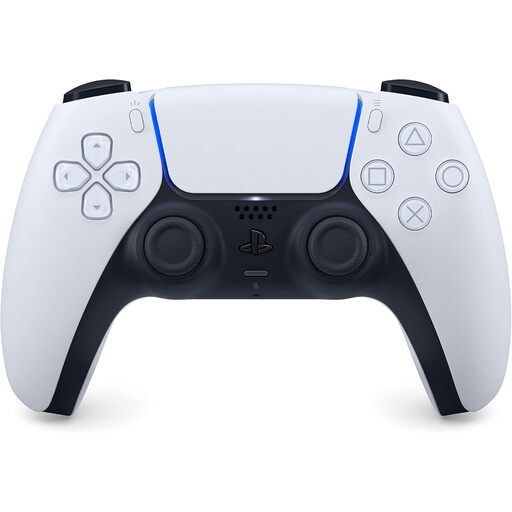
Why we recommend it: It's THE benchmark on PS5. The DualSense controller delivers a sensory immersion that competitors struggle to match, thanks to its stunning haptic feedback and adaptive triggers. Its broad compatibility also makes it a top-tier choice for PC gaming.
As an official product, it ensures flawless compatibility and seamless integration with the PlayStation ecosystem. No nasty surprises to worry about after a console update.
Haptic feedback and adaptive triggers for unparalleled immersion; Sony build quality; integrated microphone.
Browse our full selection of controllers, all tested and approved by our editors according to these same demanding criteria.
The most effective solution is to choose a model equipped with Hall effect sticks. This technology, increasingly common on mid-range and high-end controllers, eliminates the mechanical wear that causes the problem. Of course, regular maintenance (dusting without harsh chemicals) and a bit of care (avoiding drops) will help extend the life of any controller.
It all depends on the brand and model. Officially licensed third-party controllers (from brands like Hori, PDP, Turtle Beach...) often offer equivalent performance, and sometimes even advanced features not found on basic models. Conversely, cheap, unlicensed controllers are a risky bet: expect latency, compatibility bugs, and poor build quality. The official license logo is your best guide.
It heavily depends on how often you play, the quality of the components, and how you care for the battery. On average, you can expect a lifespan of 2 to 5 years. The lithium-ion battery is often the first component to fail, with its capacity diminishing over charge cycles. A tip to preserve it: avoid letting it fully discharge too often.