Parents of children who are sensitive to textures
If fruit pieces or a particular consistency put your child off, compare yoghurts with pieces, blended fruit and flavoured recipes before choosing a flavour.


If your child is fussy, start with the texture they’ll accept: fruit pieces and blended fruit suit different preferences. Then compare the ingredients and sugar per 100 g, and check for milk and storage instructions. Fresh fruit yoghurts are not a substitute for long-life milk that can be stored at room temperature.
If fruit pieces or a particular consistency put your child off, compare yoghurts with pieces, blended fruit and flavoured recipes before choosing a flavour.
To choose between two pots, check the sugar per 100 g, the proportion of fruit, the fat content and whether sweeteners are included, rather than relying on the flavour name alone.
The fruit yoghurts mentioned here contain milk. If your child needs to avoid it, check the label of the specific product you choose and any requirements for their meal, particularly at school.
When shopping for a meal for a fussy child, start with whether they’ll accept the product, then check the recipe and any requirements relating to refrigeration or milk.
| Criteria | What to check | Who it matters to |
|---|---|---|
| Texture | Look for “with pieces”, “blended fruit” or “flavoured”, then check the recipe for your chosen flavour. | If pieces might put your child off, consistency matters more than flavour; around 33% of consumers prioritise whether the texture will be accepted. |
| Ingredients | The sugar per 100 g and the ingredients list, particularly the proportion of fruit and any sweeteners. | If I’m comparing several recipes, I want to know what they contain rather than relying on “0%” or the picture of the fruit. Ingredients are the top priority for around 27% of consumers. |
| Storage | The temperature stated on the packaging and the use-by date, taking into account the journey home and space in the fridge. | If I’m planning several meals after a shop, I need to be able to transport and store the pots as instructed; around 20% of consumers put planning for chilled products first. |
| Milk and school | Whether milk is listed in the ingredients for the specific product, and any requirements for your child’s meal. | If my child needs to avoid milk or follow specific requirements at school, I check the product is suitable before choosing it. This is a priority for around 20% of consumers. |
Auchan states that its organic stirred yoghurt with blended fruit should be kept between 0 °C and +6 °C; Carrefour lists fruit yoghurts in its chilled section. These products are therefore not suitable when you need something that can be stored at room temperature.
Check the product category and storage instructions before planning how to transport or store it.
The Delisse recipe with pieces contains 10.8% fruit, compared with 5.1% in the Auchan Bio blended-fruit product. A flavour name alone doesn’t tell you about the texture or proportion of fruit.
Read the product description and ingredients list on the pot you choose, especially if the pack contains several flavours.
The Delisse 0% product mentioned by E.Leclerc contains acesulfame K and sucralose. The fat claim doesn’t tell you about all the ingredients.
Compare the ingredients list and nutritional values per 100 g for each product.
The recipes featured contain milk. The presence of fruit doesn’t mean a product is suitable for a child who needs to avoid this ingredient.
Check the label of the flavour you buy and follow any medical or school requirements specific to your child.
A range worth exploring if you’re looking for several flavours and want to check the texture of each recipe.
Recipes with pieces and a 0% option, each requiring different checks for texture and ingredients.
A stirred yoghurt with blended fruit to consider if your child prefers a smooth texture.
Fruit yoghurts listed by Carrefour in its chilled section.
A range in which La Laitière distinguishes fruit yoghurts from plain and flavoured yoghurts.
This fermented strawberry milk drink may suit a child who is happy with a drinkable format; it’s not a substitute for a fruit yoghurt to eat with a spoon.
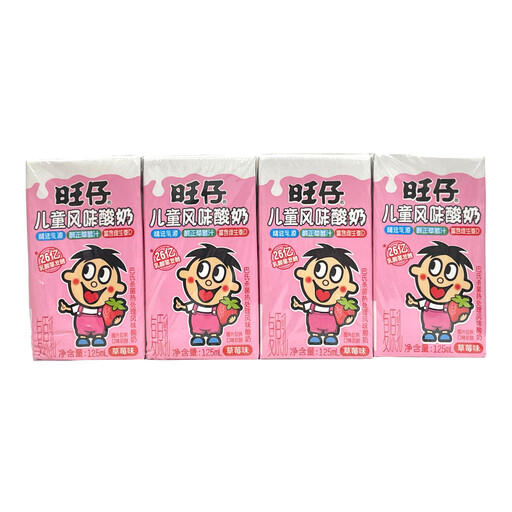 Image unavailable
Worth considering if your child prefers a drinkable texture to a yoghurt eaten with a spoon.
Pack of four 125 ml containers. This product contains milk: check the ingredients and storage instructions on the packaging. For a meal at school, also check the rules that apply to your child.
No, not if you need something that can be stored at room temperature: the fruit yoghurts mentioned here need to be kept chilled. For its blended-fruit product, Auchan Bio states that it should be stored between 0 °C and +6 °C.
Start with the texture your child will accept, then compare the recipes. The E.Leclerc and Auchan listings state that the Delisse yoghurt with pieces contains 10.8% fruit, while the Auchan Bio blended-fruit product contains 5.1%; these figures don’t apply to every recipe in these categories.
Yes: the products featured contain milk. Service Public Entreprendre states that allergens must be declared for relevant processed foods. Check the ingredients of the product you buy and any requirements specific to your child.
First check the school’s rules, the product’s storage requirements and any instructions that apply to your child. A label alone can’t tell you whether a meal is suitable for their individual needs.
No. The E.Leclerc listing for the Delisse 0% product includes the sweeteners acesulfame K and sucralose, among other ingredients. Read the full ingredients list rather than making assumptions based on “0%” alone.