
Livraison le jour même ou le lendemain

Qualité garantie

Débloquez vos offres de bienvenue: Livraison GRATUITE | Jusqu'à -80 % | 30 jours d'essai gratuits à JoyPlus
Téléchargez l'application
The screech of a chair scraping across the floor, the discovery of a new scratch on your pristine hardwood… Faced with these minor daily disasters, the solution seems obvious: the furniture felt pad. Yet, choosing the right model often feels like an uphill battle. Between adhesives that give up after a week and felts that flatten pathetically, it's easy to make the wrong purchase.
As a Product Specialist at Joybuy, I'm here to help you see things more clearly. Let's cut through the marketing jargon and get straight to the point: how do you choose floor protection that is truly effective and durable? Here are the pitfalls to avoid and the essential criteria for making the right choice.
Promising packaging doesn't guarantee a quality product. Many users end up with ineffective solutions after just a few weeks. Here are the most common flaws:
For truly effective protection, a few technical details make all the difference. This is what separates a useless gadget from a reliable, long-term accessory.
The choice of fastening depends on the furniture and its use.
The quality of the felt is paramount. A high-density felt or a dual-material model will better resist crushing and wear. These more robust models are often designed for specific uses, like a furniture pad for tiled floors, where constant movement over grout lines puts the material to the test. Dense felt also proves to be an excellent silent chair pad, more effectively absorbing vibrations and sliding noises.
To help you visualise these criteria, here are a few options that meet distinct needs.
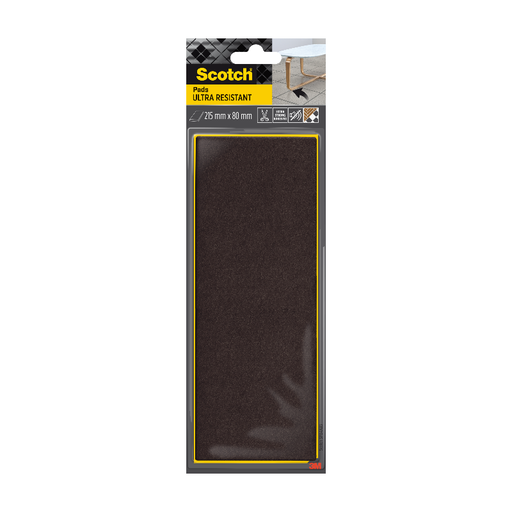
Why we recommend it: Ideal for furniture with non-standard leg shapes or sizes. This sheet allows for precise cutting to create perfectly fitted protection, whether for a bookshelf, a bench, or an appliance.
It solves the "wrong size" problem by offering total flexibility. Its extra-strong adhesive and high-density, dual-material design combat peeling and flattening.
Total customisation for optimal coverage. High-density material is effective on both smooth and slightly textured floors.
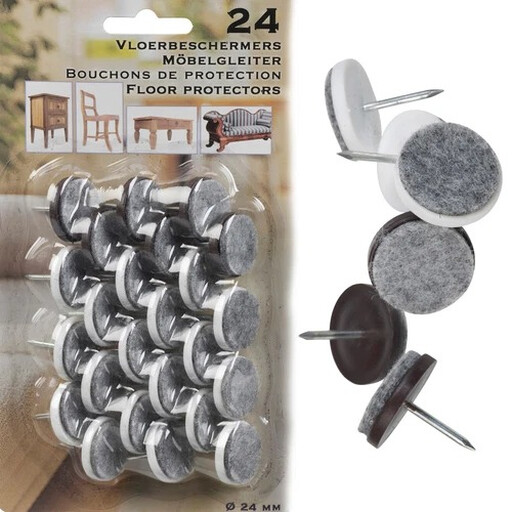
Why we recommend it: The ultimate solution for dining room or office chairs. The nail-on system provides a mechanical bond that withstands constant movement and friction, where adhesives show their limits.
It completely eliminates the risk of adhesive failure. Once nailed in, the pad becomes one with the chair leg, ensuring continuous protection.
Ultra-secure and durable fastening. Perfect for heavy-use wooden furniture (chairs, stools, etc.).
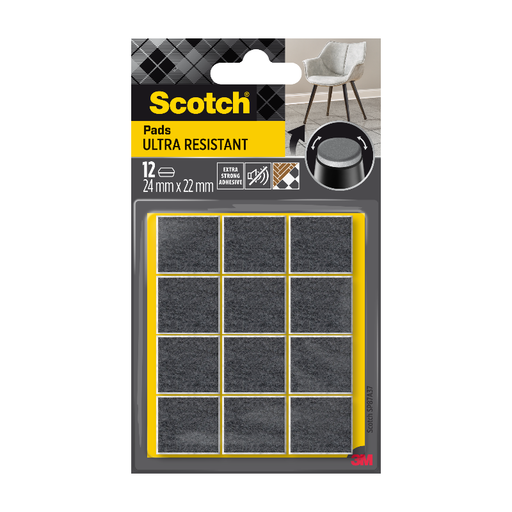
Why we recommend it: Specially designed for hard, uneven floors like tile. Its rounded-edge design is engineered to glide over grout lines without snagging or peeling—a common weakness of classic pads.
Its rounded edge limits premature wear and the risk of peeling when crossing tile grout lines. The high-density felt and powerful adhesive combat the other two common pitfalls.
Enhanced durability on tile. Noticeable noise reduction (up to -30 decibels claimed by the manufacturer).
Explore our full selection of products that meet our quality criteria and industry standards.
Longevity depends on the pad's quality, the type of floor, and how often the furniture is used. On a static piece of furniture, a good quality pad can last several years. On a chair used daily, an inspection every 6 to 12 months is recommended. Replace them as soon as the felt is compressed, worn, or the adhesive begins to peel.
The secret is in the application! Follow these 4 steps for a perfect result:
They are perfect for protecting hardwood floors, laminate, linoleum, and vinyl. For tile, choose high-density models, preferably with rounded edges, to better withstand crossing grout lines. However, they are not suitable for carpets and rugs, nor for very rough outdoor surfaces like raw concrete.