
Livraison le jour même ou le lendemain

Qualité garantie

Débloquez vos offres de bienvenue: Livraison GRATUITE | Jusqu'à -80 % | 30 jours d'essai gratuits à JoyPlus
Téléchargez l'application
By our product experts
Choosing a motorcycle helmet is a critical decision for any rider. Full-face, modular, the new ECE 22.06 safety standard… Faced with a jungle of models, it's easy to feel lost. This guide is here to help you make sense of it all in 2026, focusing on the criteria that truly matter and featuring a selection of helmets that blend safety, comfort, and practicality, whether for your daily commute or long weekend rides.
Before you fall for a particular model, let's review the key points that define a good helmet. Here are the essential criteria for making the right choice.
Since 2024, the ECE 22.06 standard has been the new benchmark for all helmets on the market. Far more demanding than the old one (ECE 22.05), it requires more extensive impact tests: shocks at different speeds, on a greater number of points on the shell, as well as tests for abrasion resistance and oblique impacts to better assess protection against rotational forces. Choosing an ECE 22.06 certified motorcycle helmet simply means ensuring you get the highest level of protection available today.
The full-face motorcycle helmet is made of a single piece that protects the entire head, including the chin. It is the champion of protection, ideal for long journeys and high speeds.
The modular helmet has a chin bar that flips up. Highly versatile, it is particularly popular for city riding or during breaks, as it allows you to talk or hydrate without having to take the whole thing off. Be careful, though: if you plan to ride with the chin bar open, make sure the helmet has dual P/J homologation (for "Protective" and "Jet").
For a helmet worn every day, comfort is not an option. It's an essential criterion. Here are the elements to look out for:
Keeping these criteria in mind, we have found models for you that check all the boxes: safety, features, and unbeatable value for money.
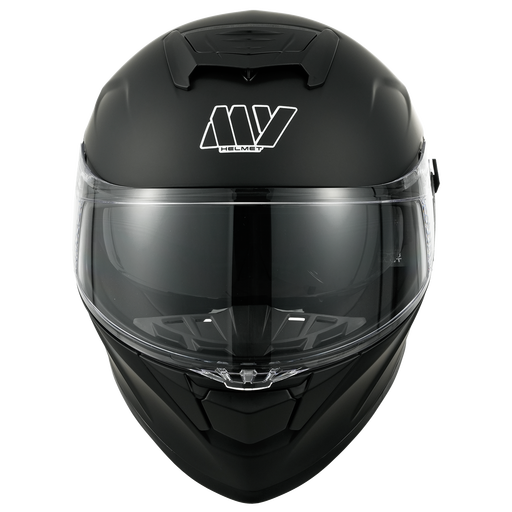
Why it stands out: The MY-936 is the ultimate smart choice. It offers the essentials: the protection of an ECE 22.06 certified full-face helmet, without unnecessary frills. Its understated matte black helmet look is a timeless classic that matches any bike.
Highlights:
Who is it for? Perfect as a daily scooter helmet or for riders (men and women) who want reliable and functional gear for their city and suburban commutes.
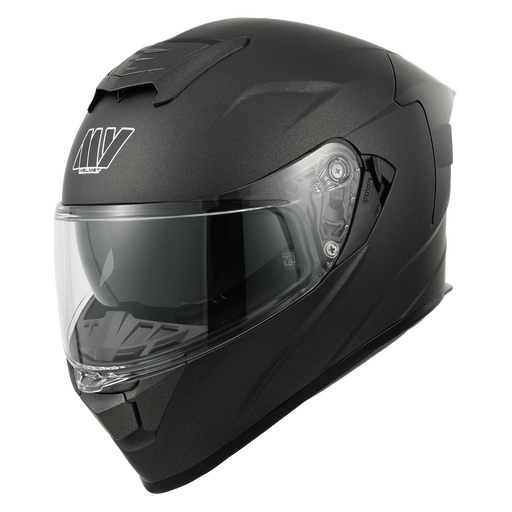
Why it stands out: This version offers all the same great qualities as the MY-936 but boasts a matte titanium finish that is more modern and distinctive than traditional black.
Highlights:
Who is it for? For riders who want the benefits of the MY-936 with an extra touch of style. It is just as at home in the city as it is on country roads.
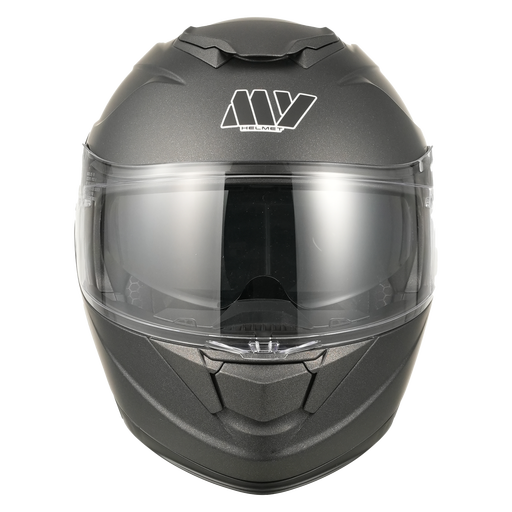
Why it stands out: The MY-935 is all about versatility. This modular helmet with its flip-up chin bar is the best companion for frequent stops in the city or for long-distance tourers who like to be able to chat at the pump without taking their helmet off.
Highlights:
Who is it for? Daily commuters, couriers, or simply those who want the best of both worlds: the safety of a full-face and the freedom of an open-face helmet.
While the models presented are unisex and fit all head shapes, some female riders look for designs or colours that are unique to them. To explore more options, take a look at our dedicated selection.
? Discover our complete selection of motorcycle helmets for women
As a general rule, it is advisable to replace your helmet every 5 years, even without any impact. Over time, the materials it's made of (foams, resins) lose their effectiveness due to UV rays, sweat, and temperature changes. And of course, a helmet must be replaced after any impact, even if no damage is visible to the naked eye.
To be effective, a helmet must be perfectly fitted. Not too big, not too small. To find your size, take a tape measure and measure your head circumference, passing about 2.5 cm (1 inch) above your eyebrows and across the most prominent bump at the back of your skull. Then, compare this measurement with the manufacturer's size guide. A new helmet should feel slightly tight on the cheeks (the foam will compress) without creating painful pressure points on the forehead or temples. Most importantly, it must not move when you shake your head.
Yes, you are perfectly entitled to continue riding with an ECE 22.05 certified helmet. The ban only applies to the manufacturing and sale of new models under this old standard. However, for any new purchase, we can only recommend that you choose an ECE 22.06 certified motorcycle helmet. It's your guarantee of benefiting from the latest and strictest protection standards.