
Livraison le jour même ou le lendemain

Qualité garantie

Débloquez vos offres de bienvenue: Livraison GRATUITE | Jusqu'à -80 % | 30 jours d'essai gratuits à JoyPlus
Téléchargez l'application
Choosing a new motorcycle helmet is a key moment for any rider. Full-face, modular, 22.06 standard, sun visor... With a vast array of options, it's easy to feel overwhelmed. Our goal isn't to declare one helmet "the best" on the market, but to give you the essential insights to find the full-face motorcycle helmet that's perfectly suited to your riding style, safety requirements, and budget.
At Joybuy, our mission is to decode the technical jargon and marketing promises, so you can make the right choice with complete confidence.
Before diving into our selection, let's review the key points that make all the difference in daily use.
Since 2022, the new European ECE 22.06 standard has become the benchmark for safety. Replacing the old 22.05 certification, it mandates drastically stricter testing. An ECE 22.06-certified motorcycle helmet has not only undergone impact tests at various speeds and on more points, but has also been tested for its ability to manage rotational impacts—the twisting forces exerted on the brain during a crash.
Choosing a 22.06-certified helmet is your guarantee of receiving the best protection currently available. Today, all new helmets brought to market must comply with it.
The full-face motorcycle helmet, moulded from a single piece, offers the highest level of structural protection for the face and chin. It's the preferred choice for long highway journeys and sport riding.
The modular motorcycle helmet, on the other hand, features a chin bar that flips up. This is an extremely convenient feature in the city for chatting at a red light or simply catching your breath when stopped. A word of caution: if you plan to ride with the chin bar up, make sure the helmet has dual P/J certification (for both Protective/Full-face and Jet configurations).
Comfort isn't a luxury; it's a crucial safety feature in its own right. A helmet that causes discomfort is a helmet that distracts. Here are the points you shouldn't overlook:
A closer look at two models that caught our eye with their technical specs and compliance with the latest standards.
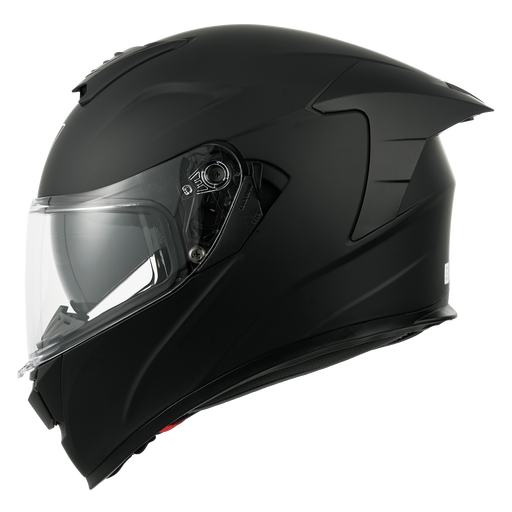
What sets it apart
The MY-936 is a full-face motorcycle helmet that gets straight to the point: safety and simplicity. Certified ECE R 22.06, it is built around an ABS (Acrylonitrile Butadiene Styrene) shell and a high-density EPS liner for optimal shock absorption. Its matte black motorcycle helmet finish gives it a sleek, versatile look.
Advantages
Who is it for?
An excellent choice for daily motorcycle and scooter riders looking for a protective, functional, and no-frills helmet, all at a budget-friendly price point.
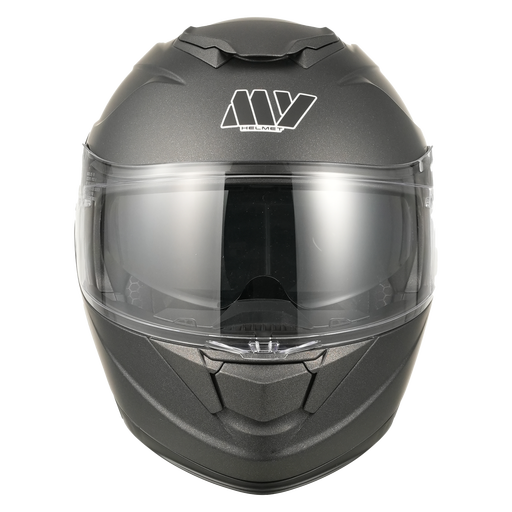
What sets it apart
The MY-935 is a modular motorcycle helmet that combines the safety of a full-face with the convenience of a jet helmet. Its flip-up chin bar is a real bonus for coffee breaks or city rides. Also certified ECE 22.06, it ensures a high level of protection. Its key feature: a dedicated space to accommodate a Bluetooth communication system.
Advantages
Who is it for?
It targets both long-distance touring enthusiasts and heavy urban commuters. Its versatility and intercom compatibility make it an excellent road companion for both short and long journeys.
While most helmets today are unisex, fit can vary based on anatomy. Some brands offer their models with redesigned interior padding or specific colourways. To explore more options, feel free to browse our dedicated selection.
? Discover our selection of women's helmets
It is recommended to replace your helmet every 5 years for a thermoplastic shell (like ABS) and up to 7 years for a composite fibre shell. This lifespan is shorter with intensive use. The absolute golden rule: any helmet that has sustained an impact must be replaced immediately, even if no damage is visible to the naked eye.
A well-fitted helmet should feel snug all around, without creating painful pressure points. To find your size, measure the circumference of your head with a tape measure, about 2.5 cm (1 inch) above your eyebrows. Once the helmet is on and the chin strap is fastened, it shouldn't "float" or shift when you move your head. The cheek pads should lightly compress your cheeks; they will break in over time.
Absolutely not. The finish, whether matte or glossy, has no impact on the shell's protective capabilities. It's a purely aesthetic choice. However, a matte finish is often more susceptible to fingerprints and micro-scratches. To preserve its look, it's best to use cleaning products specifically designed for matte surfaces.