
Livraison le jour même ou le lendemain

Qualité garantie

Débloquez vos offres de bienvenue: Livraison GRATUITE | Jusqu'à -80 % | 30 jours d'essai gratuits à JoyPlus
Téléchargez l'application
When it comes to riding, safety is non-negotiable. And at the heart of every rider's gear is the cornerstone piece?: the helmet. With the arrival of the new, much stricter ECE 22.06 standard, navigating the jungle of available models can quickly become a challenge. Our guide is here to cut through the noise. We'll explain the key points and present a selection of helmets that tick all the boxes—standard, comfort, and practical features—so you can ride with peace of mind.
Before you fall for a particular model, let's review the essential criteria that will guarantee your safety and comfort on the road.
The European UNECE 22.06 regulation is now the new standard for all helmets sold on the market. It replaces the old 22.05 certification with a significantly more demanding set of requirements. In practical terms, 22.06 helmets undergo impact tests at various speeds, on many more points of the shell, and, for the first time, include an assessment of their resistance to rotational impacts. Choosing an ECE 22.06 full-face motorcycle helmet means ensuring you are protected by the highest standards currently available.
The ideal helmet type depends primarily on your riding style.
Comfort isn't a luxury; it's an active safety feature. A helmet you can forget you're wearing allows you to stay focused on the road. Here are the details that change everything:
Now for our top picks. We've selected a few models that tick all the boxes for the new standard, without sacrificing features and while keeping an eye on value for money.
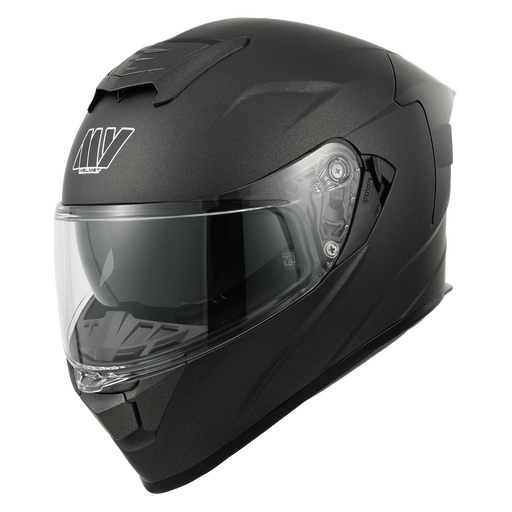
Why It Stands Out?: The MY-936 is a no-nonsense full-face helmet that gets straight to the point. Certified ECE 22.06, it immediately establishes itself as a safe, modern choice. Its ABS shell, combined with a high-density EPS liner, ensures excellent shock absorption. On the practical side, it includes the two most sought-after daily features: a retractable sun visor and a fully removable, washable interior.
Available in a Matte Titanium finish or as a matte black full-face helmet, it offers a clean, modern style.
Pros?:
Who Is It For?? For motorcycle and scooter riders looking for a pragmatic full-face helmet that's up-to-date with the latest standards, perfect for daily commuting, even in sunny weather.
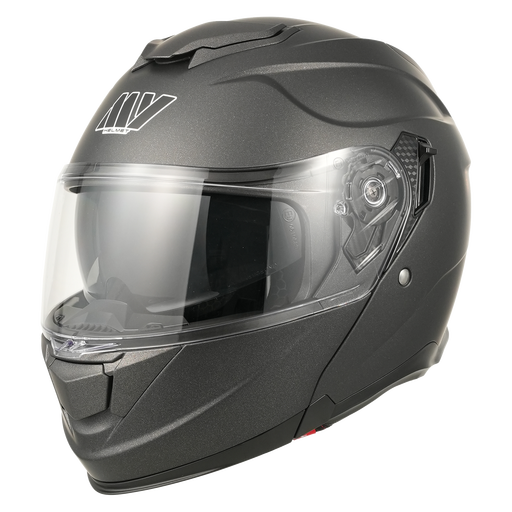
Why It Stands Out?: The MY-935 plays the versatility card. This modular motorcycle helmet is a true Swiss Army knife thanks to its flip-up chin bar, which is ultra-practical in the city and during breaks. It is also, of course, ECE 22.06 certified, a testament to its high-quality design. It is equipped with a dual-visor system: a clear main visor and an internal sun visor. An important detail: it has a dedicated space to accommodate a Bluetooth communication system. This makes it the ideal companion for long rides.
Pros?:
Who Is It For?? For riders who love the flexibility of a modular helmet, switching between urban commutes and weekend getaways, and who want the ability to integrate an intercom.
Our selection is just a glimpse of what's available. The market is full of models with various finishes, brands, and features. If you want to broaden your search, there's no shortage of options.
Feel free to browse our complete category of full-face helmets with visors to find the perfect one that meets all your needs.
Discover More Full-Face Helmets with Visors
The ECE 22.06 standard is a complete overhaul of 22.05. The major changes? Impact tests at both lower and higher speeds, an increase in the number of impact points on the shell from 6 to 18, and most importantly, the introduction of an oblique impact test. This test evaluates protection against rotational forces, a key factor in many serious injuries during an accident.
Due to its single-piece construction, a full-face helmet offers inherently superior structural integrity. That said, a good ECE 22.06-certified modular motorcycle helmet has undergone rigorous stress tests, including on its chin bar. For optimal safety, the golden rule is to always ride with the chin bar closed and locked, unless the helmet has the well-known P/J dual homologation (for Full-Face/Jet).
This is the one step you can't get wrong. Take a measuring tape and measure your head circumference, passing it about 2.5 cm (1 inch) above your eyebrows and around the most prominent point at the back of your skull. Then, compare this measurement to the manufacturer's sizing guide. When you try it on, the helmet should fit snugly and evenly, without any painful pressure points. Shake your head?: it shouldn't move. Finally, the cheek pads should lightly compress your cheeks.