
Livraison le jour même ou le lendemain

Qualité garantie

Débloquez vos offres de bienvenue: Livraison GRATUITE | Jusqu'à -80 % | 30 jours d'essai gratuits à JoyPlus
Téléchargez l'application
Choosing a new frying pan can quickly become overwhelming. Between the different materials, coating promises, and array of shapes, it's hard to know where to start. Our guide is here to give you the keys to an informed choice, focusing on what truly matters: your cooking habits, not the marketing hype.
Before you rush to the store, let's review the features that make all the difference. Here are the points to put under the microscope.
The choice of material is critical: it directly impacts cooking performance, maintenance, and the lifespan of your pan.
Beyond the material, the shape and compatibility of your pan are crucial.
To move from theory to practice, we've selected three models with distinct profiles. Each one excels in a particular area.
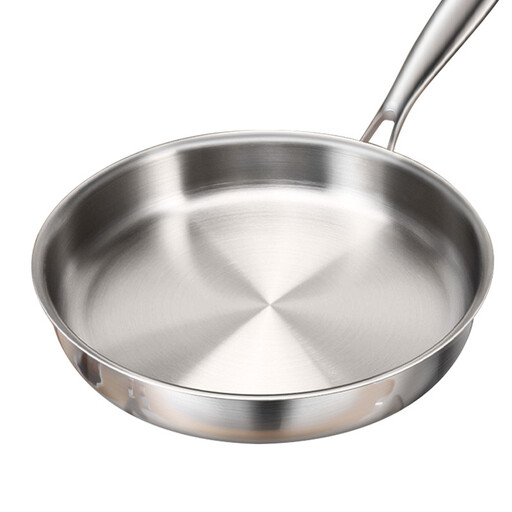
Why it stands out This PURECOOK model is a perfect example of the best that modern stainless steel has to offer. Its tri-ply construction (stainless steel / aluminum / stainless steel) is the key to optimal thermal conductivity. In practical terms? Heat spreads incredibly fast and perfectly evenly, eliminating hot spots and giving you complete control over your cooking.
Advantages
Who is it for? For demanding cooks seeking a high-performance and virtually indestructible stainless steel pan. It's ideal for mastering the art of the perfect sear, provided you get the hang of cooking with this material.
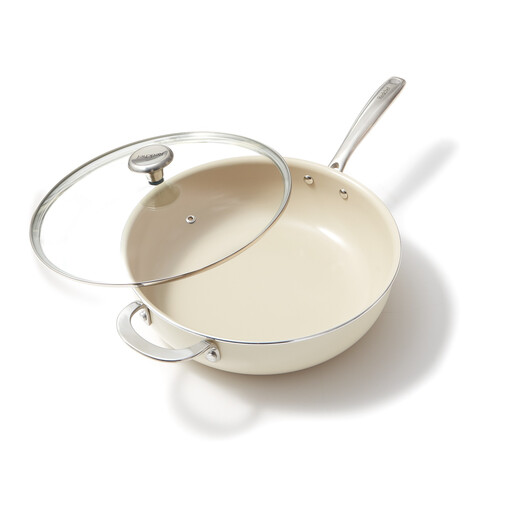
Why it stands out This Redchef sauté pan is all about versatility, combining the simplicity of a non-stick coating with the practicality of a deep body. The brand guarantees a healthy ceramic coating, free of PFAS, PFOA, lead, and cadmium. Its thick cast aluminum base not only ensures induction compatibility but also provides excellent resistance to warping.
Advantages
Who is it for? For anyone who prioritizes daily convenience. Ideal for families, quick meals, and slow-cooked dishes, this non-stick pan promises a hassle-free cooking (and cleaning) experience.
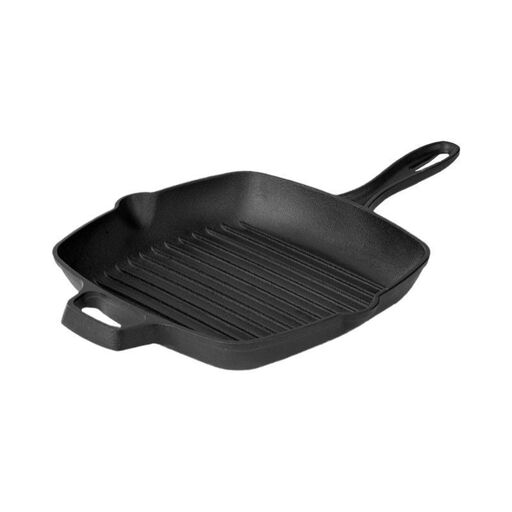
Why it stands out This COOKER KING grill pan goes all-in on raw cast iron, the king of materials for an aggressive sear and restaurant-quality grill marks. Its 26 cm square shape optimizes the cooking surface, perfect for steaks, salmon fillets, or vegetable skewers.
Advantages
Who is it for? For meat lovers and grilling enthusiasts who want to replicate the flavors and sear marks of a barbecue without leaving their kitchen.
If these three profiles don't check all your boxes, or if you're looking for lighter cookware without sacrificing efficiency, other options are available. Aluminum, for example, is an excellent compromise. Discover our selection of aluminum cookware to find high-performance alternatives suited for every budget.
Maintenance is the key to your cast iron skillet's longevity. After each use, clean it with very hot water and a brush—and most importantly, no dish soap. Dry it immediately and completely (a good trick is to put it back on the heat for a few moments). Finally, apply a thin layer of vegetable oil to the entire inner surface with a paper towel. This step nourishes the seasoning and protects it from rust.
A stainless steel pan doesn't have a non-stick coating in the traditional sense. Its secret lies in technique! To prevent food from sticking, just follow one golden rule: preheat the pan dry over medium heat, do the water drop test (it should bead up and roll around), then add your fat, and only then, add your food. The intense heat creates a thin layer of steam (the Leidenfrost effect) that prevents sticking.
PFOA (perfluorooctanoic acid) is a chemical from the PFAS family that was long used in the manufacturing of non-stick coatings like Teflon. Due to concerns about its effects on health and the environment, its use is now highly regulated or even banned in many countries. A PFOA-free pan guarantees that this compound was not used in the manufacturing of its coating. Manufacturers are now turning to alternatives like ceramic or other next-generation coatings that are considered safer.