
Livraison le jour même ou le lendemain

Qualité garantie

Débloquez vos offres de bienvenue: Livraison GRATUITE | Jusqu'à -80 % | 30 jours d'essai gratuits à JoyPlus
Téléchargez l'application
A daily kitchen essential, the frying pan can be a real headache when it's time to buy a new one. Between coatings that peel off after a few months and unfulfilled compatibility promises, it's easy to feel lost. As the Head of Product Recommendations at Joybuy, my mission is to help you see clearly, cutting through the marketing hype to guide you toward a long-lasting choice that truly fits your needs.
The market is flooded with products making attractive claims, but not all are created equal. Here are the two most common pitfalls that could lead to buyer's remorse.
To make the right choice, focus on objective features. Three elements are crucial for the performance and longevity of your future pan.
The material determines everything: the type of cooking, the maintenance, and the lifespan.
Compatibility with your stovetop is crucial, especially for induction.
Rather than an endless list, we've selected specific models for clear needs. The goal: to help you find the pan that's truly right for you.
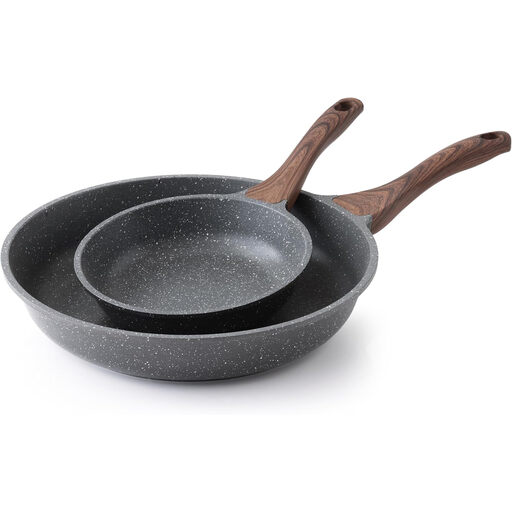
Why we chose it: This two-pan set covers most needs, from the morning omelette to the evening family meal. Their non-stick coating makes cooking and cleaning a breeze: a real time-saver on busy days.
Its granite-effect coating is guaranteed PFOA-free. The die-cast aluminum body resists warping, while the stainless steel base ensures excellent responsiveness on induction.
A versatile and easy-to-maintain pan set, compatible with all stovetops and ovens (up to 204°C), all with an excellent balance of practicality and price.
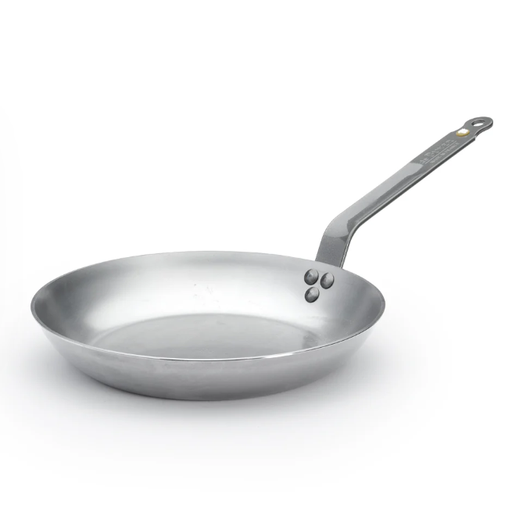
Why we chose it: For those chasing the famous Maillard reaction on a steak or grilled vegetables, the carbon steel pan is the absolute benchmark. It's an item for enthusiasts who appreciate the ritual of seasoning.
There's no artificial coating to wear out here. Its non-stick property is natural, created by the polymerization of oil (the seasoning). It's a lifetime investment, the exact opposite of disposable products.
Exceptional thermal conductivity for powerful sears and perfect caramelization. The more you use it, the better it gets.
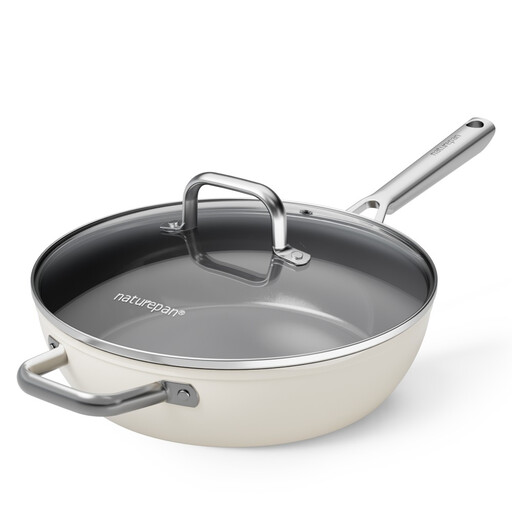
Why we chose it: With its high sides, lid, and healthy coating, this sauté pan is a fantastic all-in-one tool. It's perfect for health-conscious cooks looking for a do-it-all pan: sear, simmer, and even finish in the oven.
Its ceramic coating, reinforced with titanium and diamond particles, promises enhanced durability. Most importantly, it's guaranteed free of PTFE, PFOA, and other PFAS: a key selling point for healthy cooking.
Its versatility is maximal: frying pan, sauté pan, and even an oven dish (up to 260°C). Ideal for one-pan meals, from stovetop to table.
Explore our full selection of pans that meet our quality criteria and current safety standards.
The lifespan of a non-stick pan depends on the quality of its coating and, most importantly, its care. An entry-level model will last one to two years, while a quality one can last five years or more. To preserve it, avoid thermal shock (never run it under cold water when hot), use wooden or silicone utensils, and preferably wash it by hand with a soft sponge.
Its maintenance is the key to its performance. After each use, deglaze it with water while still hot, scrub with a brush if needed (never use detergent!), dry it immediately on the stove, and then lightly oil it with a paper towel before storing. This ritual prevents rust and strengthens the seasoning over time.
Not necessarily. The price can reflect the brand's prestige, design, or place of manufacture. A reasonably priced pan with a thick base, quality material (like 18/10 stainless steel or carbon steel), and a securely attached handle can prove to be much more high-performing and durable than a more expensive model that relies solely on its looks. Trust the technical specs, not the price tag.