
Livraison le jour même ou le lendemain

Qualité garantie

Débloquez vos offres de bienvenue: Livraison GRATUITE | Jusqu'à -80 % | 30 jours d'essai gratuits à JoyPlus
Téléchargez l'application
Choosing a fruit soda seems simple enough: a tempting flavour, a convenient size and a promise of refreshment are often enough to get you to the checkout. Yet not all fizzy drinks are created equal. Sugar content, sweeteners, juice quantity, fibre, packaging and storage can all affect both the taste and the price per litre.
So before you fill the fridge with a multipack of sodas, it's worth taking a few moments to read the label. Here are the criteria to look out for when choosing a fruity, sparkling drink that's right for a meal, a party, the office or occasional consumption.
A drink might highlight peach, strawberry, lemon or tropical fruits without containing a significant amount of juice. The ingredients list helps you distinguish between flavourings, juices from concentrate and the actual fruit content.
The order of ingredients also gives a useful clue: they are generally listed from most to least abundant. A drink made primarily from carbonated water and flavourings won't have the same profile as a recipe containing coconut water or fruit juice.
A sugar-free soda may contain sweeteners such as sucralose, acesulfame-K, steviol glycosides or aspartame. These substances are permitted when used in accordance with European regulations, but their taste doesn't necessarily suit everyone.
The "sugar-free" claim therefore doesn't automatically mean "free from sweeteners". For drinks containing aspartame, the presence of phenylalanine must also be taken into account by those affected by phenylketonuria.
A pack of 24 cans can be very practical for an association, an event or a household that regularly drinks this type of beverage. For more occasional use, however, it risks cluttering up your cupboards and increasing the chances of the cans exceeding their best-before date.
The format is also worth a look: 330 ml cans are easy to serve and transport, while a 750 ml bottle is better suited to a shared meal.
Start by comparing the values per 100 ml, then scale them up to the amount you'll actually consume. In a 330 ml can, you'll need to multiply the label figures by 3.3.
For example, TING Cream Soda has 18 kcal and 4.4 g of sugars per 100 ml, which works out at around 59 kcal and 14.5 g of sugars per 330 ml can. Conversely, some flavoured sparkling mineral waters have zero sugar and zero calories, such as Perrier Forever Raspberry, according to the product information.
Recipes enriched with prebiotic fibres should be looked at separately: they may provide a measurable amount of fibre, but that doesn't turn the drink into a health product. SODA YASS and VAÏVAÏ Citrus each state 6.6 g of fibre per 330 ml can, for around 57 kcal per can.
For individual consumption, 250 ml or 330 ml formats help to avoid leftovers. An opened fizzy drink should generally be drunk quickly to keep its bubbles and flavour. Drinks made with sparkling coconut water, such as NOW COCO, should be refrigerated after opening and consumed within the time stated on the packaging.
For a gathering, packs of 12 or 24 cans are easier to hand around. However, do check the total volume: a pack of 24 x 330 ml cans amounts to nearly 7.92 litres.
Read the full ingredients list, especially if you have an allergy, are following a specific diet or want to avoid aspartame. Depending on the recipe, the drink may contain sugar, fructose, acidity regulators, preservatives or several sweeteners.
A natural sparkling mineral water like SAN PELLEGRINO has a much shorter ingredients list: natural mineral water and carbon dioxide. It's a sugar-free, flavour-free option, suitable for meals and for those who prefer a refreshing drink with a more neutral taste.
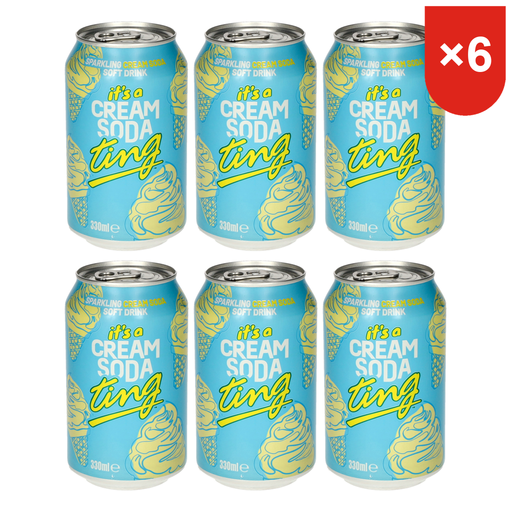
Why this suits this profile: This pack of six cans lets you discover an original flavour without committing to a large volume straight away. The 330 ml format works well for both breaks and individual meals.
The nutritional values are clearly stated: 18 kcal and 4.4 g of sugars per 100 ml. The presence of sucralose is also listed in the ingredients.
A pack of 6, 330 ml cans and a fizzy cream flavour best enjoyed well chilled.
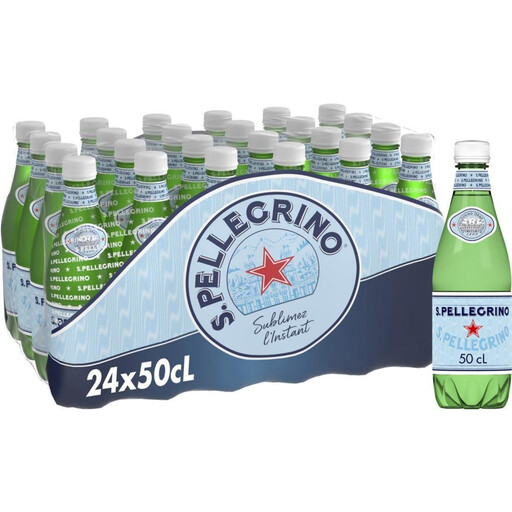
Why this suits this profile: With its 500 ml format, this sparkling mineral water fits easily on a table, at lunch or during a social occasion where you want to avoid sugary drinks.
The stated ingredients are limited to natural mineral water. No sugar, no fruity flavouring and no sweetener to decipher.
24 bottles of 500 ml, 0 kcal and a short ingredients list that pairs easily with meals.
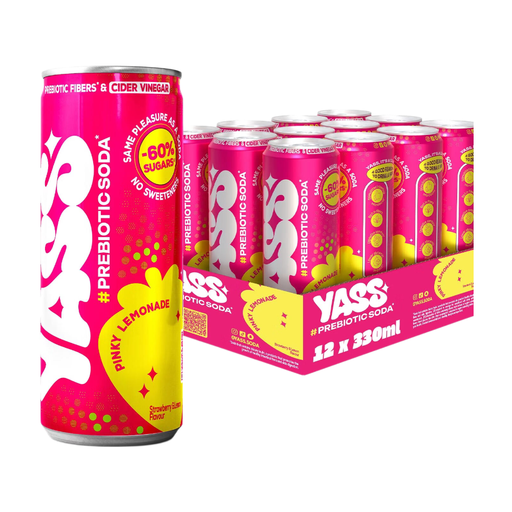
Why this suits this profile: The pack of 12 is ideal for an office, a household or an event. Its flavour blends notes of strawberry and lemon, with a recipe enriched with prebiotic fibre.
The product page states 6.6 g of fibre per can, around 57 kcal and no artificial sweeteners. These figures should still be considered alongside your individual needs and digestive sensitivity.
12 cans of 330 ml, 6.6 g of fibre stated per can and a pink lemonade flavour.
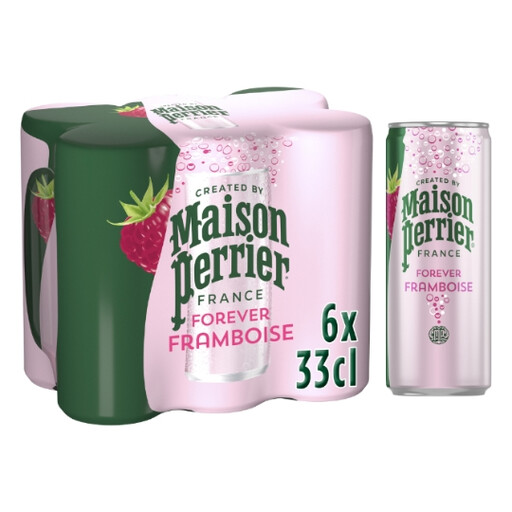
Why this suits this profile: This fizzy drink brings a hint of raspberry with no sugar, no calories and no sweetener – a good compromise for those who want a change from plain water.
The product page states that the drink contains 99.9% natural mineral water and natural raspberry flavourings, with no sugar or sweetener.
Six cans of 33 cl, 0 kcal and a light raspberry flavour with no sugar.
Start by looking at the "of which sugars" line per 100 ml, then check the amount for a whole container. Sugar-free flavoured sparkling waters, for example raspberry or melon, can fit the bill. If the recipe contains sweeteners, you'll find them in the ingredients list.
They contain added fibre, often from inulin or other plant sources. The stated amount should be compared to the portion you actually consume. A high intake may not be suitable for people with particular digestive sensitivities; as the name suggests, a drink remains a food product, not a medicine.
To preserve its taste and fizz, drink it soon after opening. For sparkling coconut water drinks, the product page may recommend refrigeration and consumption within two days. For each product, the label remains the best source of information regarding the date and storage conditions.