For an individual lunch at uni, a multipack of sealed pots means you don’t have to deal with the rest of an opened tin. A large tin is better suited to sharing or portioning out at home, provided you can store any leftovers in the fridge according to the product instructions. To compare recipes, check the ingredients and sugars per 100 g: ‘in light syrup’ and ‘no added sugar’ don’t mean the same thing.
Which format is right for you?
Student having lunch alone between lectures
A sealed pot lets you take a single portion with you without leaving an opened tin to deal with after your meal. E.Leclerc and Carrefour offer multipacks of individual fruit portions; check the weight of each portion to make sure it suits your appetite.
Housemate making several desserts
An 800 to 850 g tin can be a good choice if you share its contents or portion them out soon after opening. Store any leftovers according to the instructions on the tin you buy.
Shopper keeping an eye on added sugar
Compare the ingredients list and sugars per 100 g for the exact product. A product labelled ‘no added sugar’ may still contain sugars that occur naturally in the fruit.
What should you look for?
When choosing fruit in syrup to take to uni, first decide whether you need a sealed individual portion or a tin to share. Then compare recipes that suit how you plan to use it.
| What to consider |
What to check |
Who it’s for and why |
| Taking it with you without leftovers |
The weight of each pot and whether you can take it with you unopened. |
Between lectures, I want to take a portion with me without having to store an opened tin; around 42% of consumers prioritise this need for portability. |
| Sharing and managing leftovers |
How much you’ll eat and the storage instructions once opened. |
If I’m making several desserts for my housemates, I can choose a large tin as long as I refrigerate the leftovers; around 33% of consumers prioritise sharing and using the contents. |
| Recipe and added sugar |
The ingredients list and sugars per 100 g for the product you’re considering. |
If I want to avoid added sugar in the recipe, I distinguish this from the total sugar content; around 25% of consumers put this ingredient-related consideration first. |
Mistakes to avoid
-
Assuming a ‘family-size’ pack is suitable for taking with you
An opened large tin leaves you with several portions to manage. It’s better suited to sharing at a meal or preparing at home than to a single dessert eaten on campus.
If you’re having lunch on your own, choose sealed pots. Before buying a large tin, decide what you’ll do with the leftovers.
Portioning it out may require sealed food containers and space in the fridge.
-
Comparing tins by size alone
The total weight doesn’t tell you how many portions you’ll eat before the product’s opened shelf life is up. A larger tin is only useful if you can use all its contents.
Compare the weights and work out how many desserts you’ll make, then check the storage instructions for opened products on each pack.
-
Confusing ‘no added sugar’ with ‘sugar-free’
Carrefour’s listing for an ST MAMET fruit cocktail in pots states that the no-added-sugar product contains naturally occurring sugars. This label doesn’t apply to every recipe from the brand.
Check the ingredients and nutritional information for the exact product, particularly the sugars per 100 g.
-
Ignoring the condition of the tin and storage instructions once opened
The DGCCRF lists bulging, rust and dents among the possible signs that a tin may be damaged. Storage instructions after opening also vary between products.
Don’t use a tin that looks damaged. Once opened, follow the refrigeration and storage time instructions on the packaging.
Brands to consider
ST MAMET
Carrefour offers, among other products, an 850 g tin of fruit cocktail and a four-pack of 113 g pots.
- These two formats suit different needs: sharing a tin or taking a sealed pot with you.
- The 850 g fruit cocktail recipe includes sugar in its ingredients, while the ‘no added sugar’ label applies to the pot version reviewed. Check the label of each product.
CARREFOUR CLASSIC'
Carrefour sells tinned fruit in syrup under this brand, including an 825 g fruit cocktail and 800 g Williams pears, as well as multipacks of pots.
- Choose between a tin to share and individual portions.
- The weight and recipe vary by product, so compare the labels rather than treating these products as interchangeable.
Douceur du Verger
E.Leclerc offers, among other products, a 500 g tin of fruit cocktail in light syrup and a multipack of 4 × 70 g pots under this brand.
- The multipack lets you take a sealed pot with you, while the 500 g tin is better suited to several portions.
- Check that the amount in each pot or tin suits the number of desserts you’re planning.
AUCHAN
Auchan offers, among other products, an 840 g tin of peach halves in light syrup and a multipack of 4 × 113 g pots.
- These pack sizes let you choose between a product to share and a multipack of individual portions.
- For the 840 g tin of peaches reviewed, Auchan advises transferring the contents to an airtight container after opening, refrigerating them and eating them within two days.
Joybuy products to take with you or share
The multipack of small pots is a good choice if you want to take a sealed portion with you. The other fruit in syrup featured here comes in tins, so it’s best suited to sharing or to situations where you can manage the leftovers after opening.
 Image unavailable
ST MAMET Fruit cocktail in syrup, 3 × 125 g
This pack of three 125 g pots lets you take one with you unopened for an individual lunch.
If you’re looking for a recipe with no added sugar, check the ingredients. Once you’ve opened a pot, follow the product’s storage instructions.
View on Joybuy
 Image unavailable
ST MAMET Fruit cocktail in syrup, 850 g
This 850 g tin is suitable for a shared dessert or for making several portions at home, rather than for taking a single portion with you.
Carrefour’s listing for the 850 g ST MAMET fruit cocktail includes sugar in the ingredients. If you open the tin, make sure you can store the leftovers according to the packaging instructions.
View on Joybuy
 Image unavailable
St Mamet Williams pear halves in light syrup, 455 g drained weight
You can divide the pear halves between several desserts if you have a way to store the tin after opening.
The 455 g is the drained weight, not the total weight including syrup. Check the storage instructions before planning portions for several days.
View on Joybuy
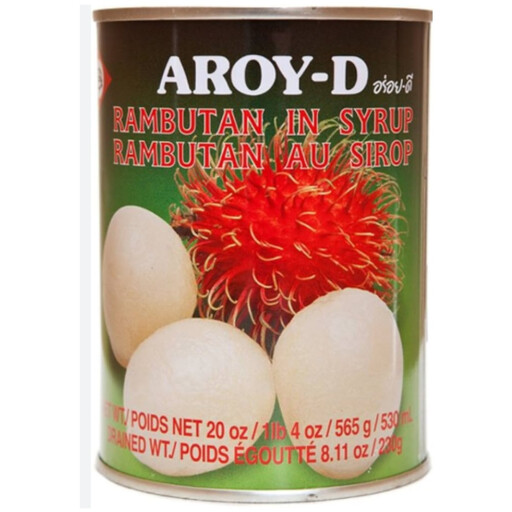 Image unavailable
AROY-D Rambutans in syrup, 565 g
This 565 g tin is better suited to sharing or portioning out than to serving as a pre-portioned individual snack.
If you don’t eat it all when you open it, check the storage instructions for the product you’ve bought. Also check the label for ingredients and allergens.
View on Joybuy
 Image unavailable
AROY-D Mango slices in syrup, 425 g
This 425 g tin can be shared; if you’re having lunch on your own, plan what you’ll do with the leftovers.
Before dividing it between several meals, check the ingredients and the storage instructions for opened products on the packaging.
View on Joybuy
Frequently asked questions
Does ‘family size’ always mean a large tin?
No. With fruit in syrup, you can compare a large tin to share with a multipack of smaller portions. If you’re having lunch on your own at uni, check whether you can take a sealed portion with you or store a tin properly once it’s open.
Can I keep an opened tin in my bag until the next day?
Don’t plan to keep an opened tin in your bag until the next day: follow the refrigeration instructions on the product. For its 840 g tin of peaches in light syrup, Auchan advises using an airtight container in the fridge and eating the contents within two days of opening. The storage time may differ for other products.
Does ‘no added sugar’ mean ‘sugar-free’?
No. Carrefour states that the ST MAMET fruit cocktail in pots labelled this way contains naturally occurring sugars. To compare two products, check their ingredients and the ‘of which sugars’ line in the nutritional information per 100 g.
What should I check on a tin before taking it with me?
Check its condition, date and storage instructions before putting it in your bag. The DGCCRF lists bulging, rust and dents among the possible signs that a tin may be damaged. Don’t eat the contents if the tin looks suspicious.


