Anyone making a dessert to share
For a fruit bowl or a tart, the amount of usable fruit matters more than the number of packs.


For a dessert to share, choose a tin based on the drained weight and the shape of the fruit, rather than its stated size alone. Individual pots are a better choice if you want to serve separate portions or keep leftovers to a minimum. Then compare the packing liquid, the ‘of which sugars’ figure per 100 g and the storage instructions after opening for each product.
For a fruit bowl or a tart, the amount of usable fruit matters more than the number of packs.
The packing liquid, ingredients and ‘of which sugars’ figure can help you compare products without confusing ‘no added sugars’ with ‘sugar-free’.
If the number of guests varies, individual portions can save you from opening a large tin that won’t be finished.
For Sunday lunch, first decide whether you’ll serve the fruit together or in individual portions. Then check the quantity of fruit, the ingredients and the storage instructions for the product you choose.
| What to consider | What to check | Best for |
|---|---|---|
| Quantity to share | The drained weight, if shown on the packaging, and the shape of the fruit for your planned dessert. | For topping a tart or filling a fruit bowl, I want to know how much fruit I’ll have, rather than count the syrup. Around 42% of consumers would make this their top priority. |
| Sugars and liquid | The ingredients, packing liquid and ‘of which sugars’ figure per 100 g. | If I’m comparing fruit in syrup with a product that has no added sugars, I want to know exactly what each one contains. Keeping added sugars in check would be a priority for around 33% of consumers. |
| Portions and leftovers | Portion size and storage instructions after opening. | If not everyone wants dessert, I’d rather not open more fruit than I need. Avoiding leftovers would come first for around 25% of consumers. |
The total weight includes the packing liquid, so it doesn’t tell you how much fruit you’ll actually be serving.
For a tart or fruit bowl, check the drained weight if it’s shown and choose an amount that suits the number of guests.
‘No added sugars’ doesn’t mean the fruit contains no sugars.
Compare the ingredients and the ‘of which sugars’ figure per 100 g for the products you’re considering.
Storage instructions after opening vary by product. The listing for St Mamet’s 425 g fruit cocktail says to keep it in a suitable container in the fridge for 3 to 4 days, while Auchan’s 340 g exotic fruit mix should be used within 2 days.
If you’re not sure how many portions you’ll need, consider individual pots. Once you’ve opened a tin, follow the instructions on its own label.
The Carrefour range includes large tins of fruit as well as individual portion pots.
The range includes large tins and individual pots, including 840 g of peach halves in light syrup.
The range shown by E.Leclerc includes tins from 455 to 500 g and packs of 4 × 70 g individual pots.
These tins of fruit in syrup can be used to make a dessert to share. The stated pack size doesn’t tell you how much fruit you’ll be serving, so check the drained weight.
 Image unavailable
If you’re making a tart or dessert to share and pear halves suit your recipe, the drained weight of 455 g gives you a useful guide when planning portions.
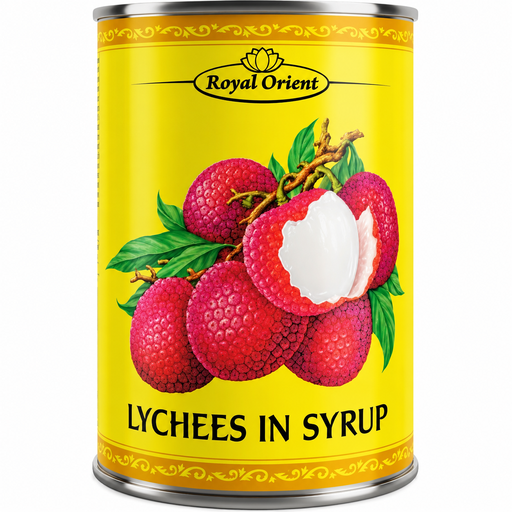 Image unavailable
If you’re making a lychee dessert, check the drained weight before deciding how many tins to open: 567 g is the stated pack size, not the weight of the fruit alone.
 Image unavailable
The slices are a good choice for a dessert where you want to serve mango. Check the drained weight to plan how much to share. Once opened, follow this product’s instructions to refrigerate it and use it within two days.
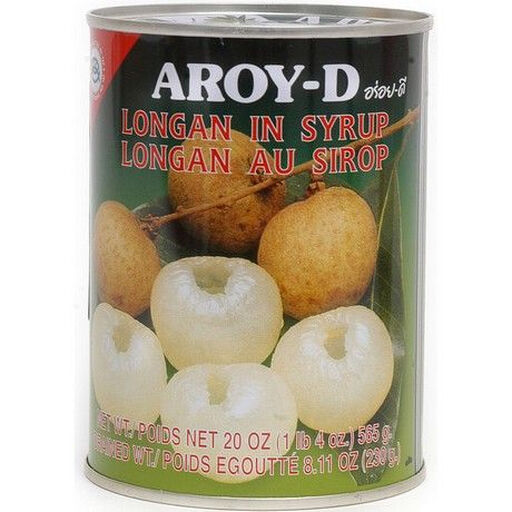 Image unavailable
For a longan dessert or fruit salad, check how much fruit you’ll be serving rather than assuming the stated 565 g is the drained weight.
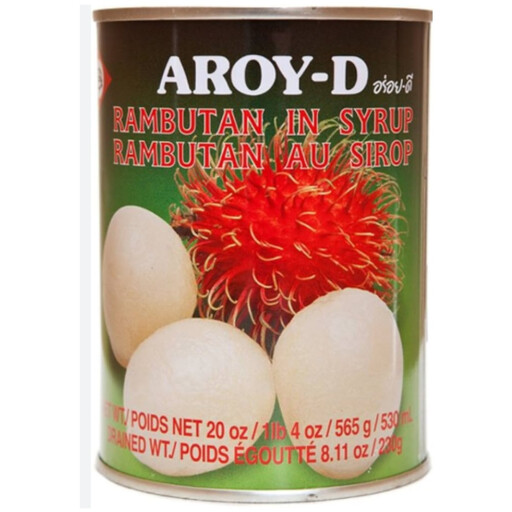 Image unavailable
For a rambutan dessert, check how much fruit is available before planning your portions. The product listing warns that it may contain traces of soya and milk, and that the fruit’s texture may pose a choking risk. Bear these warnings in mind before serving.
Choose based on the drained weight and number of guests, then consider the shape of fruit your recipe needs. Halves can work well for a tart; if you’re serving individual portions, take a look at the pots too.
No. It doesn’t mean the product contains no sugars. To compare two products, check their ingredients and the ‘of which sugars’ figure in the nutritional information, using the same 100 g basis for both.
Follow the instructions for the product you’ve bought, as storage times vary. The listing for St Mamet’s 425 g fruit cocktail says to keep it in a suitable container in the fridge for 3 to 4 days. Auchan’s 340 g exotic fruit mix should be kept in an airtight container and used within 2 days.
Check the drained weight if it’s shown, the ingredients list, the nutritional information and the storage instructions for the specific product. The DGCCRF states that nutritional information is given per 100 g or 100 ml, making it easier to compare products with different portion sizes.